Borra Caves stand as one of the most remarkable geological formations in peninsular India. Nestled in the Ananthagiri Hills of the Eastern Ghats, approximately 90 kilometers from Visakhapatnam and 30 kilometers from Araku Valley town center, these limestone caverns have drawn visitors for over a century. The caves descend to depths of nearly 80 meters, making them among the deepest in the country, while their internal passages stretch approximately 200 meters in length.
The formations inside Borra Caves took shape over millions of years as the Gosthani River carved through limestone deposits. What emerges today is a subterranean world of stalactites hanging from ceilings, stalagmites rising from floors, and mineral deposits creating patterns that spark imagination. For travelers heading to Araku Valley, Borra Caves consistently rank as a priority stop, and understanding the practical details helps maximize your visit.
The Geological Wonder: History and Discovery
The documented history of Borra Caves begins in 1807 when William King George, a British geologist surveying the region, formally recorded the cave system. However, local tribal communities had known about these caverns long before colonial documentation. The caves hold spiritual significance for indigenous groups, with a natural Shiva lingam formation inside the main chamber serving as a site of worship to this day.
Geological studies indicate the caves formed during the Precambrian era, placing their origins at approximately one million years ago. The limestone that constitutes the cave structure belongs to the Kurnool group of rocks, characterized by high calcium carbonate content. As slightly acidic rainwater seeped through cracks over countless millennia, it dissolved the limestone and gradually hollowed out the chambers visitors walk through today.
The stalactite and stalagmite formations continue growing, though at imperceptible rates. Scientists estimate that these structures add roughly one inch per century under optimal conditions. This ongoing geological process means the caves you see today differ subtly from what visitors saw decades ago, with formations slowly extending and merging over time.
Essential Visitor Information
Planning your Borra Caves visit requires attention to operational details that affect your experience. The caves operate under government management, with regulated timings and fee structures.
Ticket Prices and Entry Fees
The entry fee structure at Borra Caves remains straightforward. As of recent updates, adult tickets cost approximately ₹75-100, while children typically pay reduced rates around ₹25-40. Foreign nationals may face slightly higher charges. Camera fees apply separately, usually around ₹25-50 for still cameras. Video recording devices attract higher fees.
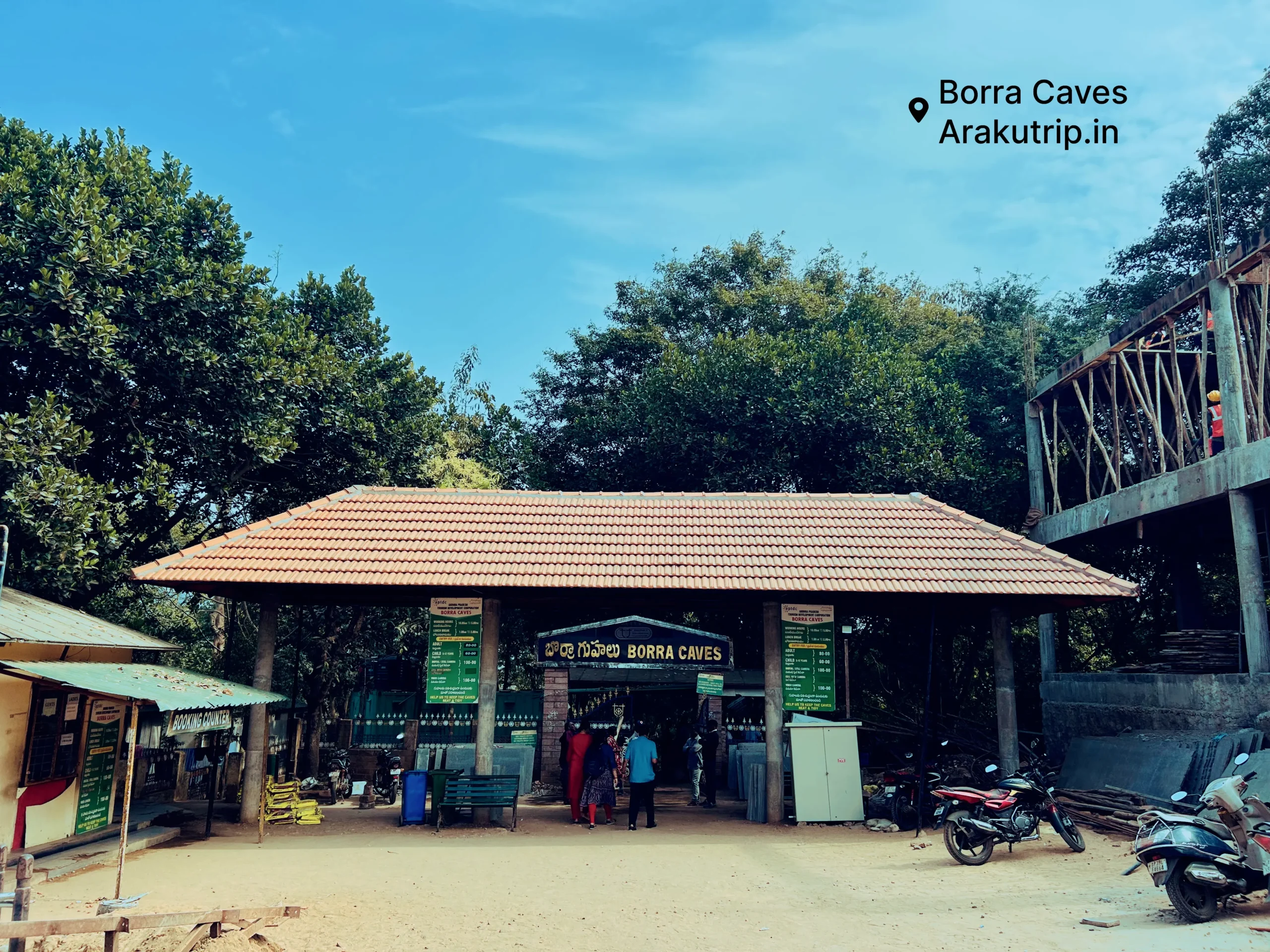
Tickets are available at the counter located near the cave entrance. During peak tourist season, particularly from October through January, queues can extend considerably during midday hours. The ticketing system operates on a first-come basis without advance online booking for general visitors. Group tours and educational institutions sometimes arrange prior permissions through the tourism department.
Opening and Closing Timings
Borra Caves maintain operating hours from 10:00 AM to 5:00 PM throughout the year. The caves remain open all seven days, including public holidays, though hours may adjust during special circumstances or maintenance periods. The last entry typically occurs around 4:30 PM to allow visitors adequate time for the internal tour before closing.
Morning visits between 10:00 AM and 12:00 PM offer advantages including smaller crowds, cooler temperatures outside the caves, and better parking availability. Weekends and public holidays see substantially higher footfall, making weekday visits preferable for those with scheduling flexibility.
Inside Borra Caves: What to Look For
The internal exploration follows a defined pathway with steps descending into the main chambers and eventually looping back toward the exit. Guides available at the entrance provide commentary, pointing out notable formations and sharing associated folklore.
Stalactite and Stalagmite Formations
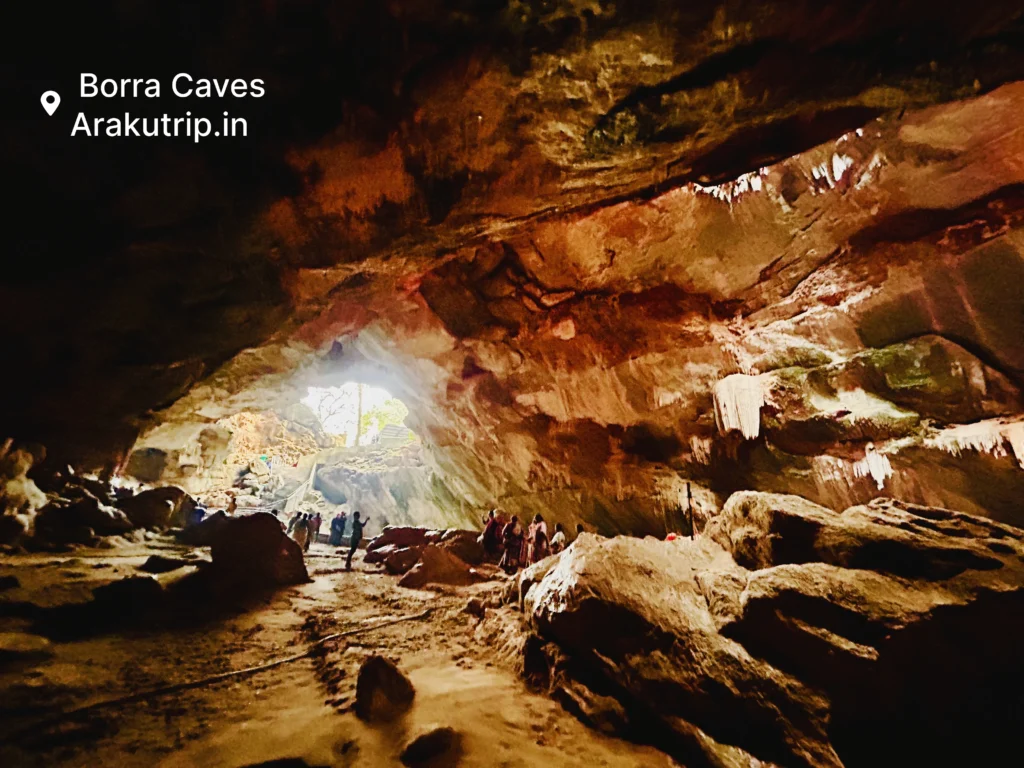
The primary attractions within Borra Caves are the mineral formations created by calcium carbonate deposits. Stalactites hang from the ceiling where mineral-laden water dripped and evaporated over millennia. Stalagmites rise from the floor where those same droplets accumulated. In some sections, the two have merged into columns connecting floor to ceiling.
Local guides assign imaginative names to prominent formations based on their resemblance to familiar objects. You will hear references to formations resembling Shiva lingams, mother and child figures, human brains, crocodiles, and various deities. While these interpretations require imagination, they add engagement to the tour, particularly for younger visitors.
The most significant formation is the natural Shiva lingam near the entrance chamber. This formation draws pilgrims alongside tourists, and small worship ceremonies occasionally occur. The cavern containing this formation is the largest within the system, with ceiling heights reaching impressive dimensions.
The Natural Lighting Experience
Borra Caves benefit from both artificial lighting installed for visitor safety and natural light penetrating through openings in the rock ceiling. The interplay between these light sources creates atmospheric effects, particularly in the main chamber where sunlight streams through gaps and illuminates mineral deposits.
The artificial lighting employs colored bulbs in some sections, creating dramatic visual effects on the formations. Photography works best in areas with natural light or in the larger chambers where artificial lighting provides adequate illumination. Flash photography faces restrictions in certain sensitive areas to protect the formations and avoid disturbing any cave-dwelling fauna.
The internal temperature within Borra Caves remains relatively constant throughout the year, typically ranging between 20-25 degrees Celsius. This makes the caves comfortable even during summer months when external temperatures climb significantly higher. The humidity level stays elevated due to the enclosed environment and ongoing water seepage.
Best Time to Visit and Travel Tips
Timing your Borra Caves visit affects both your comfort and experience quality. The caves remain accessible year-round, but external factors influence the overall trip.
The ideal months span October through February when the surrounding Araku Valley enjoys pleasant weather with minimal rainfall. This period coincides with peak tourist season, meaning larger crowds but comfortable driving conditions on the ghat roads leading to the caves. The monsoon months from June through September bring lush greenery to the surrounding landscape but also increase the risk of travel disruptions due to road conditions.
Reaching Borra Caves from Araku town takes approximately 45 minutes by road. From Visakhapatnam, the journey covers roughly 90 kilometers and takes about three hours due to the winding ghat sections. The Vizag-Araku train stops at Borra Guhalu station, located within walking distance of the caves, offering an alternative to road travel.
Practical tips for your visit include wearing comfortable shoes with good grip since the internal pathways involve steps that can be slippery. Carrying water is advisable, though refreshment stalls operate near the entrance. The descent into the caves and return climb require moderate physical fitness, with approximately 700 steps involved in the complete circuit.
For photography, early afternoon provides the best balance of natural light penetrating the openings while artificial lighting remains effective. Tripods face restrictions but handheld shots work well in the larger chambers. The combination of geological significance, spiritual importance, and visual drama makes Borra Caves an essential inclusion in any Araku Valley itinerary.
What is special about Borra Caves in Andhra Pradesh?
Borra Caves are one of the deepest natural caves in India, famous for their stunning stalactite and stalagmite formations created over millions of years. Located in the Ananthagiri Hills of Araku Valley, these caves are not just geological wonders but also hold spiritual significance, with natural rock formations resembling Shiva Lingam and other divine shapes.
How far are Borra Caves from Vizag and Araku Valley?
orra Caves are located approximately:
90 km from Visakhapatnam (Vizag)
35 km from Araku Valley
The journey itself is a major highlight, especially via train through tunnels and scenic घाट sections, making it one of the most beautiful travel routes in Andhra Pradesh.
What is the best time to visit Borra Caves?
The ideal time to visit Borra Caves is:
October to March – Pleasant weather, best for exploration
Monsoon (June–September) – Lush greenery but slightly slippery inside caves
Avoid peak summer afternoons as it can get humid inside the caves.
Is Borra Caves suitable for families and beginners?
Yes, Borra Caves are family-friendly and beginner-friendly. The cave has:
Proper steps and pathways
Basic lighting arrangements
Easy-to-moderate walking routes
However, elderly visitors should move carefully due to slightly uneven surfaces and moisture.
Can Borra Caves be covered in a one-day Araku trip package?
Yes, Borra Caves are usually included in one-day Vizag to Araku tour packages. Most itineraries cover:
Borra Caves
Katiki Waterfalls (trek)
Coffee plantations
Araku Valley viewpoints
This makes it a high-value travel experience combining adventure, nature, and culture in a single trip.