Ananthagiri Hills: Exploring the Coffee Capital of the South
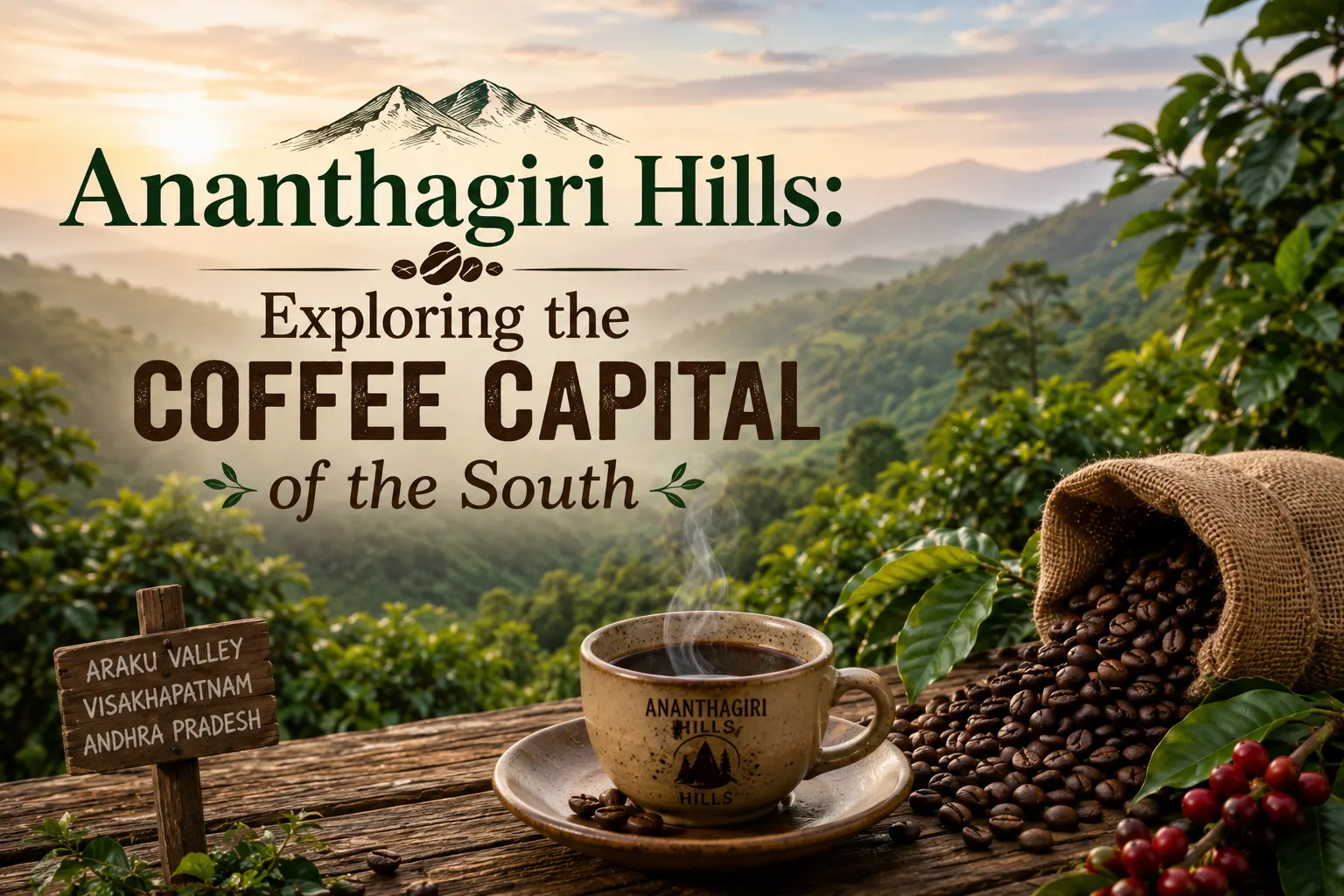
Ananthagiri Hills: Exploring the Coffee Capital of the South
Ananthagiri Hills represents the transitional zone where visitors ascending from the coastal plains first encounter the elevated terrain that defines the Araku experience. This area, positioned along the route between Visakhapatnam and Araku Valley, deserves attention beyond brief glimpses through vehicle windows. The sprawling coffee plantations, hidden waterfalls, and distinctive atmosphere make Ananthagiri worthy of deliberate exploration.
Understanding what distinguishes Ananthagiri from Araku proper helps visitors decide whether to allocate time here or press onward to the main valley. For those who appreciate plantation landscapes, seek quieter alternatives to touristy Araku town, or want to understand coffee cultivation firsthand, Ananthagiri delivers experiences unavailable elsewhere in the region.
Why Ananthagiri is a Must-Stop on Your Way to Araku
The elevation change that occurs in the Ananthagiri area creates dramatically different environments within short driving distances. As roads climb through the ghat sections, vegetation shifts, temperatures drop, and the landscape transforms from plains character to hill station atmosphere.
Coffee cultivation dominates the Ananthagiri landscape in ways that Araku town itself does not display. While Araku has museums about coffee, Ananthagiri places you inside the production environment. The plantations visible from roadsides and accessible through short walks represent working agricultural operations rather than tourism displays.
The misty conditions that make Araku famous often intensify in Ananthagiri, where the climbing terrain creates fog formation points. Morning drives through this section frequently involve moving through cloud layers, with visibility shifting from crystal clear to nearly obscured within short distances.
Accommodation options in Ananthagiri provide alternatives to the more developed Araku hotel scene. Visitors seeking plantation atmosphere over convenience of central location find appropriate properties here. If you want to wake up directly in this foggy belt, you can look into an Ananthagiri hills resort booking or browse your choices in our full Araku Valley accommodation guide. The trade-off involves greater distance from town attractions but true immersion in the coffee-growing environment.
The quieter character of Ananthagiri appeals to visitors who find Araku town’s tourism development off-putting. Fewer vendors, less traffic, and reduced tourist density create an atmosphere that the more popular valley floor cannot match during busy periods.
Walking Through Sprawling Coffee Estates
Coffee plantations in Ananthagiri extend across hillsides visible from the main road and accessible through various routes ranging from formal estate tours to informal roadside walks. Understanding options helps visitors choose appropriate engagement levels.
Roadside pullouts at several points along the route allow brief plantation access without formal arrangement. Parking at these designated areas and walking short distances into the plantation rows provides photographic opportunities and a sensory experience of the coffee-growing environment. If you want to plan your own road trip stops seamlessly, our Vizag to Araku by car guide outlines exactly how to navigate these highway curves safely.
The orderly rows of coffee plants create distinctive visual patterns, particularly when viewed across sloping terrain. The shade trees interspersed among coffee plants filter light and create cool environments even during warmer hours. Walking among plants reveals details invisible from vehicle perspectives.
Formal estate tours, where available, provide guided experiences with explanations of cultivation practices, processing methods, and coffee industry economics. These tours typically require arrangements through accommodations or direct contact with estate management. The educational value exceeds self-guided exploration, though timing and availability may not suit all visitors.
During harvest season (November through January), the visual appeal of plantations increases as ripe red cherries cover plants. It is an amazing window to experience the hills, and checking the best time to visit Araku Valley or the specific Araku Valley weather in December conditions will help you align your trip with the peak picking season. Workers picking selectively through rows add human activity to the landscape. The sounds and movements of harvest season provide an atmosphere unavailable during quieter months.
The sensory experience of walking through coffee estates includes aromatic components. The distinctive smell of coffee plants, particularly during flowering or near processing facilities, creates scent memories that complement visual impressions.
Hidden Gems: Tadimada (Ananthagiri) Waterfalls
Tadimada Waterfalls, also known as Ananthagiri Falls, represents one of the area’s natural attractions that many visitors miss by focusing exclusively on destinations farther along the route.
The waterfall reaches impressive dimensions during and immediately after monsoon season, when water flows achieve maximum volume. To see how it stacks up against other seasonal cascades in the region, take a look at our guide to Araku Valley monsoon waterfalls. During drier months, the cascade may reduce substantially, so timing affects experience quality. Post-monsoon visits (September through November) often balance good water flow with cooperative weather.
Reaching Tadimada requires navigating roads less developed than the main highway. Local directions or GPS guidance help locate the access points, which may not be prominently signed. If you prefer not to test your own vehicle on these rugged tracks, hiring an experienced local driver via our Araku cab booking portal is a safe and reliable option. The final approach may involve unpaved sections that challenge low-clearance vehicles.
The trek from parking areas to the waterfall itself covers a modest distance but involves uneven terrain. Proper footwear supports safe navigation. The forest environment through which the path passes adds value beyond the waterfall destination itself.
At the falls, viewing areas allow appreciation of the cascade without dangerous proximity to water flows. Swimming or wading in pools below requires a careful assessment of conditions since depths and currents vary with water levels.
The relative obscurity of Tadimada means fewer visitors compared to Chaparai waterfalls or Katiki waterfalls. Those seeking nature experiences without tourism crowds find this characteristic appealing.
Capturing the Valley from Ananthagiri Viewpoints
Viewpoints along the Ananthagiri route provide perspectives across the climbing terrain and coffee-covered hillsides. These stopping points offer photography opportunities and moments of appreciation without requiring extended commitments.
The viewpoints appear at intervals along the ghat road, some with established parking areas and safety barriers, others merely wide spots where vehicles can safely stop. Your journey past these overlooks can be smoothly arranged as part of a complete Vizag to Araku tour package. Identifying these points while driving requires attention since approaching at speed may result in missing turnoff opportunities.
Morning mist conditions create the most dramatic photography opportunities at these viewpoints. The fog that fills lower elevations while higher points remain clear generates the “sea of clouds” effect that defines Araku-region imagery. To capture similar early morning cloud views from even higher elevations, many travelers pair this trip with an early trek up the Vanjangi hills or a detour toward Lambasingi. Timing arrival for dawn or shortly after maximizes chances of capturing these spectacular conditions.
The photography subjects from Ananthagiri viewpoints include layered mountain ridges receding into the distance, coffee plantation patterns on hillsides, the winding road visible below or ahead, and atmospheric conditions that change throughout observation periods.
Evening viewing provides a different character as sunset colors warm the landscape and shadows lengthen across terrain features. The golden hour light that photographers prize illuminates differently from morning conditions, justifying visits at both ends of the day for serious photographers.
Facilities at viewpoints range from none to basic. Some locations have small vendor stalls selling tea and local snacks like fresh bamboo chicken in Araku; others offer nothing beyond the view itself. Carrying water and minimal provisions ensures comfort during longer observation stops.
Planning Your Travel Route
Ananthagiri Hills rewards visitors who see it as a destination rather than merely transit. The coffee plantations, waterfalls, and viewpoints provide experiences distinct from what Araku town offers. Allocating time for deliberate exploration here enriches overall trip value beyond what a rushed passage permits.
If you want to view this transitional zone as part of a completely organized trip, you can check out our complete Araku Valley tour travel packages or pick a quick weekend Araku Valley 1-day tour package that wraps up the region’s top highlights seamlessly.
Where are the Ananthagiri Hills located exactly?
Ananthagiri Hills is a scenic elevated hill range located roughly halfway along the ghat road connecting Visakhapatnam to Araku Valley. It serves as the primary altitude transition zone where the hot coastal plains transform into a cool, high-elevation mountain environment.
Can I visit the Ananthagiri coffee estates on a single-day trip?
Yes, easily. Because these sprawling plantations sit directly alongside the main highway to town, they are highly accessible. You can easily include a walk through the estates and viewpoints on a quick Araku Valley 1-day tour package.
How do I book a stay inside the coffee plantations of Ananthagiri?
If you wish to stay in the heart of the coffee belt rather than the busy town center, you can secure your eco-villas and mountain rooms via our Ananthagiri hills resort booking
portal, or compare nearby plantation homestays within our curated Araku Valley accommodation guide.
Is the road through Ananthagiri Hills safe for self-driving?
The ghat road features sharp turns, steep inclines, and frequent heavy morning fog blocks that require cautious, low-speed driving. If you plan to drive up yourself, read our comprehensive Vizag to Araku by car guide
for route safety guidelines, or book an expert local driver through our Araku cab booking system.
What is the best time to visit the Tadimada Waterfall in Ananthagiri?
The best time to see Tadimada Waterfall in full force is immediately post-monsoon, from September through November. During the peak summer months, the water column decreases significantly, making it a much drier trek.

All Categories
- Araku Cab Service
- Araku Coffee
- Araku Tour Packages
- Araku Tourist Places
- Araku Trip Packages
- Araku Valley for families
- Araku Valley shopping
- Araku Valley Timings
- Araku Valley Trip Cost
- Araku Weather
- Around Vizag
- Camping in Araku Valley
- Hidden Spots
- Hotel & Rooms
- Hotels & Resorts
- Stay & Food
- Tatipudi Reservoir
- Tent camping
- Transport & Safety
- Travel Guides
- Vizag Attractions
- Vizag Beachs
- Vizag Cab Services
- Vizag Travel Planning
Recent Posts

Vizag Travel FAQ

Vizag Photography Guide
Vizag Shopping Guide
Tags