Paderu: Exploring the Hidden Mandal Near Araku Valley
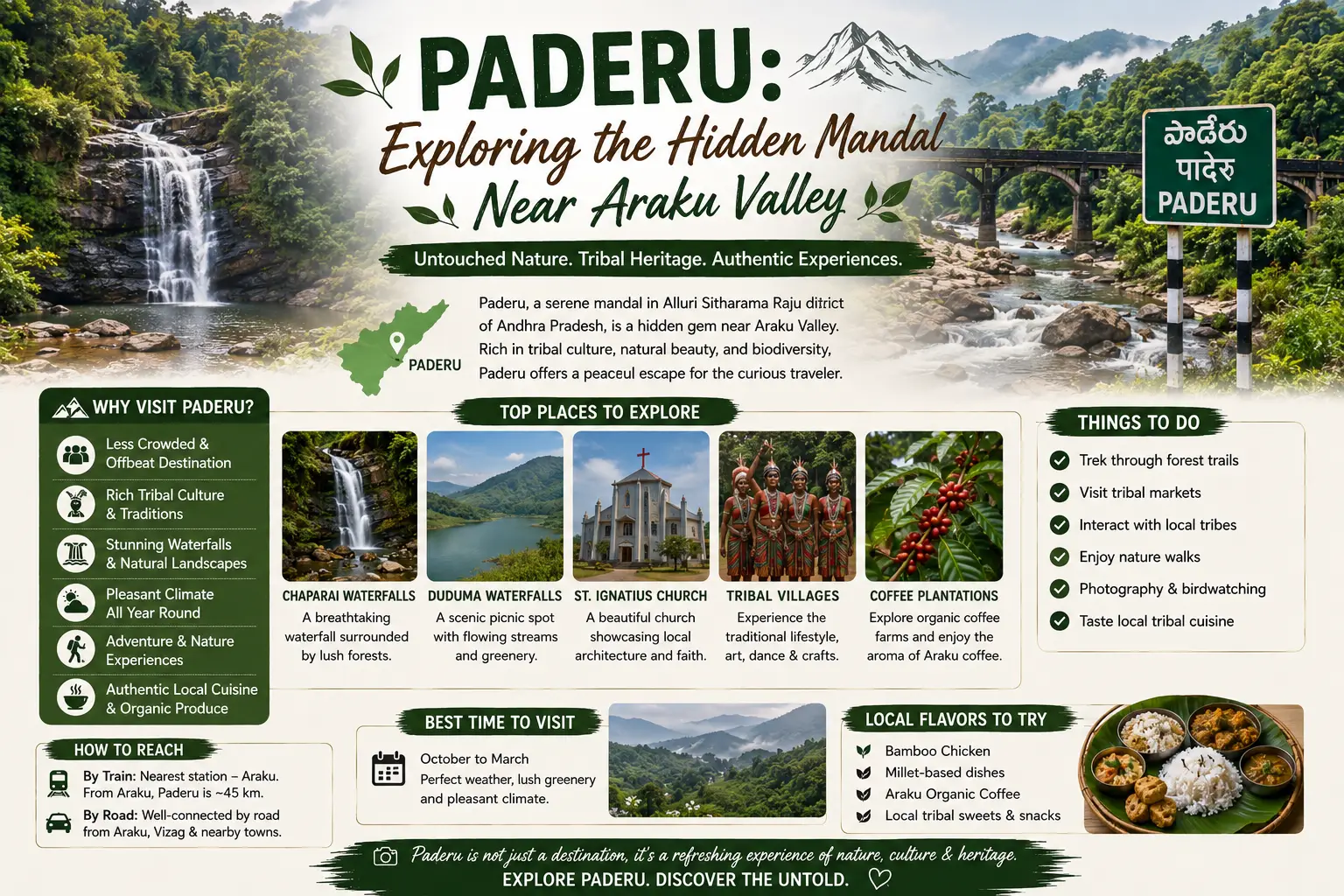
Paderu: Exploring the Hidden Mandal Near Araku Valley
Paderu mandal sits adjacent to Araku Valley, offering experiences that complement the more developed tourism infrastructure around Araku town. This administrative area remains less visited than its famous neighbor, preserving an atmosphere of authenticity that tourism development can erode. For travelers seeking experiences beyond standard itineraries, Paderu rewards the extra effort required to reach its attractions.
The mandal headquarters town of Paderu serves as a base for exploring surrounding areas, including the famous Matsyagundam fish pool, local tribal markets, and scenic mountain roads that wind through coffee plantations and forest reserves.
Why Visit Paderu? A Closer Look at Tribal Life
Paderu provides glimpses into tribal community life that more touristed areas cannot offer. The reduced visitor numbers mean local rhythms continue without performance for outsiders. Observing daily activities, market transactions, and community interactions shows life as it actually unfolds rather than as tourism programming presents it.
The tribal communities in the Paderu area maintain traditions visible in clothing, agricultural practices, and social interactions. While direct participation in community activities requires either luck with timing or deliberate arrangement, simple observation while visiting provides a cultural context unavailable in Araku’s more commercial environment.
The economic activities around Paderu center on agriculture and forest products. Coffee cultivation, as throughout the region, plays important roles, but so do fruit orchards, vegetable farming, and gathered forest items that tribal communities bring to market.
The town of Paderu itself remains small and relatively undeveloped for tourism. Accommodation options exist but remain limited compared to Araku. Visitors seeking comfortable stays should consider day trips from Araku rather than overnight stays in Paderu unless specifically interested in simpler lodging conditions.
Must-Visit: Matsyagundam (The Fish Pool)
Matsyagundam represents Paderu’s most celebrated attraction, drawing visitors specifically interested in this unique natural and spiritual site. The name translates roughly as “fish pool,” describing the natural spring-fed water body that forms the attraction’s core.
The pool contains fish that local tradition holds as sacred, leading to practices that protect them from harm. Visitors observe fish swimming freely without fear of capture. The connection between religious belief and environmental protection creates a functioning conservation example worth noting beyond its spiritual significance.
The Sri Matsyalingeshwara Swamy Temple adjacent to the pool anchors the site’s religious importance. Pilgrims visit the temple while tourists come for the natural attraction, creating a mixed-purpose visitation pattern. Respecting the religious significance through appropriate behavior maintains positive relations with local communities.
The setting around Matsyagundam combines water, vegetation, and temple architecture in visually appealing ways. Photography opportunities exist, though some religious restrictions may apply within temple precincts. The overall atmosphere encourages contemplation and appreciation rather than rushed checkbox tourism.
Reaching Matsyagundam from Paderu town requires local transportation since distances exceed comfortable walking. Auto-rickshaws or hired vehicles provide access. From Araku, the journey to Matsyagundam via Paderu covers approximately 50–60 kilometers depending on exact routing.
Local Markets and Authentic Shopping
The weekly market (santhalu) in Paderu and nearby villages brings tribal communities together for trading. The market provides shopping opportunities distinct from the tourist-oriented vendors around Araku attractions.
Market days create concentrated activity that other days lack. For instance, the massive wholesale tribal market in nearby Hukumpeta (just 9 km from Paderu town) comes alive every Saturday starting in the early hours of the morning. Confirming specific local market timelines before planning a Paderu visit maximizes the experience, as arriving during non-market periods finds a quieter town with limited visible commerce.
Products available at tribal markets include agricultural produce, forest-gathered items, handicrafts, and household necessities. The purchasing experience differs from tourist shopping since vendors may not speak Hindi or English fluently and bargaining follows local conventions rather than tourist area practices.
Forest honey, locally grown spices, bamboo products, and seasonal fruits represent items that visitors might purchase. Authenticity here exceeds what tourist areas can guarantee since these markets serve local needs rather than visitor expectations.
The cultural observation value of market visits may exceed shopping utility for many visitors. Watching community members interact, examining products that serve actual rather than decorative purposes, and absorbing the market atmosphere provides an ethnographic experience that purchasing cannot replace.
Road Trip: Getting from Araku to Paderu
The direct journey from Araku to Paderu covers approximately 36 to 43 kilometers through scenic mountain terrain. The road passes through areas that reward observation even when not stopping.
Road conditions vary with the season and maintenance cycles. The route includes sections that may challenge low-clearance vehicles or inexperienced drivers. Checking current conditions before departure, particularly after heavy rains, prevents unpleasant surprises.
Public bus services (APSRTC) connect Araku and Paderu daily, providing budget transportation options for travelers without private vehicles. The state bus journey is highly economical and takes approximately 1 hour and 15 minutes to 1 hour and 30 minutes.
Private vehicle travel, whether a personal car or hired cab, provides flexibility for intermediate stops and timing control. The route passes through viewpoints and plantation areas that reward brief pauses for photography or observation.
A round-trip cab hire from Araku to Paderu with a Matsyagundam visit typically costs ₹1,500–2,500 depending on vehicle type, waiting time requirements, and negotiation skill. Including this excursion in multi-day cab packages may provide better value than standalone booking.
The Paderu excursion suits travelers with at least two days in the Araku region since time constraints make single-day trips from Vizag impractical when including Paderu alongside standard Araku attractions. Those with three or more days can comfortably incorporate Paderu exploration.
The experience Paderu offers differs qualitatively from mainstream Araku tourism. Reduced infrastructure, fewer visitors, and maintained authenticity create an atmosphere that developed destinations cannot preserve. Visitors who appreciate discovery over convenience find Paderu rewarding despite, or perhaps because of, its limited tourism development.
How far is Paderu from Araku Valley and how long does it take?
The road distance between Araku and Paderu is approximately 36 to 43 kilometers. Traveling by a private car or local APSRTC bus generally takes between 1 hour and 15 minutes to 1 hour and 30 minutes, depending on road conditions and mountain traffic.
What is special about the Matsyagundam pool near Paderu?
Matsyagundam is a natural, spring-fed water body filled with fish that are considered strictly sacred by local tribal communities. Because of deeply rooted religious beliefs and the presence of the adjacent Sri Matsyalingeshwara Swamy Temple, the fish are fully protected from netting or fishing, creating a unique example of faith-driven wildlife conservation.
When is the best day to experience the traditional tribal markets around Paderu?
To see the region at its most culturally vibrant, plan your visit around local market days. For instance, the famous wholesale tribal market (santhalu) in nearby Hukumpeta takes place every Saturday, drawing indigenous farmers from surrounding hill tracts to trade fresh organic ginger, turmeric, wild honey, and handmade bamboo crafts.
Can we find luxury hotels and resorts to stay overnight in Paderu?
No. Tourism infrastructure in Paderu remains very basic compared to the commercial resort setups available in Araku town. Lodging options are limited to simple, no-frills local guesthouses. For maximum comfort, it is highly recommended to book your stay through our Araku valley hotels
hub and visit Paderu as a day-trip excursion.
Is a day trip to Paderu recommended as part of a 1-day Vizag tour?
No, a single-day trip from Visakhapatnam cannot efficiently accommodate a Paderu detour. Combining the long highway drive with extensive cave trekking or waterfall visits leaves no room for the mountain roads to Paderu. This off-beat excursion is best suited for travelers booking a multi-day itinerary through our Araku valley tour travel packages
.

All Categories
- Araku Cab Service
- Araku Coffee
- Araku Tour Packages
- Araku Tourist Places
- Araku Trip Packages
- Araku Valley for families
- Araku Valley shopping
- Araku Valley Timings
- Araku Valley Trip Cost
- Araku Weather
- Around Vizag
- Camping in Araku Valley
- Hidden Spots
- Hotel & Rooms
- Hotels & Resorts
- Stay & Food
- Tatipudi Reservoir
- Tent camping
- Transport & Safety
- Travel Guides
- Vizag Attractions
- Vizag Beachs
- Vizag Cab Services
- Vizag Travel Planning
Recent Posts
Vizag Travel FAQ

Vizag Photography Guide

Vizag Shopping Guide
Tags