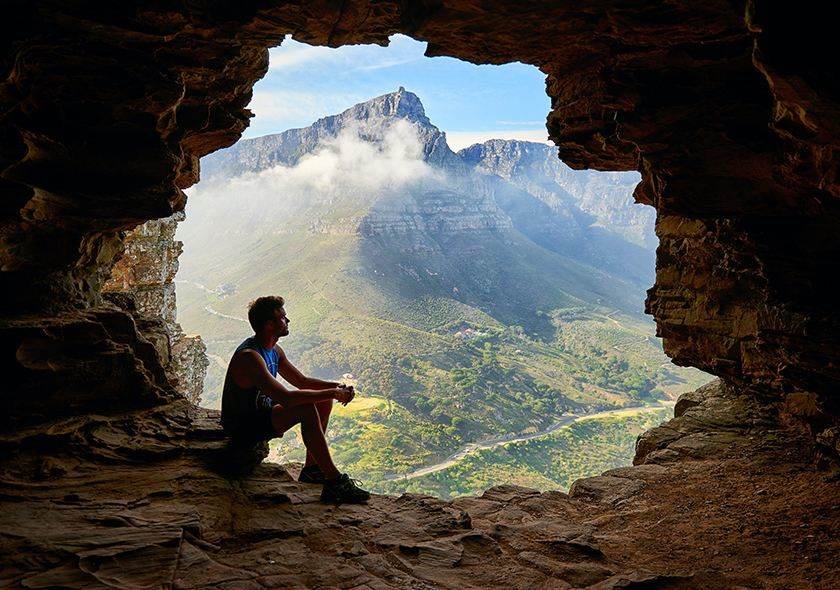
Matsyagundam: The Mythical Fish Pool Near Araku
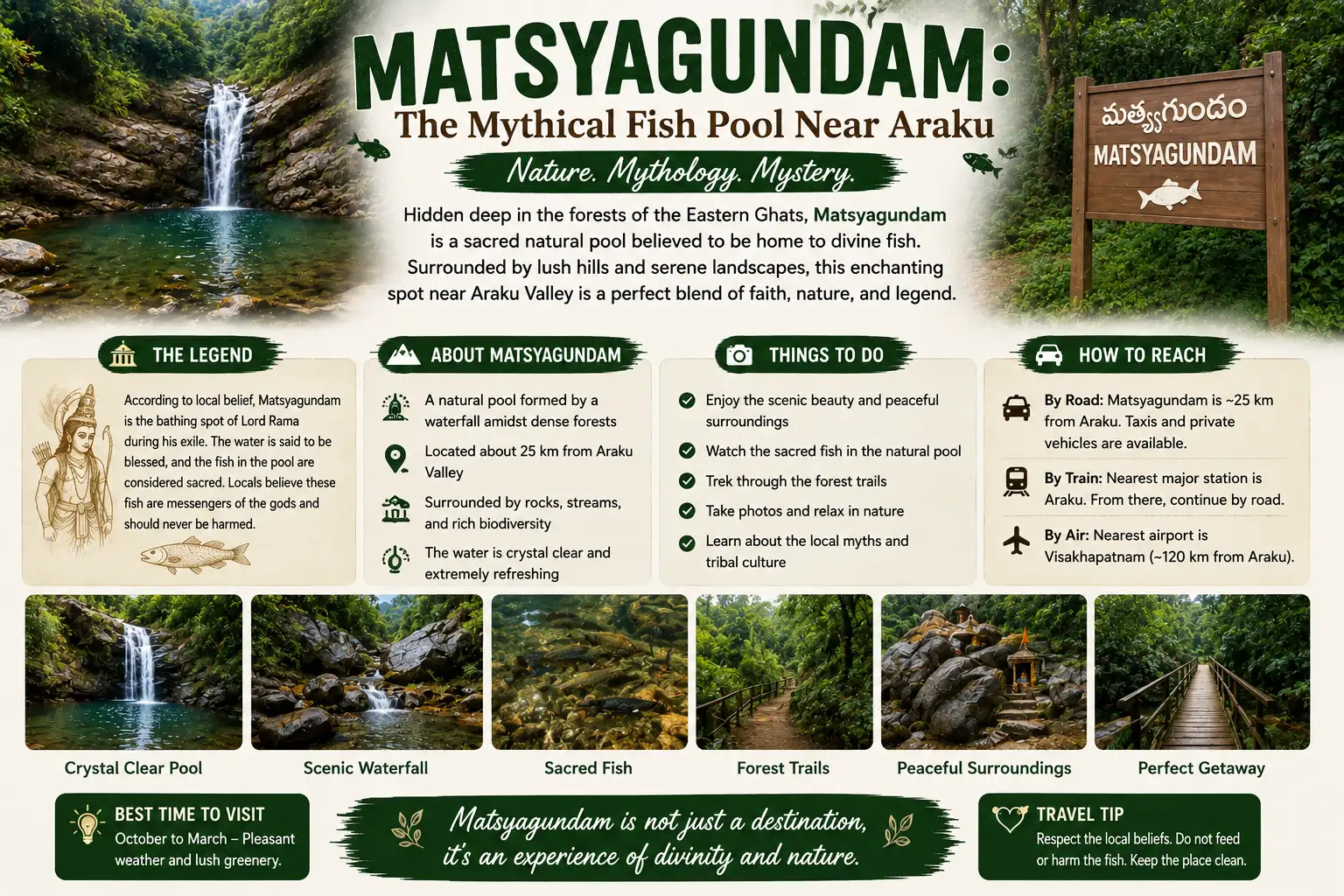
Matsyagundam: The Mythical Fish Pool Near Araku
Among the less-visited attractions in the Araku region, Matsyagundam holds a particular fascination for its combination of natural beauty, spiritual significance, and mythological narrative. This sacred fish pool near Paderu attracts pilgrims and curious travelers alike, offering experiences distinct from the standard sightseeing circuit.
Understanding Matsyagundam’s legends, the temple that anchors the site, and practical access information helps visitors appreciate what makes this destination special within the broader Araku exploration.
The Legend of the Enchanted Fish
Local mythology invests Matsyagundam with spiritual significance through stories passed across generations. The legends explain why the fish inhabiting this pool receive protection and reverence.
According to tradition, the fish in Matsyagundam originated through divine intervention connected to Lord Shiva. The specific narrative details vary between tellings, as oral traditions naturally evolve, but common elements include the pool’s sacred origin and the fish’s protected status as a result.
The consequence of these beliefs manifests in conservation behavior that predates modern environmental awareness. The fish swim freely, uninhibited by fishing pressure that would reduce their populations in secular waters. This practical effect of religious protection creates a visible abundance that visitors observe.
The protected fish have grown accustomed to human presence without associating it with a threat. The resulting behavior—fish approaching rather than fleeing visitors—creates interaction opportunities unusual at natural water bodies where fishing occurs.
The interweaving of mythology and observable reality at Matsyagundam illustrates how religious traditions can serve conservation functions. Whether visitors find spiritual meaning in the legends or not, the protection outcome remains visible and remarkable.
Local communities maintain the traditions that protect Matsyagundam’s fish. Visitors should respect these beliefs through appropriate behavior regardless of personal religious perspectives. The cultural significance to local populations deserves acknowledgment even from secular visitors.
Visiting the Sri Matsyalingeshwara Swamy Temple
The temple adjacent to the fish pool anchors Matsyagundam’s religious significance and provides the architectural focus for the site. Understanding what the temple offers helps visitors plan their visit appropriately.
Sri Matsyalingeshwara Swamy Temple honors Lord Shiva in a form specific to this location. The temple name combines Matsya (fish), Linga (the Shiva representation), and Swamy (lord), connecting the deity directly to the fish that populate the adjacent pool.
The temple architecture follows regional Hindu temple conventions, with a sanctum, mandapa, and associated structures. The scale remains modest compared to major pilgrimage temples but maintains the sacred atmosphere appropriate to the site’s significance.
Religious ceremonies occur at the temple following Hindu worship patterns. Pilgrims arriving for darshan (divine viewing) follow established protocols. Tourists visiting primarily for the natural attraction should observe temple etiquette even if not participating in worship.
Appropriate behavior at the temple includes removing footwear before entering sacred areas, dressing modestly, maintaining a quiet demeanor, and respecting any photography restrictions that may apply. These courtesies demonstrate respect for both the religious site and the local communities who maintain it.
The temple-pool relationship creates a unified site where religious and natural attractions interweave. Visitors can appreciate either or both aspects, but understanding that both exist enriches the experience beyond simple sightseeing.
Practical Guide: Distance from Araku and How to Reach
Reaching Matsyagundam requires planning since the location lies outside the immediate Araku tourism zone. Understanding distances, routes, and transportation options helps visitors incorporate this attraction into their itineraries.
Matsyagundam sits near Paderu, approximately 50 to 60 kilometers from Araku town. The journey requires passing through or around Paderu to reach the specific attraction location. Total travel time from Araku runs approximately two to two and a half hours depending on road conditions and stops. Navigating these steep ghat curves safely is key, so reading through our Vizag to Araku by car guide before hitting the highway is highly recommended.
The route from Araku to Matsyagundam passes through scenic mountain terrain that rewards observation. Coffee plantations, forest reserves, and tribal villages appear along the way. The journey itself provides an experience beyond merely reaching the destination.
Public transportation options remain limited and inconvenient for visitors unfamiliar with local bus systems. Private vehicle travel, either personal or hired, represents the practical option for most visitors. Arranging a vehicle via our automated Araku cab booking system represents the most common approach, and you can easily map out expenses using our detailed Vizag to Araku cab fare log.
Cab costs for the Araku-Matsyagundam round trip typically range from ₹2,000 to ₹3,000 depending on vehicle type and negotiation. Including Matsyagundam in broader Paderu area exploration may provide better value than standalone trips.
Road conditions vary by season. During dry periods, standard vehicles manage most routes. Monsoon conditions may deteriorate some sections, requiring assessment before departure. Local inquiries about current road status prevent unpleasant surprises.
Best Time for a Day Trip to Matsyagundam
Timing a Matsyagundam visit involves considerations of weather, the religious calendar, and overall trip scheduling.
The winter months from October through February provide comfortable travel weather and pleasant temperatures at the site. To witness these highlands at their visual peak when mist layers blanket the roads, make sure to plan your arrival around the best time to visit Araku Valley or review the chilly Araku Valley weather in December conditions. This period aligns with peak Araku tourism season, making combination visits practical.
Religious festivals at Sri Matsyalingeshwara Swamy Temple may create special visiting opportunities or unusual crowding depending on your preferences. Maha Shivaratri and other Shiva-related observances see increased pilgrimage activity. Inquiring locally about upcoming festivals helps plan accordingly.
Morning departures from Araku allow completion of Matsyagundam visits by early afternoon, leaving the late day for return travel or other exploration. If you decide to base your vacation in the central town plateau to serve as your morning launchpad, you can scan lodging options via our Araku valley hotels index or handle an instant online Araku valley rooms booking.
Conversely, for secluded high-altitude getaways close to the plantation routes, explore a tranquil Ananthagiri hills resort booking setup, or compare romantic options via our guide on Araku valley resorts for couples. If you are keeping track of strict holiday expenses, check out our curated low price hotels in Araku valley directory.
Combining Matsyagundam with other Paderu area attractions like local weekly markets or nearby viewpoints maximizes the value of the driving investment. Since you’re already covering a significant distance, adding efficient stops along the way improves the overall experience without a proportional time cost.
Single-day trips from Vizag to Matsyagundam, bypassing Araku entirely, are possible but logistically challenging. The distances involved create very long travel days with limited time at the destination. Basing in Araku for multi-day exploration and incorporating Matsyagundam as a day trip makes more sense for most visitors. For an entirely hands-off vacation where your stays, mountain transport, cave passes, and off-beat excursions are bundled seamlessly, select a flagship Vizag to Araku tour package, a comprehensive Araku valley tour package 2 days, or look into the complete line of choices on our main Araku valley tour travel packages portal.
Where is Matsyagundam located and how far is it from Araku?
Matsyagundam is a natural, spring-fed fish pool located in the Paderu region of Alluri Sitharama Raju district. It lies roughly 50 to 60 kilometers away from the main Araku Valley town center.
Why are the fish in Matsyagundam considered sacred?
According to ancient local tribal lore, the massive pools of fish were created through divine intervention tied directly to Lord Shiva. Because of this spiritual connection, the fish are fiercely protected by surrounding communities, and all forms of netting or fishing are strictly prohibited.
Can you visit Matsyagundam on a 1-day trip from Visakhapatnam?
While it is technically possible by car, it makes for an incredibly long and exhausting driving schedule. It is highly recommended to use Araku as your overnight base and plan a dedicated day trip to the pool instead.
Is there an entry fee to visit the Sri Matsyalingeshwara Swamy Temple?
No, entry to the temple and the adjacent fish pool is entirely free for both pilgrims and tourists. However, visitors must strictly follow religious decorum, including removing footwear outside the complex and avoiding direct flash photography near the deities.
What is the best way to travel to Matsyagundam from Araku?
Because local public transport to this specific pocket is highly irregular, booking a private vehicle or an outstation car via our Araku cab booking channel is the most reliable option for handling the rugged mountain roads comfortably.

All Categories
- Araku Cab Service
- Araku Coffee
- Araku Tour Packages
- Araku Tourist Places
- Araku Trip Packages
- Araku Valley for families
- Araku Valley shopping
- Araku Valley Timings
- Araku Valley Trip Cost
- Araku Weather
- Around Vizag
- Camping in Araku Valley
- Hidden Spots
- Hotel & Rooms
- Hotels & Resorts
- Stay & Food
- Tatipudi Reservoir
- Tent camping
- Transport & Safety
- Travel Guides
- Vizag Attractions
- Vizag Beachs
- Vizag Cab Services
- Vizag Travel Planning
Recent Posts
Vizag Travel FAQ

Vizag Photography Guide

Vizag Shopping Guide
Tags