Introduction: The Gem of Andhra
Araku Valley lies 115 kilometres northwest of Visakhapatnam, tucked into the Eastern Ghats at an elevation where the coastal humidity finally breaks. The air here carries a different quality—cooler, thinner, scented with coffee blossoms during flowering season and woodsmoke from tribal kitchens year-round.
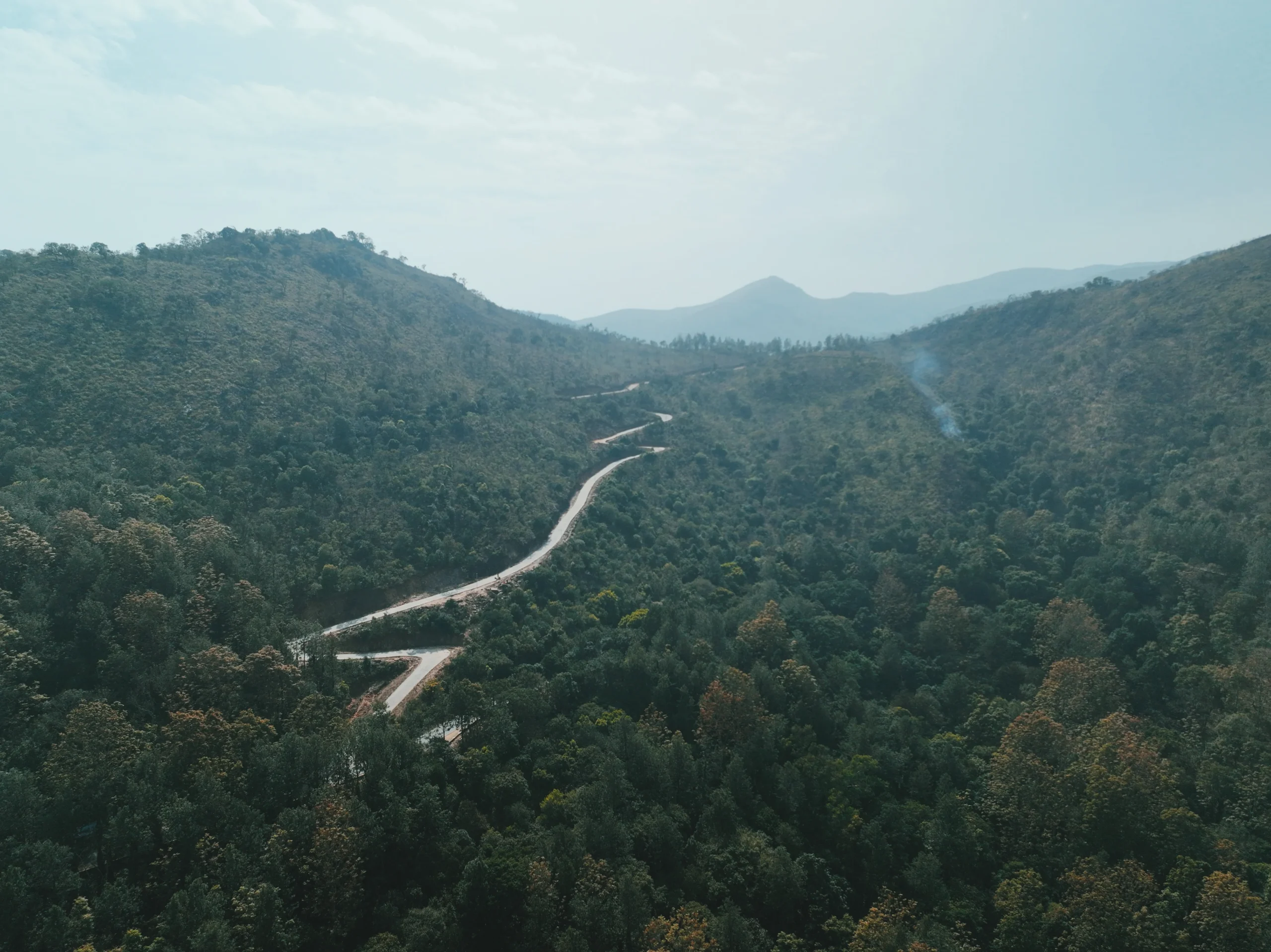
Where is Araku Valley located, exactly? The valley sits within the newly formed Alluri Sitharama Raju District, a region that stretches across forested hills inhabited by tribal communities whose presence predates most of India’s recorded history. The landscape is defined by coffee plantations that climb hillsides in neat rows, waterfalls that appear and disappear with the seasons, and roads that wind through terrain most flatlanders find genuinely surprising.
What is special about Araku Valley? The answer depends on who you ask. For coffee connoisseurs, it’s one of India’s few regions producing organic Arabica at scale—beans that have earned international recognition. For anthropologists and curious travellers, it’s home to nineteen distinct tribal communities, each maintaining cultural practices that have survived centuries of change. For families escaping Vizag’s summer heat, it’s simply the nearest place where temperatures drop fifteen degrees and children can run through gardens without wilting.
Araku Valley Andhra Pradesh has earned its reputation as the “Ooty of Andhra” not through marketing but through geography—the same elevation that makes South India’s famous hill stations pleasant works its effect here. The difference is scale: Araku remains smaller, less developed, and more accessible for weekend trips from the coast. A Friday evening departure from Vizag puts you in the valley by nightfall. By Sunday, you’ve experienced enough to understand why people return.
Essential Travel Info: Distance & Transport
Planning a trip to Araku begins with understanding the distances involved and the transport options available. The numbers matter because they determine whether you’re looking at a day trip or an overnight stay.
Araku Valley Distance Guide
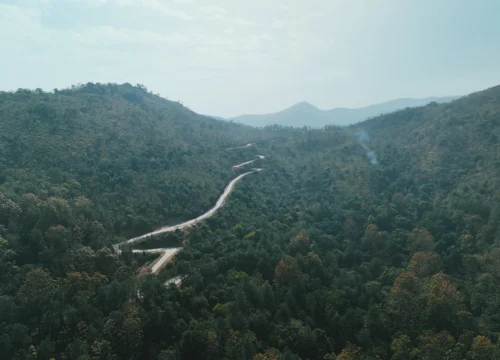
The Vizag Araku trip covers approximately 115 kilometres via the ghat road (NH516E). Under normal conditions, this journey takes 3.5 to 4 hours by car—longer than the distance suggests because the road involves continuous curves, elevation changes, and the kind of scenery that makes drivers want to stop for photographs.
From Hyderabad, the Araku distance stretches to roughly 630 kilometres—a 10 to 12 hour drive that most travellers break into two days, often stopping overnight in Vijayawada or Rajahmundry. From Vijayawada itself, Araku sits about 350 kilometres away, making it a feasible but long day drive.
For those flying in, Visakhapatnam Airport serves as the gateway. From the airport to Araku, expect about 130 kilometres and 4 hours of travel time.
Araku to Araku Valley Distance: A Common Confusion
Travellers frequently search for the “Araku to Araku Valley distance,” which reflects a common misunderstanding. Araku is the main town located within Araku Valley—they are the same destination. The town sits at the heart of the valley, surrounded by the hills, coffee estates, and attractions that define the region. When locals say “Araku,” they mean both the town and the broader valley. The distance between them is zero because one contains the other.
How to Reach Araku Valley
By Train (The Scenic Route): The Kirandul Passenger train offers what many consider India’s most beautiful rail journey south of the Himalayas. Departing Visakhapatnam around 6:00 AM, the train reaches Araku by approximately 11:00 AM, passing through 58 tunnels and crossing bridges that span deep valleys. The Vistadome coaches—glass-roofed carriages added in recent years—have transformed this utilitarian rail line into a tourist attraction. Tickets sell out weeks in advance during peak season.
By Road (The Flexible Option): Driving or hiring a cab allows stops at Borra Caves, Ananthagiri, and viewpoints along the ghat road. The journey takes longer but covers more ground. For families and groups, a private vehicle often makes more sense than the train because it permits flexible timing and eliminates the need for local transport upon arrival.
Both options have merit. The train offers an experience unavailable anywhere else in the region. The road offers freedom and comprehensive sightseeing. Many travellers choose one direction by train and return by road, capturing both experiences in a single trip.
Top Tourist Places to Visit in & Around Araku Valley (The Ultimate List)
The places to visit in Araku span geological formations millions of years old, tribal heritage sites, botanical gardens, and waterfalls that range from gentle cascades to serious drops. The sheer variety means most visitors can’t cover everything in a single trip—which is precisely why people return.
This list organizes the major Araku tourist places by proximity, separating attractions within the valley from those requiring longer excursions.
A. Must-Visit Spots in Araku (Within 30 km)
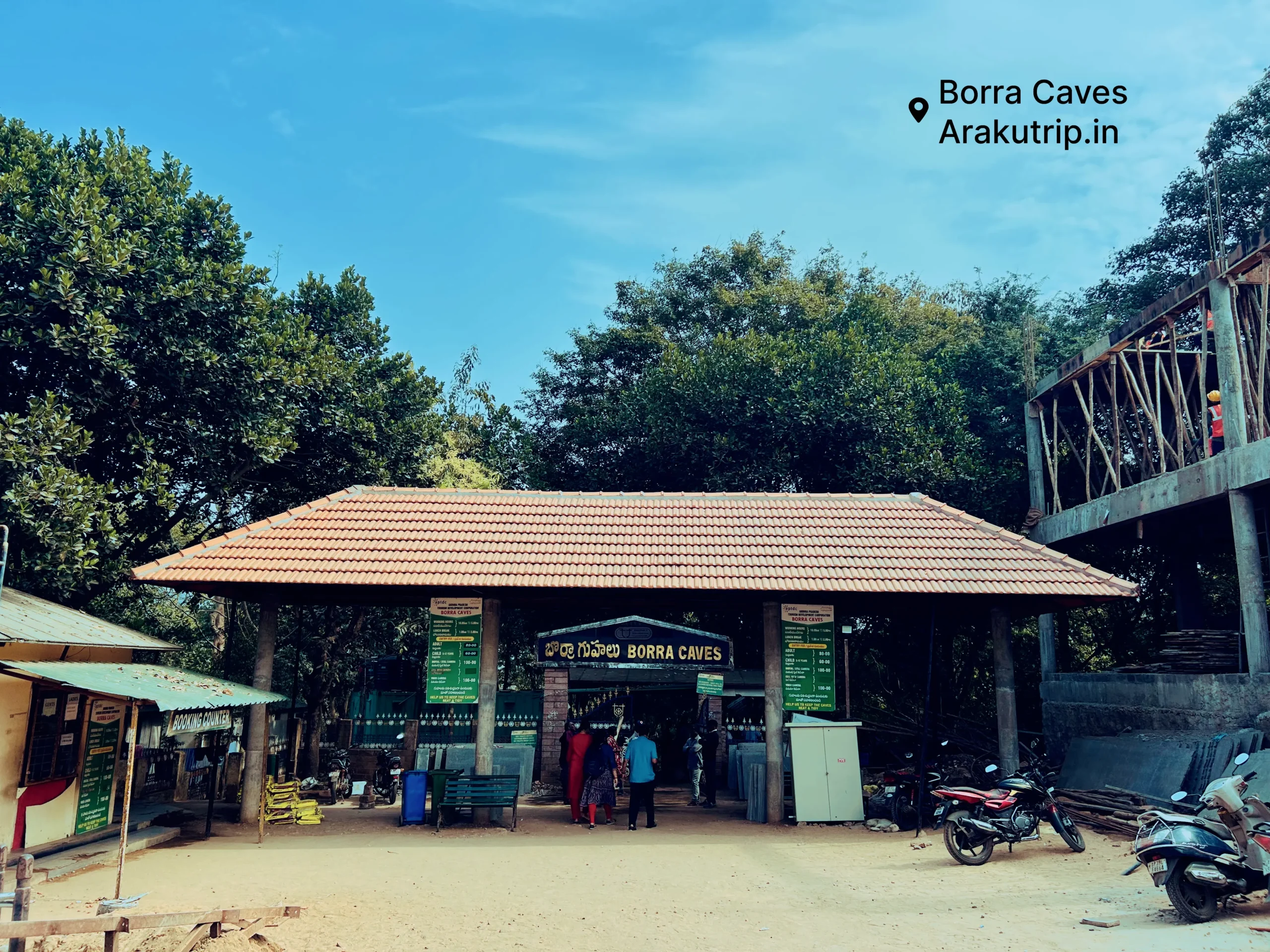
Borra Caves
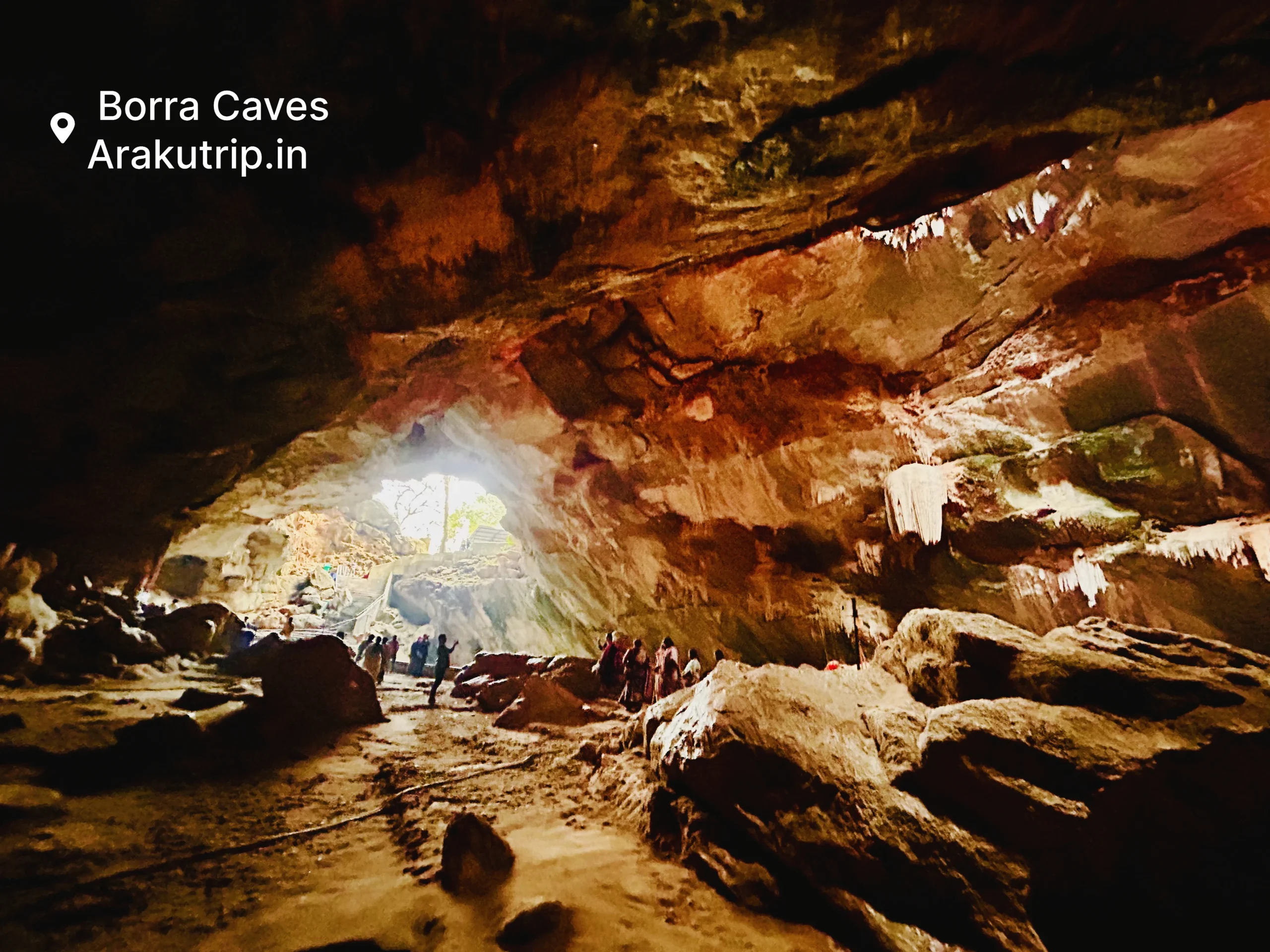
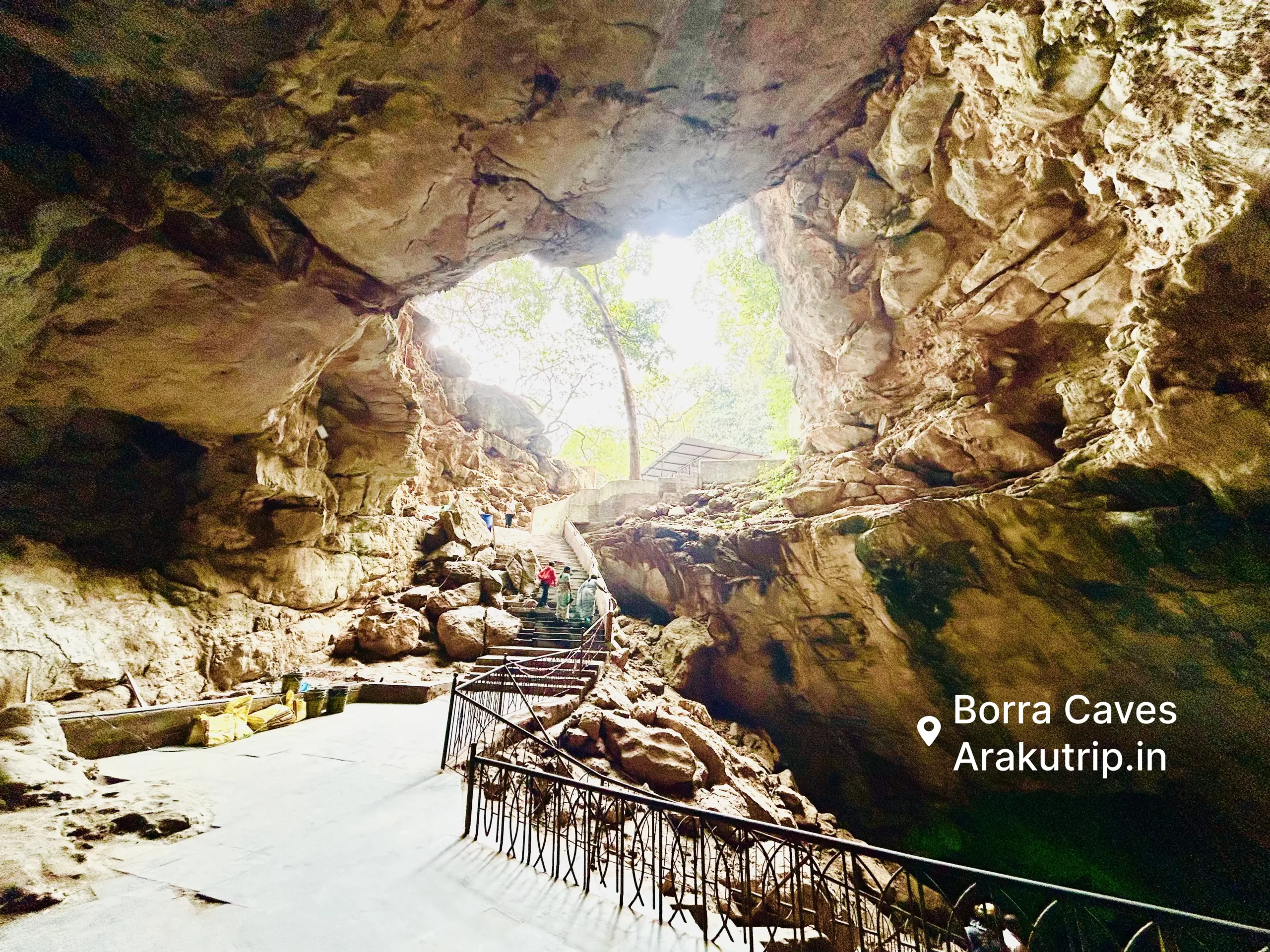
The most famous Araku sightseeing destination, Borra Caves is a limestone cave system discovered in 1807 by British geologist William King. The caves extend roughly 200 meters into the hillside, containing stalactites and stalagmites shaped over a million years of mineral deposits and water action. Local tribal legend holds that a cow fell through a hole in the cave ceiling, leading to its discovery—a story that gives the caves their name (borra means “hole” in Telugu).
Growing up, we visited Borra Caves on every school picnic—St. Joseph’s High School brought us here so many times that we knew which formations looked like Shiva, which ones looked like a mother and child, before the guides even pointed them out. We would race through the caves while teachers shouted at us to slow down, our voices echoing off walls that had been forming since before humans existed. As children, we didn’t appreciate the geology. We just knew it was the coolest place in our world—literally cool, even when summer burned everything outside.
The caves remain cool even in summer, and the formations inside justify the 1-2 hours most people spend exploring. A temple at the entrance and a small market selling local goods mark the site as both pilgrimage destination and tourist attraction.
Katiki Waterfalls
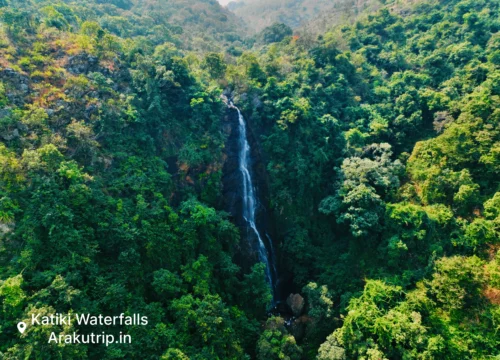
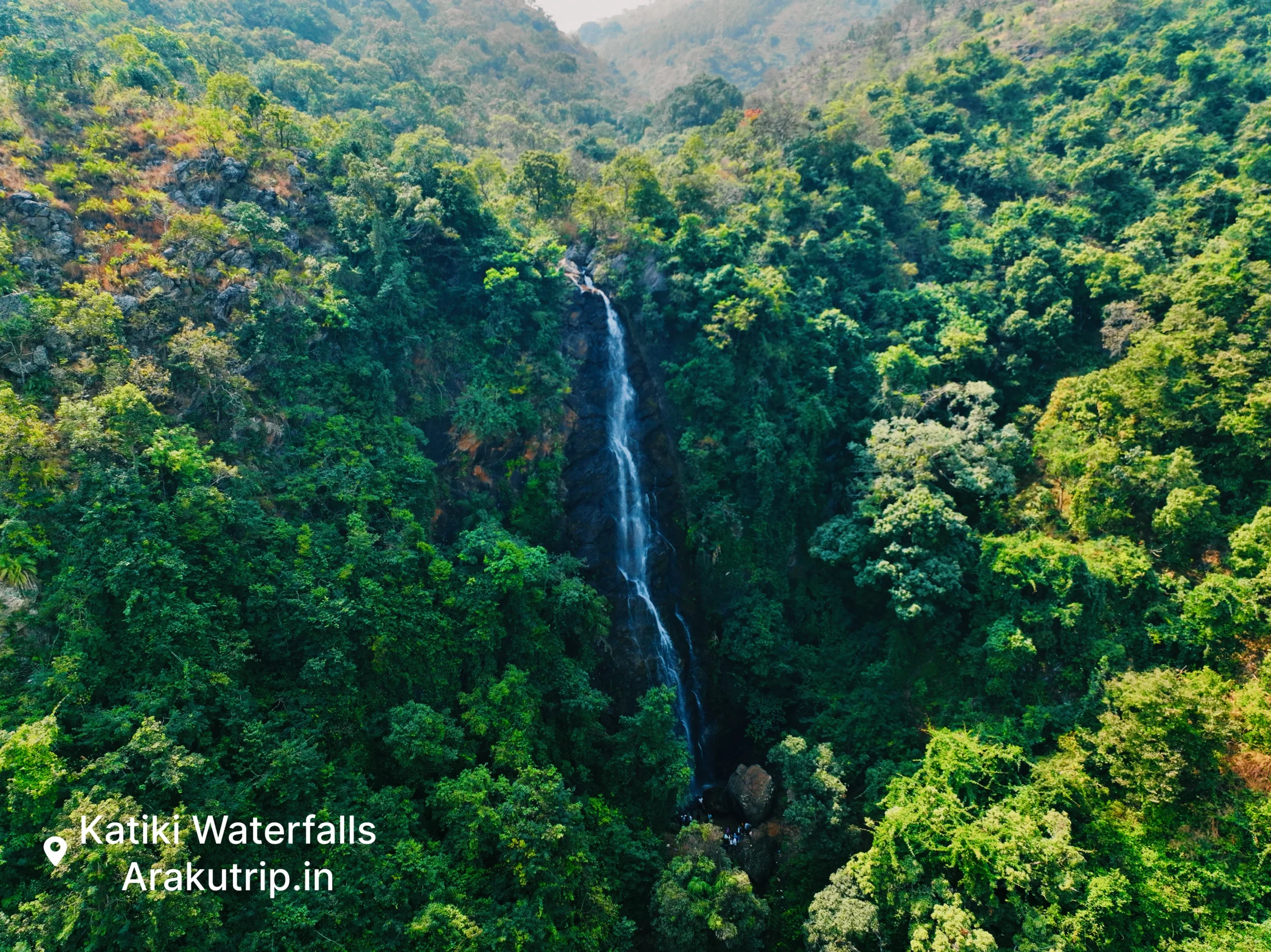
Adventure seekers rank Katiki among the region’s best experiences, not because of the waterfall’s height but because of the journey required to reach it. The Katiki waterfalls road is rough—unpaved, rocky, and impassable for regular vehicles. Visitors hire local jeeps at the starting point, bouncing through forest tracks for about 6 kilometres before reaching the falls.
We first came here as teenagers, long before jeeps became the standard transport. We walked the entire route, slipping on rocks, getting scratched by branches, arriving at the falls exhausted and immediately jumping into the pool fully clothed. The water was so cold it hurt. We didn’t care. We stayed until our lips turned blue, then walked back in wet clothes, laughing the whole way. The bamboo chicken vendors weren’t there yet in those days—that came later, when tourists discovered what we’d always known.
The waterfall drops into a pool suitable for swimming, and the surrounding forest feels genuinely remote. Local vendors at the trailhead sell Bamboo Chicken—marinated meat slow-cooked inside bamboo tubes over fire—a dish that has become synonymous with this route. Many travellers consider the bamboo chicken as essential as the waterfall itself.
Ananthagiri Hills & Waterfalls
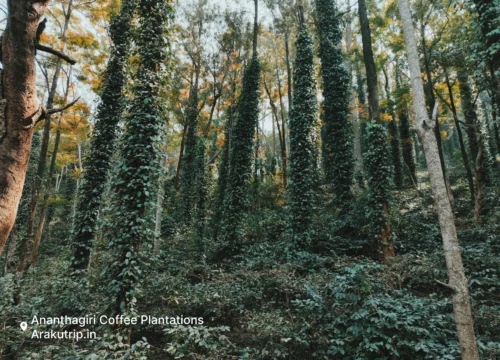
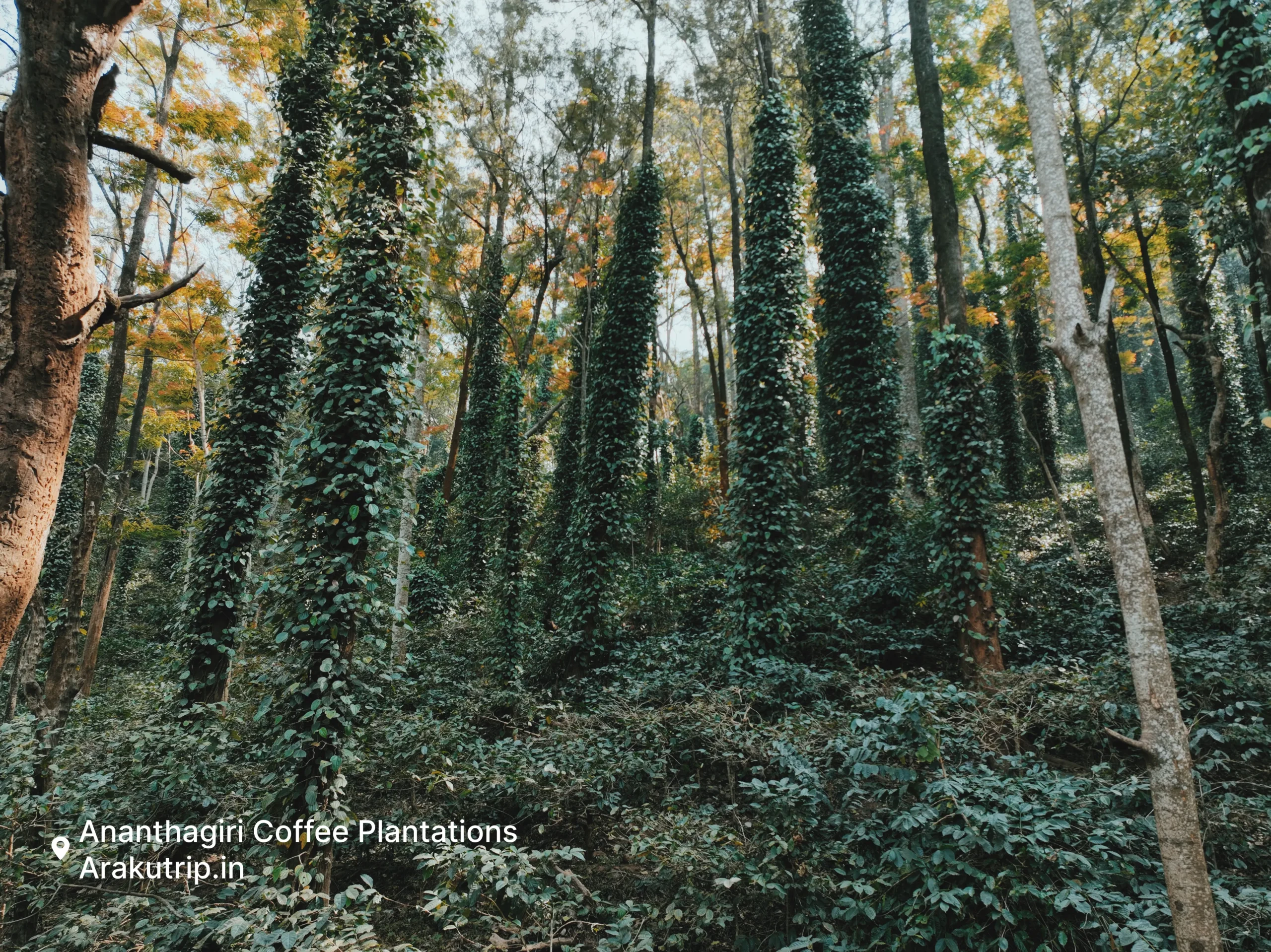
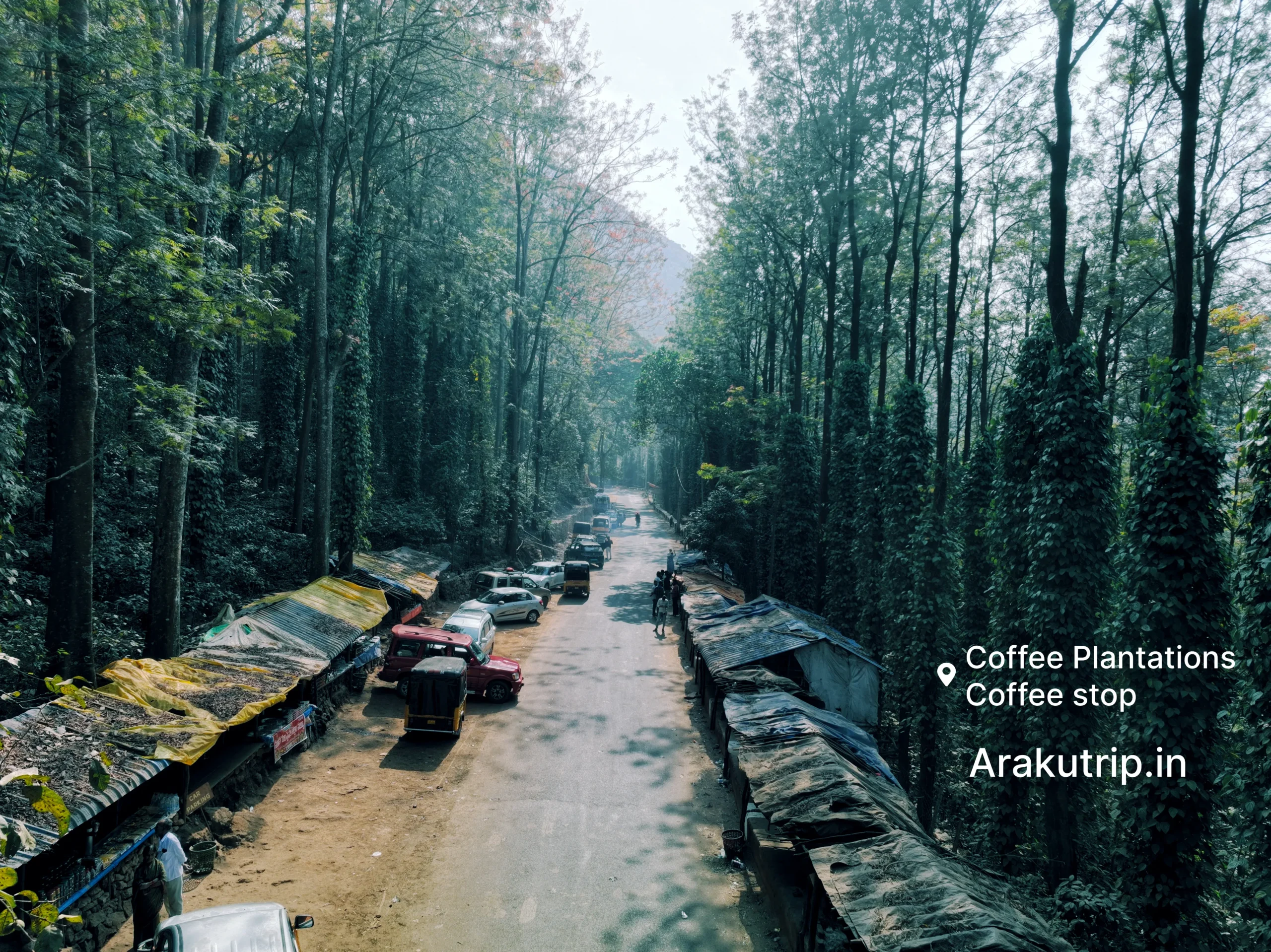
Located on the Vizag-Araku road rather than in Araku itself, Ananthagiri serves as both a waypoint and a destination. The area contains extensive coffee plantations, a small waterfall, and the Ananthagiri resort options that allow visitors to break the journey with an overnight stay.
The coffee estates here are where we learned what our valley actually produced. As children cycling to school, we passed these plantations every day without understanding what grew there. It was only when a classmate’s father—who worked at one of the estates—invited us for a walk through the rows that we understood. He showed us the coffee cherries, explained how they became the powder our mothers used every morning. We ate the sweet fruit around the beans, spitting seeds at each other until he chased us out. That was our introduction to Araku’s most famous export—not in a museum, but in the dirt between coffee plants.
For travellers driving from Vizag, Ananthagiri offers the first real taste of hill station atmosphere—the temperature drops noticeably, the air smells of coffee, and the pace slows.
Tribal Museum
The Araku Valley museum dedicated to tribal heritage stands as one of the region’s most important cultural institutions. The museum documents the nineteen tribal communities of the area—Bagata, Gadaba, Kondadora, Porja, Khond, and others—through artifacts, photographs, dioramas, and audio-visual presentations.
We grew up alongside children from these tribes—they sat next to us in class, shared our lunches, played cricket with us after school. The museum shows their history, but we knew their present. We attended their festivals, ate at their homes, learned words in their languages that we still remember. When tourists visit this museum and see displays about “tribal life,” we think of our friends’ grandmothers who still dress the way the mannequins do, still cook on the same kinds of hearths, still tell the same stories. The museum is accurate. Our memories are personal.
For visitors genuinely interested in understanding the valley beyond its scenery, this museum provides essential context. The displays cover everything from agricultural practices and housing construction to marriage rituals and belief systems. An hour here changes how you perceive the villages and faces you encounter throughout the rest of your trip.
Coffee Museum
A unique place to see in Araku, the Coffee Museum traces the history of coffee cultivation in the region, from its introduction by the British to its current status as an internationally recognized organic product. The museum includes tasting sessions where visitors sample varieties grown in surrounding plantations, along with chocolate made from locally processed cocoa.
Funny thing—we never drank coffee as children. Our parents drank it, the whole valley smelled of it, but we preferred the chocolate they started making here. When the museum opened with its tasting counter, we would convince visiting relatives to take us, then head straight for the chocolate samples. The staff knew us, knew we weren’t buying anything, but they let us taste anyway. Now we drink coffee every morning, understand what makes Araku beans different, and appreciate what we took for granted as kids running through plantations we thought were just forests with neat rows.
The retail section sells coffee powder, beans, and chocolate at prices lower than city markets—partly because you’re buying at the source, partly because the cooperative model keeps margins reasonable. For many visitors, this becomes the primary shopping stop of the trip.
Padmapuram Gardens
A botanical garden with roots dating back decades, Padmapuram has evolved into one of the most popular places to visit in Araku for families. The garden features the famous “Hanging Cottages”—tree-house style structures built among mature trees—and a small toy train that children inevitably demand to ride.
Padmapuram was barely a ten-minute walk from St. Joseph’s High School. We knew every corner of this garden—which trees had the best flowers, which paths the gardeners rarely checked, which corners were hidden from view. Boys would pluck flowers here to give to girls they liked. We did it too, all ten of us at some point, sneaking in after school hours, hearts racing, picking roses or marigolds or whatever was blooming, then cycling fast to catch the girl before she reached home. Some of those girls became wives. The flowers are still there, still blooming, and we still smile when we pass those trees.
The garden’s layout encourages wandering, with flowering plants, topiary, and shaded paths that offer relief from afternoon sun. Unlike some attractions that take an hour, Padmapuram rewards longer visits, particularly for families who want somewhere children can explore safely while adults relax.
Chaparai Water Cascade
A flat rock formation over which water spreads in thin sheets rather than dropping dramatically, Chaparai offers a different kind of waterfall experience. The cascade has featured in Telugu films, giving it recognition beyond the usual tourist circuits.
Before the films came, before the tourists discovered it, Chaparai was where we went when we wanted to feel like we were somewhere special. The flat rocks were perfect for sitting, for talking, for doing nothing while water flowed past our feet. We would bring guavas plucked from someone’s orchard—we never bought guavas in our lives, just took them from trees we passed—and eat them while the water ran. When a film crew first arrived to shoot here, we watched from the trees, amazed that our secret place was becoming famous. Now everyone knows Chaparai. We knew it first.
The flat rocks make Chaparai ideal for picnics and photography. During monsoon, the water volume increases significantly, transforming the gentle cascade into something more forceful. The surrounding forest and relative lack of commercial development maintain an atmosphere that feels discovered rather than packaged.
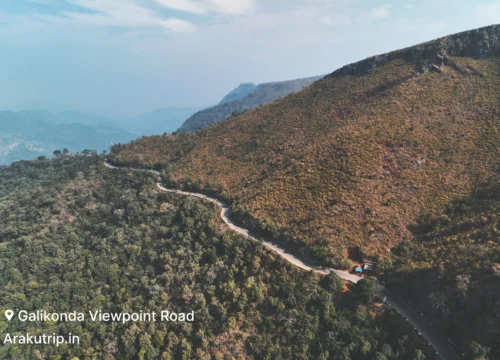
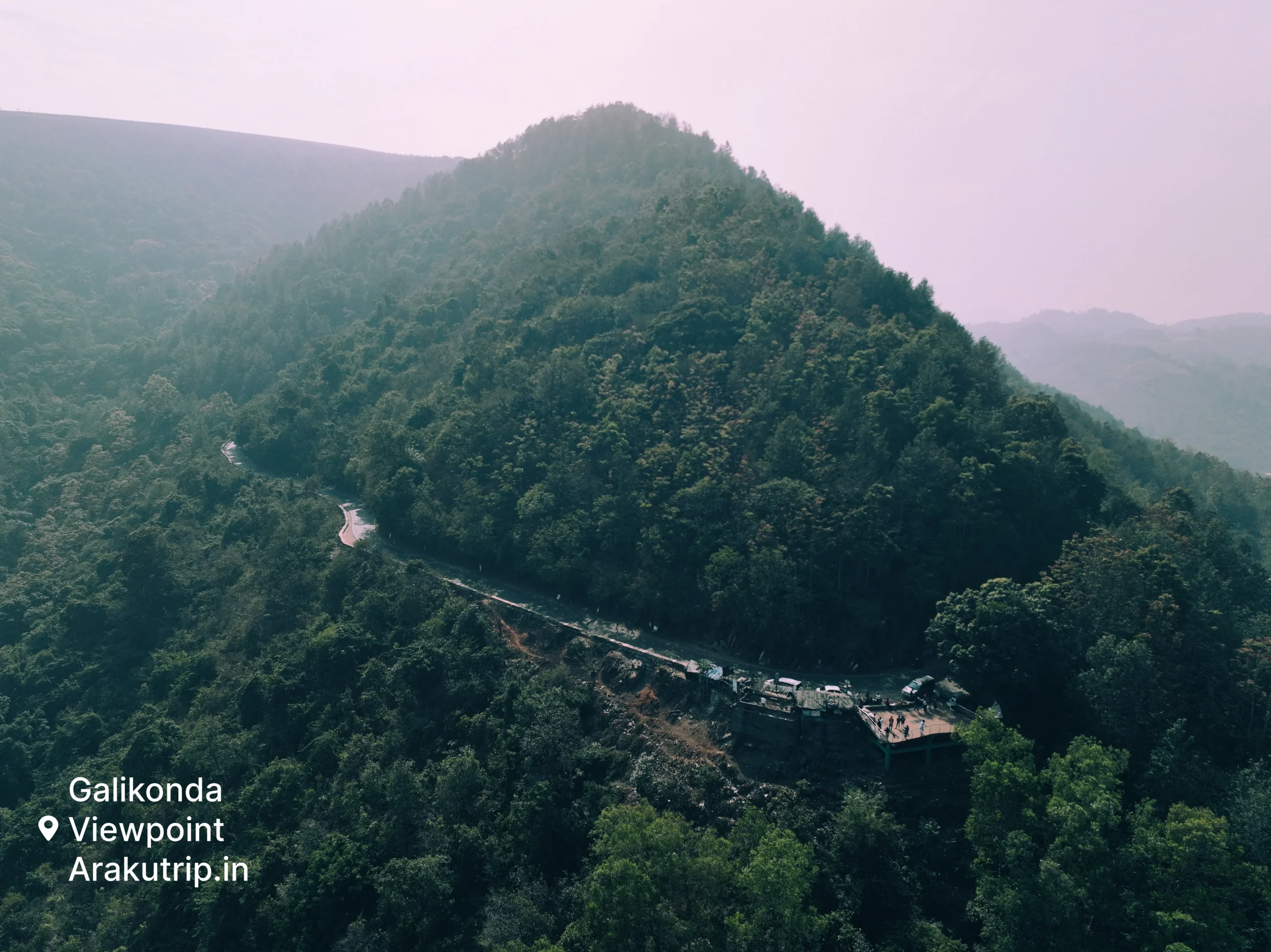
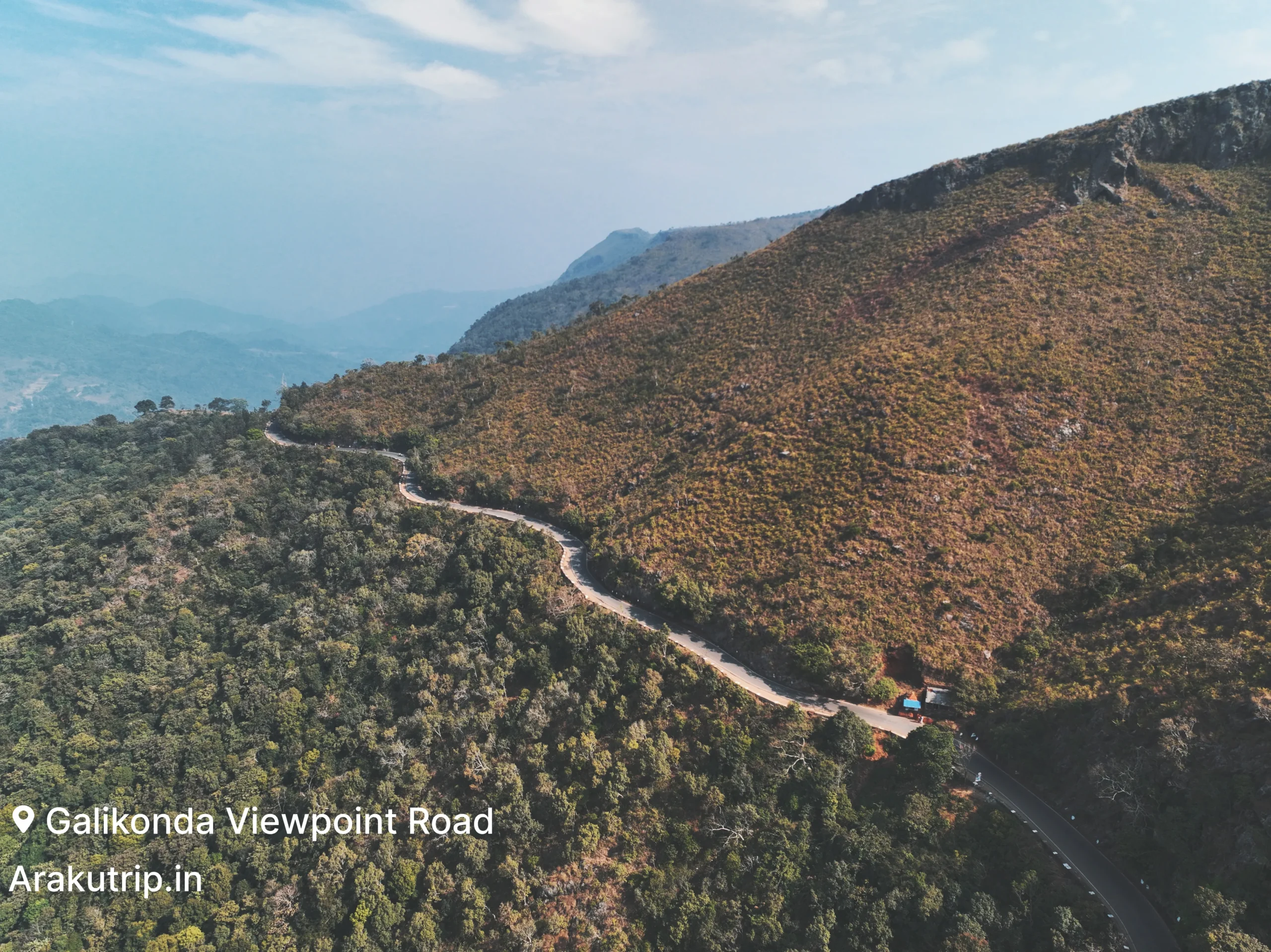
Galikonda View Point
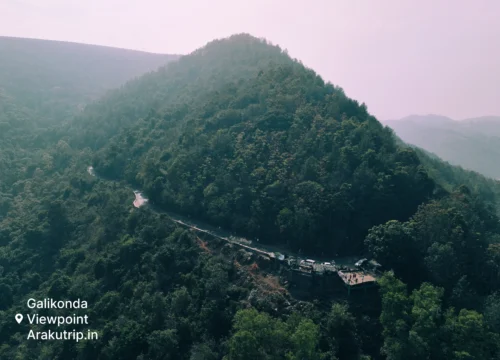
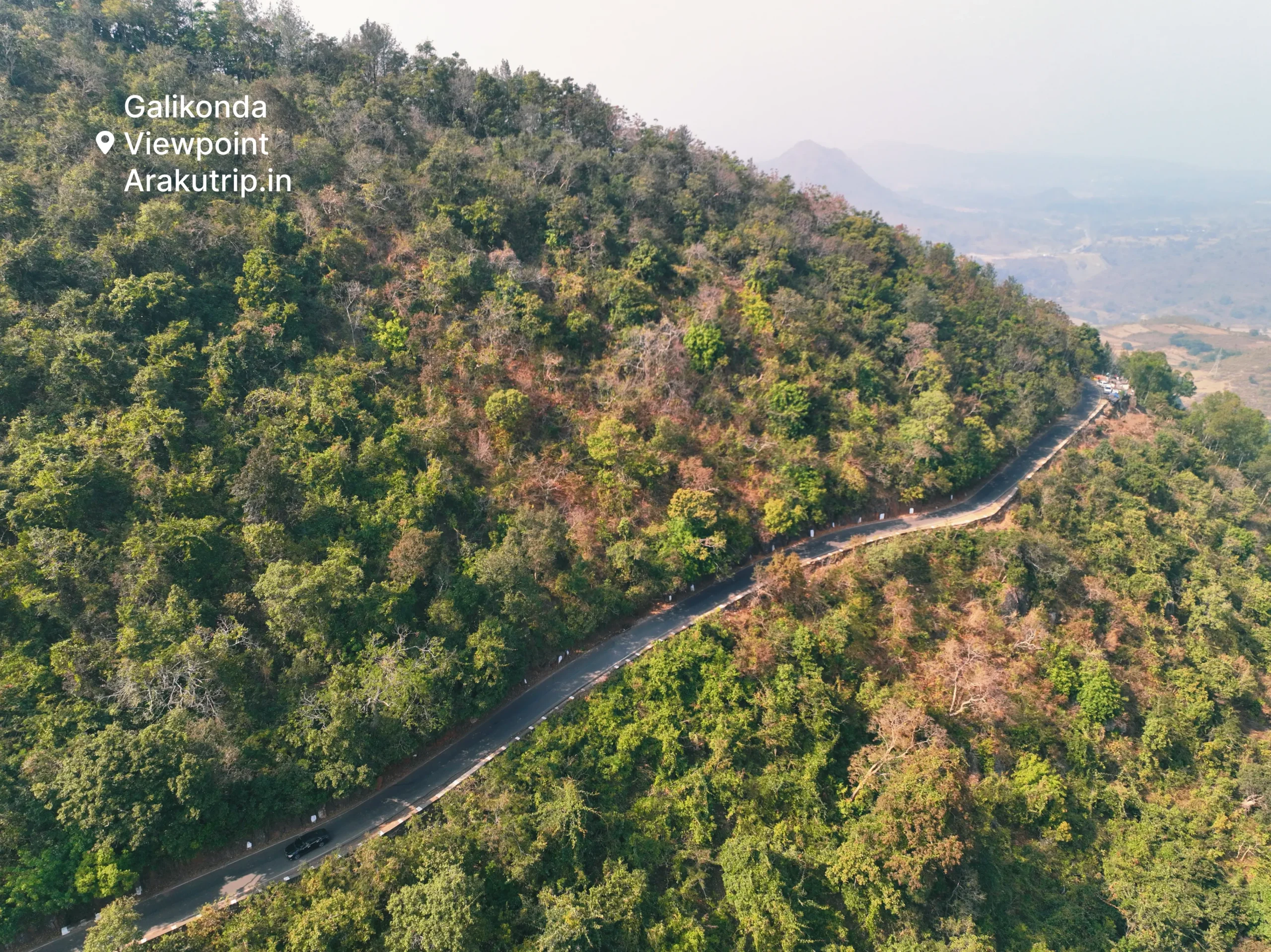
The highest point along the Visakhapatnam-Araku road, Galikonda functions as the definitive Araku Valley view point. On clear days, the visibility extends across forested ridges toward horizons that seem impossibly distant. On misty mornings, clouds drift below the viewpoint, creating the “sea of clouds” effect that has made similar spots famous.
We cycled past Galikonda every day on our way to school—up that hill in the morning, down in the evening. In winter, the fog was so thick we couldn’t see the road five feet ahead, but we cycled anyway, no sweaters because we didn’t have proper ones, legs burning on the climb. We didn’t stop to admire the view back then. We were too busy trying not to be late, too cold to care about scenery. Now when we bring visitors here and they gasp at the panorama, we think about all the mornings we pedalled through it without looking.
Photographers arrive early for dawn light or stay late for sunset colours. The viewpoint includes basic facilities—tea stalls, parking—but remains fundamentally about the vista itself. For social media documentation of your trip, Galikonda delivers the shot that proves you were here.
Rana Jilleda Waterfalls (Araku Waterfalls)
Also known simply as Araku Waterfalls, Rana Jilleda is located just 3 kilometres from Padmapuram Gardens—close enough to include in the same half-day itinerary. The falls drop into a pool accessible by a short walk from the road.
This was our after-school spot when we wanted to cool off without cycling far. Three kilometres from Padmapuram meant three kilometres from school—close enough that we could go, swim, dry off in the sun, and still reach home before our mothers started asking questions. The pool below the falls was our private swimming hole. We learned to swim here, pushed each other off rocks here, told stories here that we still tell today. Tourists call it “hidden gem.” For us, it was just the place we went when the day was hot and homework could wait.
This waterfall sees fewer visitors than Borra Caves or Katiki, making it feel more peaceful and less commercial. For travellers who have visited the major attractions and want something quieter to round out their sightseeing, Rana Jilleda provides exactly that.
Araku “Beach” (Fact Check)
Many tourists search online for Araku Beach, a search that reflects confusion rather than an actual destination. Araku is a hill station—there is no beach. The nearest beaches are in Visakhapatnam, approximately 115 kilometres away.
We laugh when we see this search query, but we understand it. People want everything in one trip—hills and beach, coffee and sand. We grew up without seeing the ocean until our first school trip to Vizag. Ten boys from the valley standing at RK Beach, waves touching our feet for the first time, completely amazed. The beach was foreign to us, exotic in a way the hills never were. Now we tell visitors: enjoy both. Start with the coast, then come to the hills. Or the other way. But don’t search for a beach in Araku—you’ll only find us explaining that it doesn’t exist.
Rishikonda Beach and RK Beach in Vizag offer coastal experiences that pair well with an Araku Valley trip. The smart itinerary includes beach time in Vizag before or after the hill station visit, capturing both landscapes in a single journey.
B. Famous Day-Trips Near Araku (Adventure Extensions)
The attractions beyond Araku’s immediate vicinity reward travellers with extra time and willingness to cover additional distance. These destinations typically require full-day commitments or overnight planning.
Vanjangi Hills (Meghalu Vanjangi)
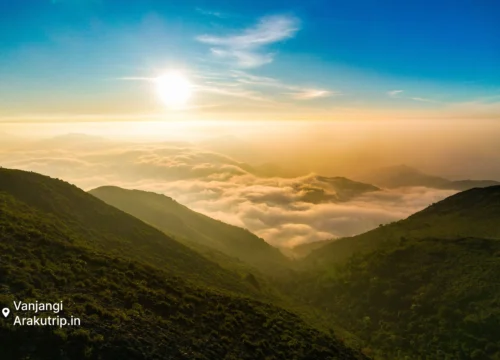
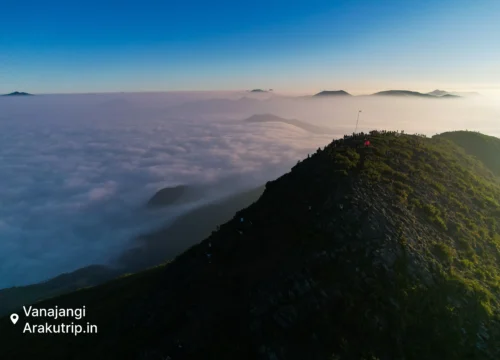
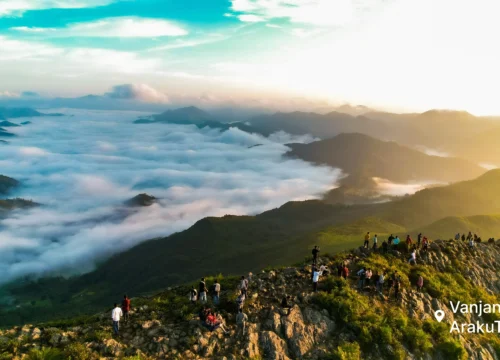
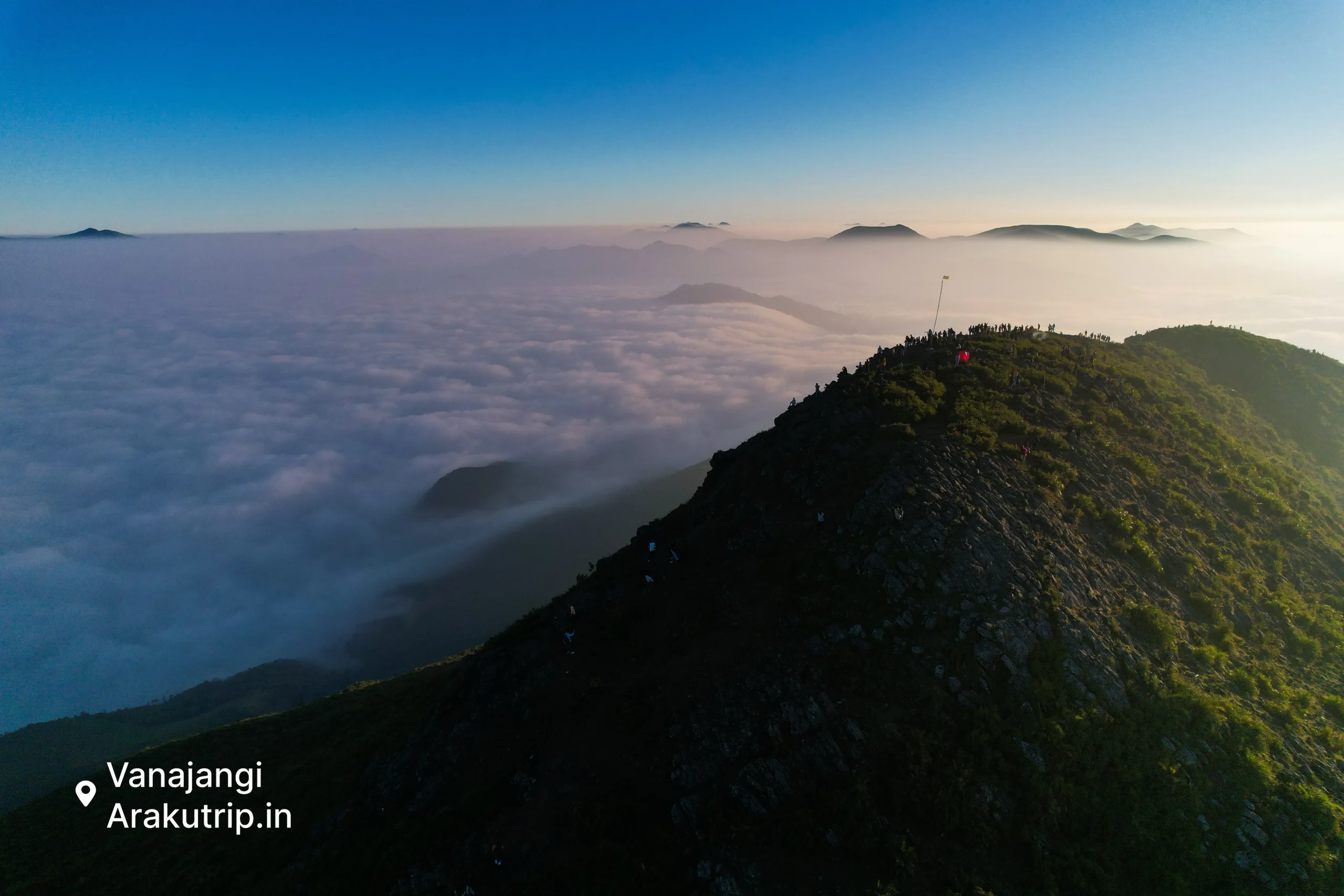
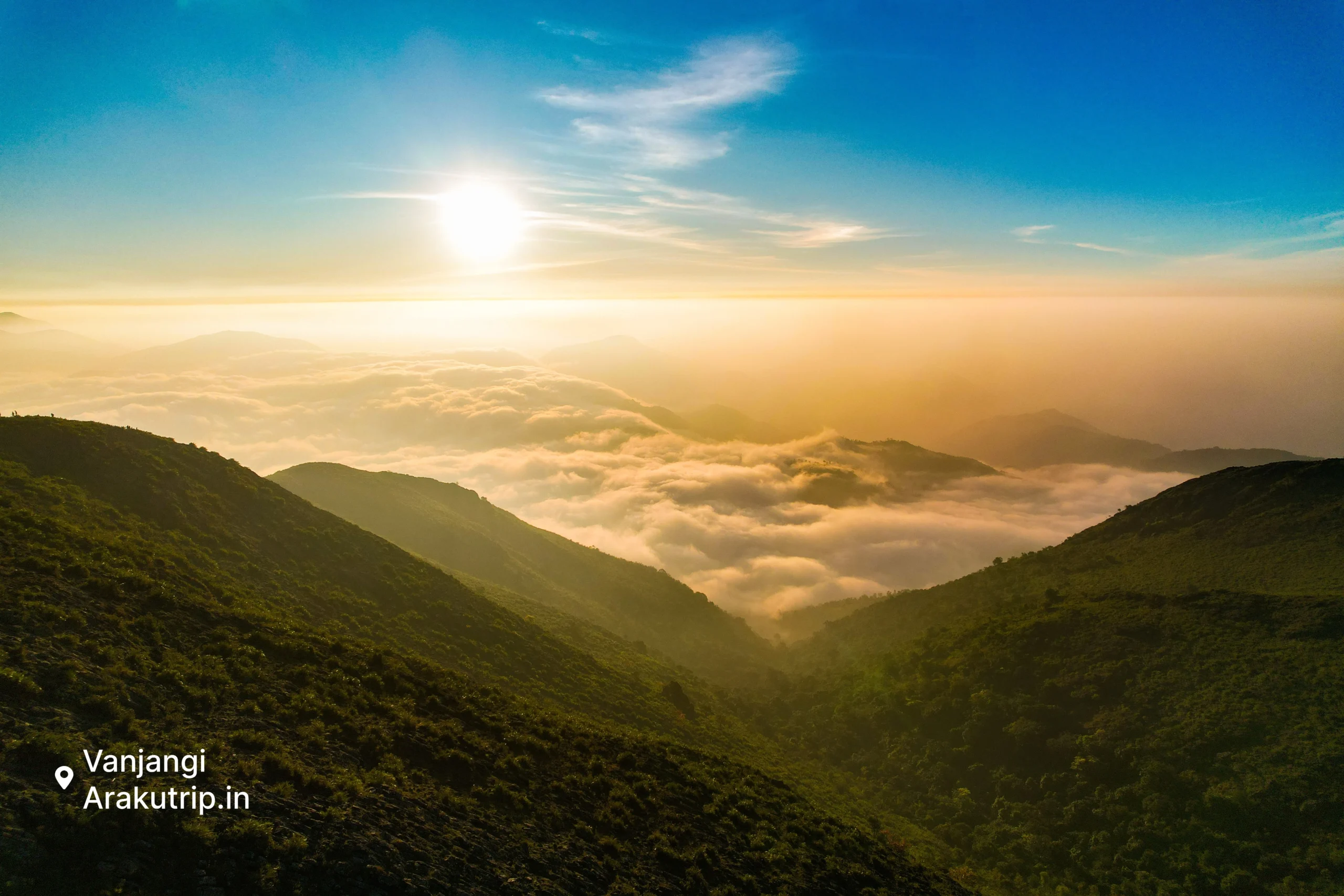
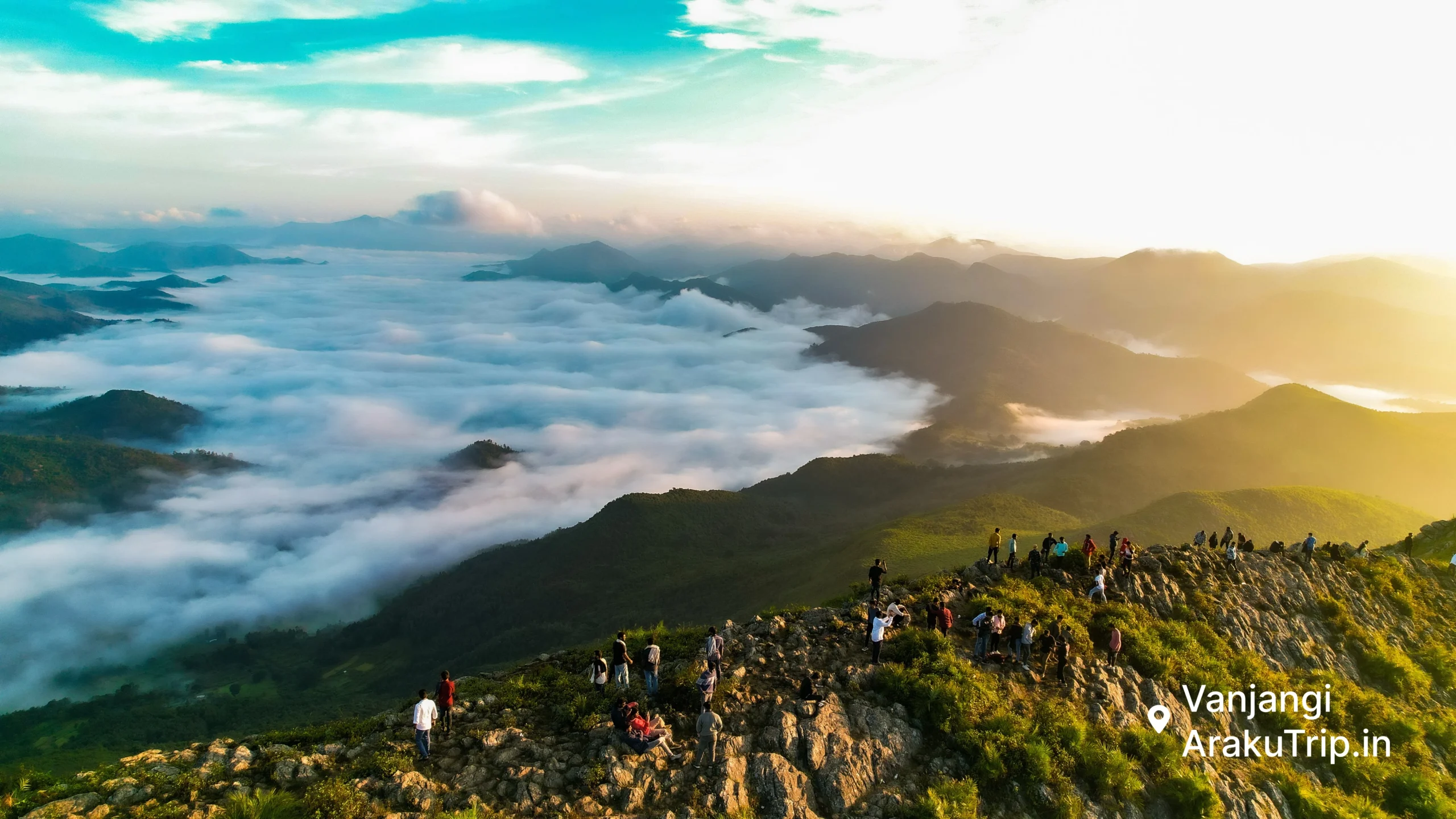
The “Sea of Clouds” phenomenon has made Vanjangi one of the most photographed locations in Andhra Pradesh. To witness it, visitors must depart Araku around 3:00 AM, reaching Vanjangi before dawn. As the sun rises, clouds fill the valleys below the viewpoint, creating the illusion of standing above an ocean of white.
We discovered Vanjangi before Instagram made it famous. A tribal friend’s family lived in a village near there, and during one visit, we woke before dawn to help with some farm work. We saw the clouds filling the valley, had no idea it was anything special—it was just what happened in the mornings there. Years later, when photographs started circulating online and tourists began arriving at 4 AM, we realised what we had witnessed so casually. Now we take visitors there, watching their faces when the clouds appear, remembering when we thought that view was ordinary.
The Vanjangi sunrise time window is specific and unforgiving—arrive late and you miss the effect entirely. The roads to Vanjangi are rough, and the darkness makes navigation challenging. Most visitors hire local drivers who know the route. The effort required filters out casual tourists, leaving those who reach the viewpoint with memories that justify the early alarm.
Lambasingi
Known as the “Kashmir of Andhra,” Lambasingi sits about 90 kilometres from Araku at an elevation where winter temperatures occasionally drop to freezing. The Lambasingi snowfall that visitors search for is actually frost—ice crystals forming on vegetation during December and January mornings—but the effect creates a winter wonderland atmosphere rare in South India.
Araku was cold enough for us, so we rarely made the trip to Lambasingi. But one December, during a school holiday, a few of us cycled there on a dare. Ninety kilometres on cycles, in winter, wearing clothes meant for Araku temperatures—not Lambasingi cold. We arrived shivering, found frost on the grass, touched it like children seeing something magical. We were children seeing something magical. The ride back was warmer because the sun came up, but we talked about that frost for months. Still do, actually.
Lambasingi works best as a winter destination, specifically during December-January when frost probability peaks. Summer visits offer pleasant temperatures but lack the unique cold-weather experience that drives the destination’s reputation.
Kothapalli Waterfalls
A multi-tiered waterfall located near Lambasingi, Kothapalli rewards visitors who combine it with a Lambasingi trip. The falls cascade over several rock levels, creating pools at various heights.
On that same cycling trip to Lambasingi, we stopped at Kothapalli on the way back. We were tired, sore, and the waterfall appeared like a reward for the effort. The multiple tiers meant multiple pools, each at a different temperature depending on sun exposure. We spent two hours there, probably longer, moving between pools, letting the journey’s exhaustion wash away. None of us had phones with cameras then—no photos exist of that day. But all ten of us remember it the same way, which might be better than any photograph.
The surrounding forest and the relative remoteness of the location ensure crowds remain manageable even during peak seasons.
Jindhagada Peak
The highest peak in AP and the entire Eastern Ghats range, Jindhagada rises to 1,690 meters above sea level. For trekkers, this summit represents a genuine challenge—the trails are not marked commercial routes but paths known primarily to locals and serious hikers.
We attempted Jindhagada once as teenagers, failed completely, and tried again in our twenties. The second attempt worked because we finally listened to a tribal elder who knew the route. He walked ahead of us like he was strolling through a garden while we gasped for breath on the inclines. At the summit, the view extended in every direction—no roads, no buildings, just forest and sky. He sat there eating rice from a leaf while we lay on rocks, too tired to speak. That mountain taught us the difference between knowing about a place and actually reaching it.
Reaching Jindhagada requires advance planning, appropriate fitness, and ideally a local guide who knows the terrain. The summit views extend across undeveloped forest in every direction, offering a perspective on the Eastern Ghats that no road-accessible viewpoint can match.
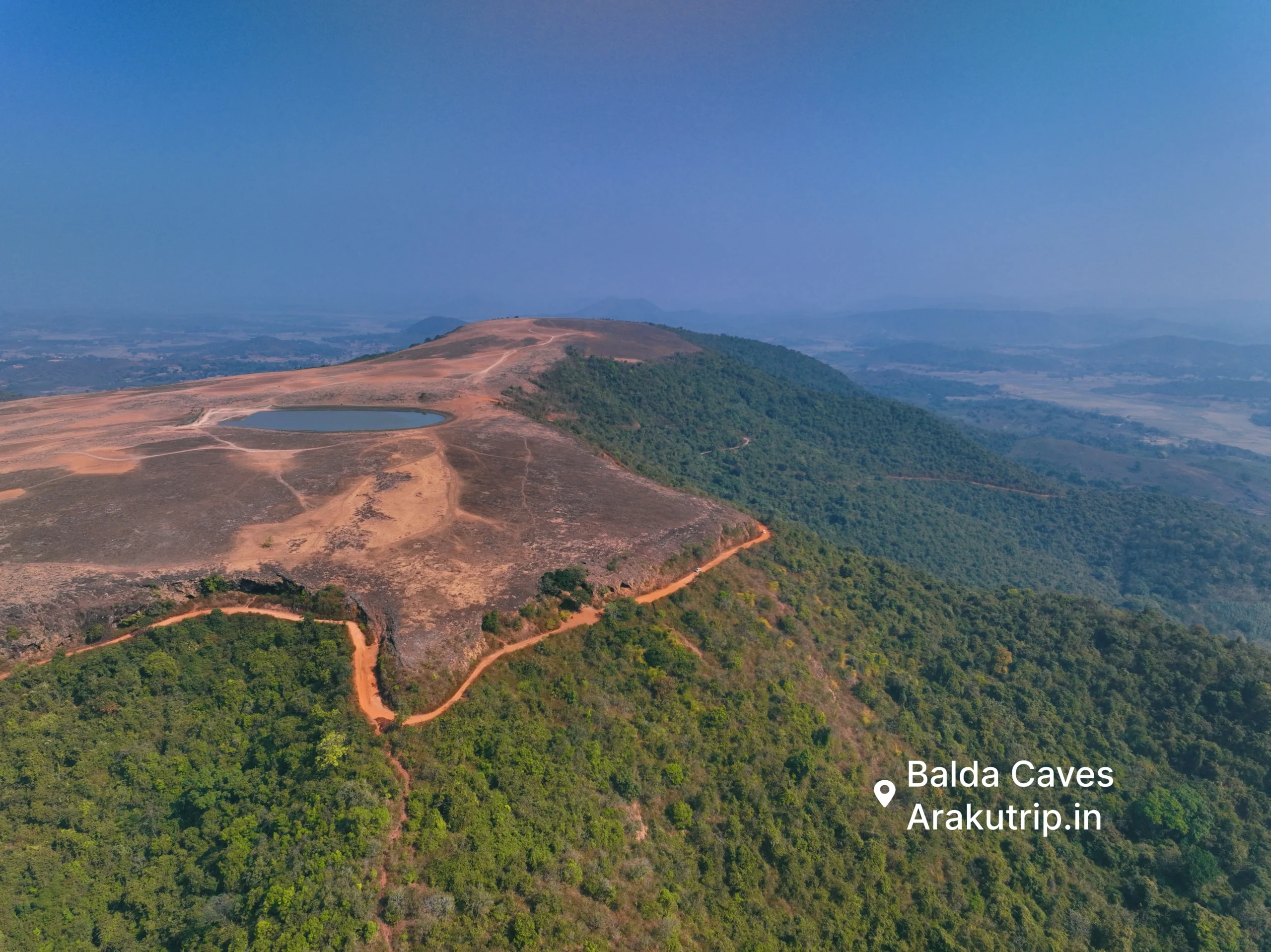
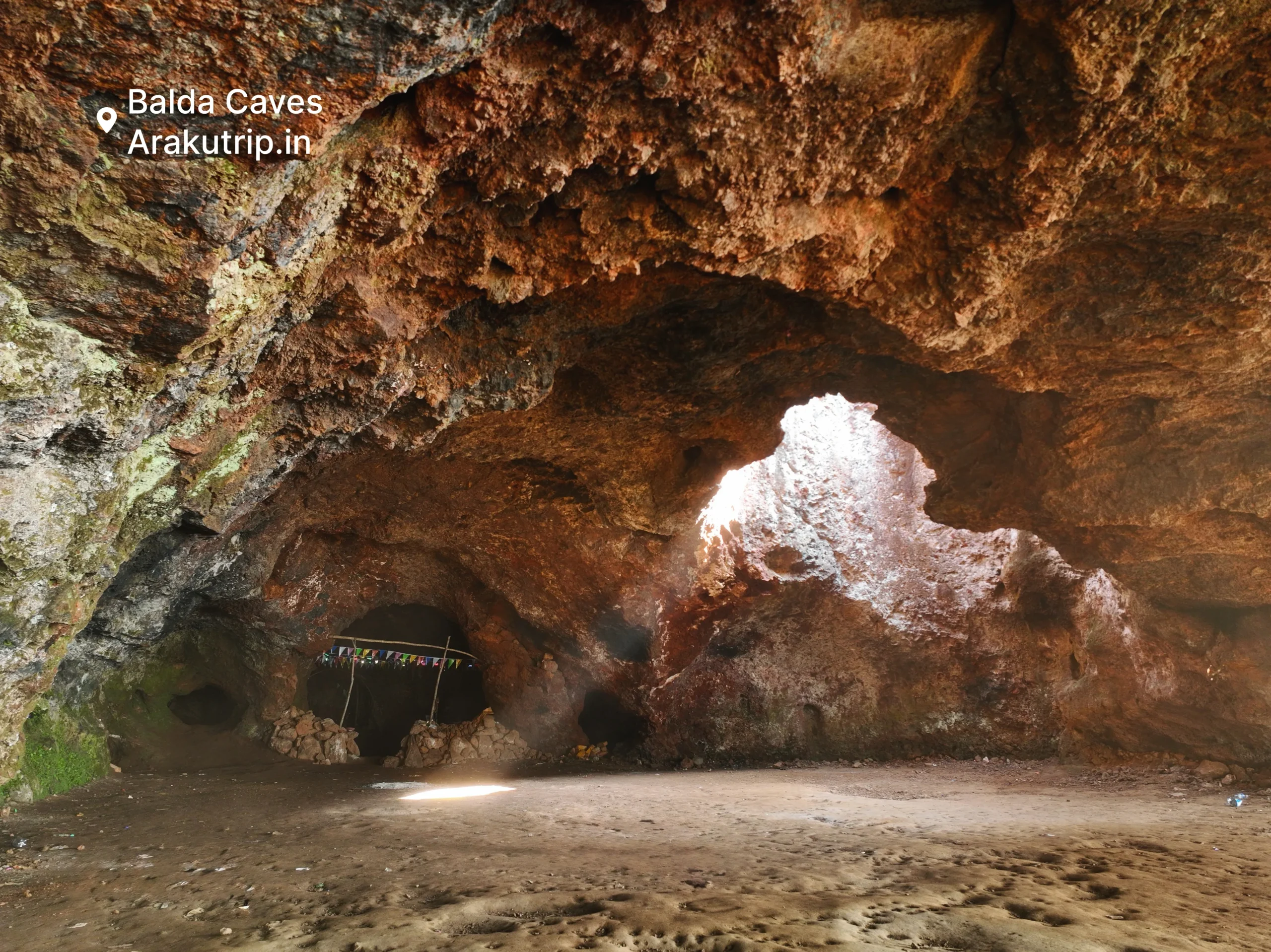
Balda Cave
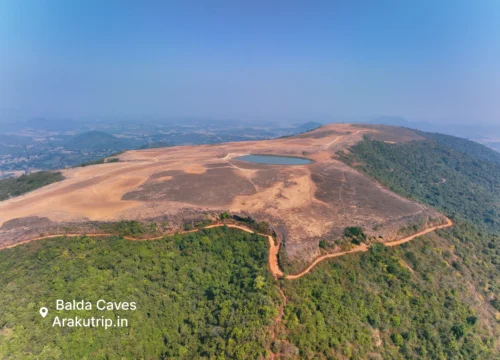
Located on the Odisha border, Balda is a massive table-top mountain featuring cave formations distinct from Borra. The location’s remoteness means fewer visitors, more genuine exploration, and the satisfaction of reaching somewhere that doesn’t appear on standard tourist maps.
The Odisha border felt like another country when we were children—technically still India, but different languages, different food, different everything. Balda was where that difference became real. We went there with classmates whose families came from that region, ate their food, heard their stories, explored caves that felt wilder than Borra because no one had installed lights or pathways. That trip taught us that Araku sat at a crossroads of cultures, not just a valley surrounded by hills. The border is just a line on maps. The people on both sides have been connected forever.
Balda counts among the notable caves in Odisha, though its proximity to Araku makes it accessible from the Andhra side. Visitors interested in geology or simply in getting off the beaten track find Balda worth the additional travel.
Duduma Waterfalls
One of India’s highest waterfalls at 175 meters, Duduma drops dramatically through forested terrain on the Odisha-Andhra border. The falls are particularly impressive during and immediately after monsoon when water volume peaks.
We heard about Duduma’s height before we ever saw it—175 meters sounded impossible, unreal, the kind of number that must be exaggerated. Then we went, during monsoon season, and stood at the viewing area while the falls roared loud enough to make conversation impossible. The spray reached us fifty meters away. We were soaked within minutes, laughing and shouting things no one could hear. Some waterfalls impress through beauty. Duduma impresses through power. You feel small standing there, which is exactly the point.
Note that Duduma is distinct from the smaller Rani Duduma waterfalls located nearby. Both are worth visiting if you’re in the area, but Duduma’s scale is what earns it a place on this list.
Chitrakote Waterfalls
Known as the “Niagara of India,” Chitrakote is located in Jagdalpur, Chhattisgarh—a considerable distance from Araku that makes it an extension trip rather than a day excursion. The waterfall spans approximately 300 meters during peak flow, making it India’s widest.
Chitrakote was our first trip outside the valley that felt like a real journey—not just a day trip, but an expedition. We saved money for months, planned the route using paper maps, and took buses that broke down twice. When we finally reached the falls, the width stunned us. We had grown up with tall waterfalls, narrow waterfalls, waterfalls you could swim under. This was different—water spreading across rock like a curtain you couldn’t see the edges of. We stayed two days, eating food we didn’t recognize, speaking Hindi because Telugu didn’t work there. That trip made us realize how much more existed beyond our valley, and somehow made us love our valley more.
For travellers building extended Vizag and Araku tour packages that venture into Chhattisgarh, Chitrakote becomes a logical inclusion. The journey from Araku takes a full day each way, meaning this destination suits those with time and serious interest in waterfalls.
Things to Do in Araku Valley
Beyond sightseeing, Araku offers experiences that engage senses the viewpoints don’t reach. The activities below represent what locals do, what travellers remember, and what distinguishes time spent here from time spent elsewhere.
Coffee Plantation Walks
The coffee estates surrounding Araku welcome visitors for guided walks through cultivation areas. These aren’t formal tours with scripts and schedules—estate workers explain what they do, how coffee grows, and what distinguishes Araku beans from coffee grown elsewhere. The aroma during flowering season is remarkable. The understanding you gain of what goes into your morning cup stays longer than any photograph.
Tribal Dance (Dhimsa)
Dhimsa is the traditional dance form of the region’s tribal communities, performed during festivals, celebrations, and increasingly for tourist audiences. The dance involves circular formations, rhythmic footwork, and music produced on traditional instruments.
We didn’t watch Dhimsa—we danced it. Growing up, we attended tribal festivals with our classmates, and when the music started, everyone joined the circle. Tribal women in traditional dress would pull us in, laughing at our clumsy footwork, teaching us the rhythm through repetition. The steps look simple until you try them—the coordination required, the stamina for hours of dancing, the way the circle moves as one organism. We were never good at it, not really, but we were part of it. That’s different from watching. When you see Dhimsa performed for tourists, know that the real version happens at 2 AM during harvest festivals, with fires burning and entire villages moving together.
Cultural programs featuring Dhimsa are organized at some resorts and during local festivals. Ask accommodation staff about scheduled performances during your visit.
Bamboo Chicken
The dish has become so associated with Araku that many visitors plan their trip partly around eating it. Chicken marinated with local spices is stuffed into bamboo tubes, sealed, and slow-cooked over open fire. The bamboo imparts a subtle flavour that metal or clay vessels don’t replicate.
We remember when bamboo chicken wasn’t a tourist attraction—it was just how some families cooked when they went into the forest. The technique came from tribal communities who had been doing it for generations. We learned to make it from a friend’s grandmother, crouching around a fire while she showed us which bamboo to use, how to seal the ends, how long to wait. The version sold at stalls today is good. The version made by someone who learned from their grandmother, in a forest clearing, shared with friends—that version is unforgettable. We still make it sometimes, on trips to the places tourists don’t reach.
Bamboo chicken stalls cluster around Katiki Waterfalls and along the main tourist routes. Quality varies—the best versions come from vendors who understand that the technique matters as much as the ingredients. Ask locals for recommendations rather than settling for the first stall you see.
Shopping at Araku View Places
The markets and shops around major Araku view places sell products worth carrying home: coffee powder from local cooperatives, spices grown in tribal gardens, honey collected from surrounding forests, and handicrafts produced by tribal artisans.
Our mothers never bought coffee from shops—they knew families who processed it, bought directly from them, ground it fresh at home. The spices came the same way, through networks of relationships we didn’t understand as children but benefited from constantly. When we guide visitors now, we take them to those same families, those same connections. The prices are the same as tourist shops, sometimes lower, but the quality is different because these are people who sell to neighbours, not strangers. Shopping in Araku can be transactional, or it can be an introduction to how the valley actually works. We prefer the second version.
Prices are generally reasonable, and purchasing directly supports local producers rather than distant middlemen.
Araku Trip Itineraries
The right itinerary depends on your available time, travel style, and willingness to rise early. These frameworks have been tested by thousands of visitors and refined through experience.
Places to Visit in Araku in One Day
A single day allows coverage of Araku’s core attractions, provided you start early and maintain focus.
Recommended Plan:
6:00 AM: Depart Vizag
8:30 AM: Brief stop at Ananthagiri for coffee and fresh air
10:00 AM: Reach Borra Caves, spend 1.5 hours exploring
12:00 PM: Lunch (bamboo chicken if appetite allows)
1:30 PM: Coffee Museum—tasting and shopping
3:00 PM: Padmapuram Gardens
4:30 PM: Galikonda View Point for late afternoon light
5:30 PM: Begin return journey to Vizag
9:00 PM: Arrive Vizag
This schedule works but leaves little margin for delays or extended exploration. You’ll see the highlights without fully absorbing them. For many first-time visitors, this overview creates the desire to return for a longer stay.
2-Day Itinerary
Two days allow proper pacing, evening relaxation, and coverage of attractions that single-day trips skip.
Day 1:
Morning departure from Vizag
Stops at Ananthagiri and Borra Caves
Afternoon arrival in Araku
Tribal Museum and Coffee Museum
Evening at leisure: local market exploration, dinner
Overnight stay in Araku
Day 2:
Early morning: Padmapuram Gardens or Rana Jilleda Waterfalls
Mid-morning: Katiki Waterfalls (allow 3-4 hours including jeep ride and bamboo chicken)
Afternoon: Galikonda View Point and return journey
Evening: Arrive Vizag
The overnight stay transforms the experience. Evening in Araku—when day-trippers have departed and the valley settles into its actual rhythm—reveals what rushing through misses.
ArakuTrip: Book Your Trip
You’ve read about the distances, the attractions, and the itineraries. The planning phase ends when the booking begins.
Vizag Araku Trip Packages through arakutrip.in are designed by people who grew up in this valley, attended school here, and know the roads, the best bamboo chicken vendors, and the viewpoints that don’t appear on Google Maps. We provide cab services, accommodation recommendations, and complete tour packages that eliminate the guesswork.
What we offer:
Cab packages from Vizag to Araku with experienced local drivers
Customized itineraries based on your available time and interests
Station pick-up services for visitors arriving by train
Extended packages covering Lambasingi, Vanjangi, and other adventure destinations
Every route we recommend, we’ve driven. Every restaurant we suggest, we’ve eaten at. Every resort we partner with, we’ve inspected.
Book your Araku Valley sightseeing package with arakutrip.in for the best rates.
Book Now →
Frequently Asked Questions
Where is Araku located?
Araku is located in the Alluri Sitharama Raju district of Andhra Pradesh. It is a hill station situated about 115 km from Visakhapatnam in the Eastern Ghats.
What are the best places to visit in Araku Valley?
The best places to visit in Araku include Borra Caves, Katiki Waterfalls, Tribal Museum, Padmapuram Gardens, Coffee Museum, Chaparai Cascade, and the Araku Valley view point at Galikonda. For adventure extensions, Vanjangi Hills and Lambasingi are highly recommended.
Is there an Araku Beach?
No, there is no Araku Beach. Araku is a hill station in the Eastern Ghats. Tourists typically combine beach time in Vizag (Rishikonda Beach or RK Beach) with their Araku Valley trip to experience both landscapes.
What is the Araku to Araku Valley distance?
There is no distance between them; Araku is the main town located within Araku Valley. They refer to the same destination. The term “Araku Valley” describes the broader region, while “Araku” typically refers to the town at its centre.
Can we cover Araku tourist places in one day?
Yes, you can cover the main places to visit in Araku in one day if you depart Vizag by 6:00 AM. A focused itinerary covering Borra Caves, Coffee Museum, Padmapuram Gardens, and Galikonda View Point is achievable. However, a two-day trip with an overnight stay allows more thorough exploration and includes attractions like Katiki Waterfalls.
What is special about Araku Valley?
Araku Valley is special for its organic Arabica coffee plantations, the ancient Borra Caves (million-year-old limestone formations), and the living culture of nineteen tribal communities including the Dhimsa dance tradition. The pleasant climate—significantly cooler than coastal Andhra—and the scenic ghat road journey add to its appeal. It is often called the “Ooty of Andhra.”
Where can I find an Araku tourist places map?
You can download a detailed Araku tourist places map from arakutrip.in. The map shows the route from Vizag, locations of all major Araku sightseeing places, distances between attractions, and recommended stopping points along the ghat road.
What are the top things to do in Araku Valley?
The top things to do in Araku Valley beyond sightseeing include: tasting Bamboo Chicken at Katiki Falls, walking through coffee plantations, watching Dhimsa tribal dance performances, buying fresh coffee powder and local spices, and trekking to lesser-known waterfalls. For adventure seekers, the early morning trip to Vanjangi for the “Sea of Clouds” sunrise is unforgettable.
This guide is maintained by arakutrip.in—locals who know the valley because we grew up in it.