Best Time to Visit Araku Valley: A Season-by-Season Guide
Best Time to Visit Araku Valley: A Season-by-Season Guide
Araku Valley experiences distinct seasonal personalities that affect everything from weather comfort to attraction accessibility. Choosing the best time to visit Araku depends on your priorities since each season offers different advantages and limitations. Understanding how the valley changes throughout the year helps align your travel dates with the experience you seek.
The hill station’s elevation of approximately 900 meters creates temperatures consistently cooler than the coastal plains below. However, this general characteristic manifests differently across seasons, with some periods offering misty magic while others deliver clear views but warmer days.
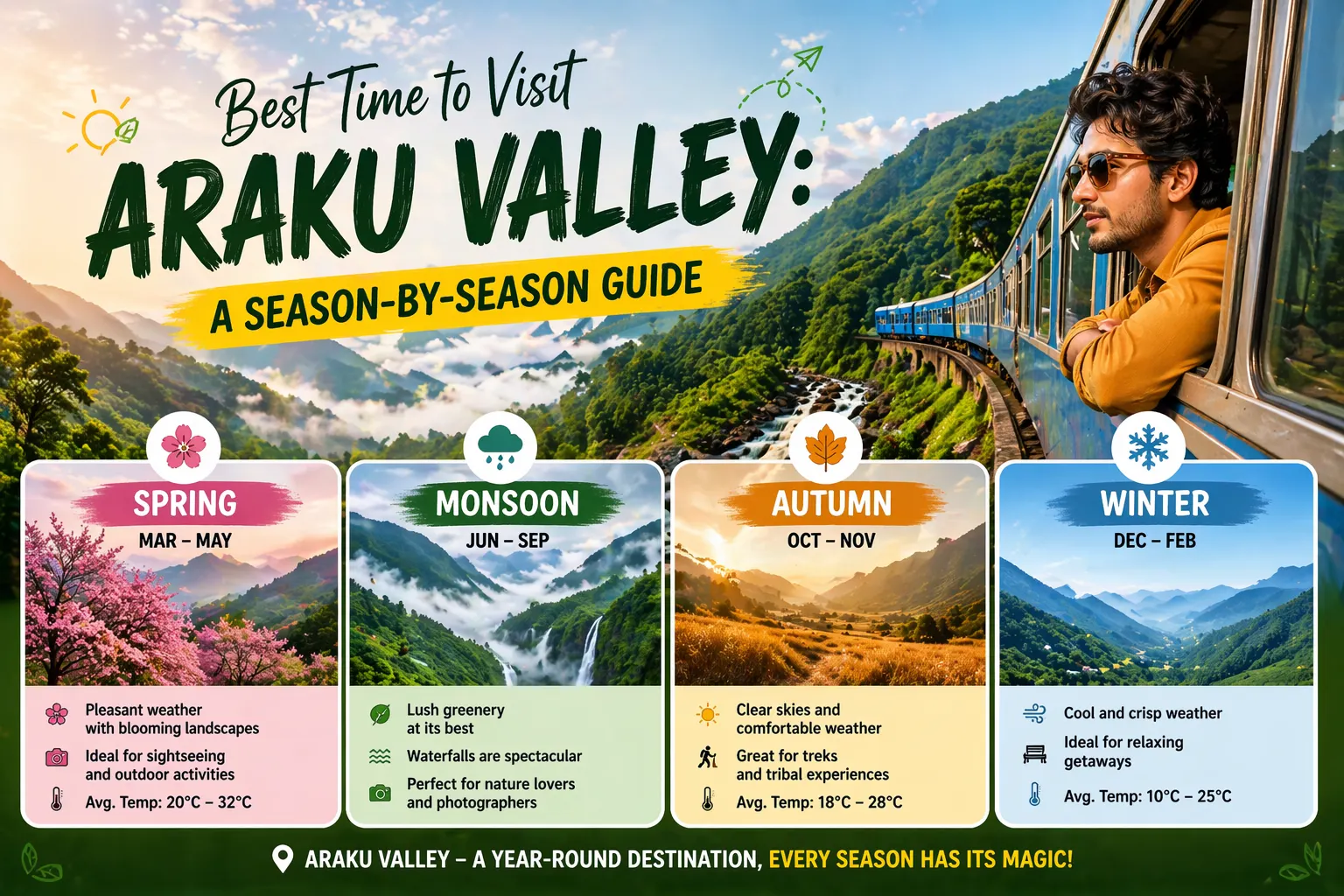
Peak Season: The Magic of Araku in Winter (Oct-Feb)
Winter months transform Araku Valley into the destination that tourism marketing promotes most enthusiastically. The combination of cool temperatures, frequent mist, and holiday timing creates conditions that attract maximum visitor numbers.
Temperature ranges during peak winter months, particularly December and January, drop to single digits during early mornings and late evenings. Daytime temperatures remain pleasant, typically between 15-25 degrees Celsius, ideal for outdoor exploration without sweating through your shirt. The temperature differential between Vizag and Araku becomes most pronounced during winter, making the hill station feel genuinely refreshing for coastal residents.
Mist and fog characterize winter mornings, creating the atmospheric conditions that make Araku famous among photographers. Viewpoints like Galikonda offer the “sea of clouds” phenomenon during this period, where fog fills valleys while hilltops emerge above the white blanket. Early morning departures reward with scenes unavailable later in the day when mist typically burns off.
The challenge of peak season visits involves crowd levels and pricing. Hotels raise rates substantially, often doubling or tripling off-season prices. Popular attractions become congested, particularly during holiday weeks around Christmas, New Year, and Sankranti. Advance booking becomes essential rather than optional.
For most visitors without specific reasons to travel other periods, winter remains the recommended best time to visit Araku. The combination of comfortable temperatures, scenic atmospheric conditions, and full attraction accessibility creates the complete hill station experience.
Monsoon Charm: Waterfalls and Lush Greenery (July-Sept)
Monsoon season brings abundant rainfall that transforms the Araku landscape into its greenest manifestation. For travelers who appreciate rain-washed scenery and accept weather-related compromises, this period offers distinct beauty unavailable during drier months.
Rainfall varies in intensity and frequency but should be expected during monsoon visits. Brief but heavy showers can interrupt outdoor activities, requiring flexible itineraries and waterproof preparation. Continuous rain occasionally persists for extended periods, potentially limiting sightseeing for travelers with tight schedules.
Waterfalls reach peak flow during and immediately after monsoon rains. Chaparai, Katiki, and other cascades that may trickle during dry season transform into powerful flows worth visiting specifically for their enhanced state. The waterfall photography opportunities during monsoon rival or exceed what peak season offers, despite fewer photographers attempting them.
Vegetation reaches maximum lushness as rains saturate the landscape. Coffee plantations, forest areas, and even roadside slopes burst with green intensity that photographs dramatically against gray, cloudy skies. The visual transformation from dry-season browns to monsoon greens affects the entire valley appearance.
Travel challenges during monsoon include road conditions affected by water damage, potential delays from landslide clearance, and reduced visibility during rain events. The ghat roads connecting Vizag to Araku require extra caution when wet. Train services generally continue normally, making rail travel more reliable than road during uncertain weather.
Accommodation availability improves during monsoon as visitor numbers drop. Rates often decrease substantially, sometimes by fifty percent or more compared to peak season. Budget travelers willing to accept weather uncertainty find monsoon visits financially attractive.
Summer Escape: Beating the Coastal Heat (March-June)
Summer months position Araku as an escape destination for coastal Andhra Pradesh residents seeking relief from intense lowland heat. The valley’s elevation provides temperature advantages, though summer represents Araku’s warmest period.
Temperature comparisons favor Araku over Vizag during summer, but the difference narrows compared to winter. Daytime temperatures may reach 30-35 degrees Celsius during peak summer, genuinely warm though still below the 40+ degrees common on the plains. Mornings and evenings remain pleasant, with afternoon hours benefiting from strategic shade-seeking.
Waterfall flows diminish as the dry season progresses, particularly by May. Chaparai may offer limited sliding opportunities when water levels drop. Katiki and other seasonal falls may reduce to trickles not worth the trek effort. Plan waterfall visits accordingly or shift expectations toward non-water attractions.
The caves at Borra provide natural air conditioning regardless of season, making them particularly appealing during summer visits. The constant cool temperature inside offers dramatic relief from afternoon heat, making cave exploration the day’s most comfortable activity.
Crowds thin during summer compared to peak winter season, though not as dramatically as during monsoon. Families with school-age children often travel during summer vacation periods, creating demand that keeps some properties occupied. Rates typically sit between peak season highs and monsoon lows.
Seasonal Activities: Coffee Picking, Festivals, and Treks
Beyond weather considerations, seasonal timing affects which activities and experiences become available during your visit.
Coffee harvest season runs approximately from November through January, making winter visits coincide with plantation activity. Visitors interested in understanding coffee cultivation from plant to cup find this period most educational, with active picking, processing, and the visual appeal of ripe red coffee cherries on plants.
The Araku Balloon Festival, held during select winter dates, adds spectacle to trips timed for this event. Hot air balloons dotting the valley skies create photographic opportunities and potential ride experiences. Confirming specific dates requires checking closer to planned travel since scheduling varies.
Trekking conditions vary seasonally with implications for difficulty and scenery. Winter offers comfortable temperatures for physical exertion but may involve brown or dry vegetation along trails. Post-monsoon months combine cooler weather with lingering greenery, potentially the optimal trekking window. Monsoon trekking involves slippery trails and leech risks that some adventurers embrace and others prefer avoiding.
Tribal festivals and local events follow their own calendar, sometimes aligning with major Hindu festivals and sometimes following community-specific traditions. The Tribal Museum can provide information about upcoming cultural events for visitors interested in experiencing authentic celebrations.
The best time to visit Araku ultimately depends on what you seek from the trip. Winter delivers the quintessential hill station experience with cool mist and comfortable exploration. Monsoon rewards waterfall enthusiasts and budget travelers. Summer offers escape from coastal heat with fewer crowds. Understanding these seasonal personalities allows choosing dates aligned with your priorities.
What is the best time to visit Araku Valley?
The best time to visit Araku Valley is from October to February when the weather is cool, misty, and ideal for sightseeing, waterfalls, and scenic drives.
Is winter the best season to visit Araku Valley?
Yes, winter is one of the most popular seasons because Araku Valley offers pleasant temperatures, foggy mornings, and comfortable travel conditions.
Can I visit Araku Valley during monsoon?
Yes, monsoon visits are popular for lush greenery, waterfalls, clouds, and fresh landscapes. Roads may be slippery, so careful planning is recommended.
How is Araku Valley in summer?
Summer is milder than many cities because of the hill climate. It is suitable for travelers seeking a cooler break from hotter plains.
Which month is best for waterfalls in Araku Valley?
July to October is ideal for waterfalls like Katiki Waterfalls and Chaparai Waterfalls because rains increase water flow.
When can I see clouds and mist in Araku Valley?
Clouds and mist are commonly seen during monsoon and winter mornings, especially near Vanjangi Hills and hill viewpoints.
Which season is best for couples visiting Araku Valley?
Winter and monsoon are favored by couples because of romantic weather, green scenery, and peaceful hill station vibes.
What is the best time for a family trip to Araku Valley?
October to February is ideal for families because travel is more comfortable and sightseeing is easier for all age groups.
Does Araku Valley get crowded during peak season?
Yes, weekends, holidays, and winter season can get crowded. Hotels and cabs may fill quickly, so advance booking is recommended.
When should I book my Araku Valley trip package?
For peak season travel, it is smart to book 15 days to 1 month early through local planners like ArakuTrip for better rooms, rates, and smooth travel arrangements.

All Categories
- Araku Cab Service
- Araku Coffee
- Araku Tour Packages
- Araku Tourist Places
- Araku Trip Packages
- Araku Valley for families
- Araku Valley shopping
- Araku Valley Timings
- Araku Valley Trip Cost
- Araku Weather
- Around Vizag
- Camping in Araku Valley
- Hidden Spots
- Hotel & Rooms
- Hotels & Resorts
- Stay & Food
- Tatipudi Reservoir
- Tent camping
- Transport & Safety
- Travel Guides
- Vizag Attractions
- Vizag Beachs
- Vizag Cab Services
- Vizag Travel Planning
Recent Posts
Vizag Travel FAQ

Vizag Photography Guide

Vizag Shopping Guide
Tags