Araku Valley Weather in December: Misty Mornings and Chilly Nights
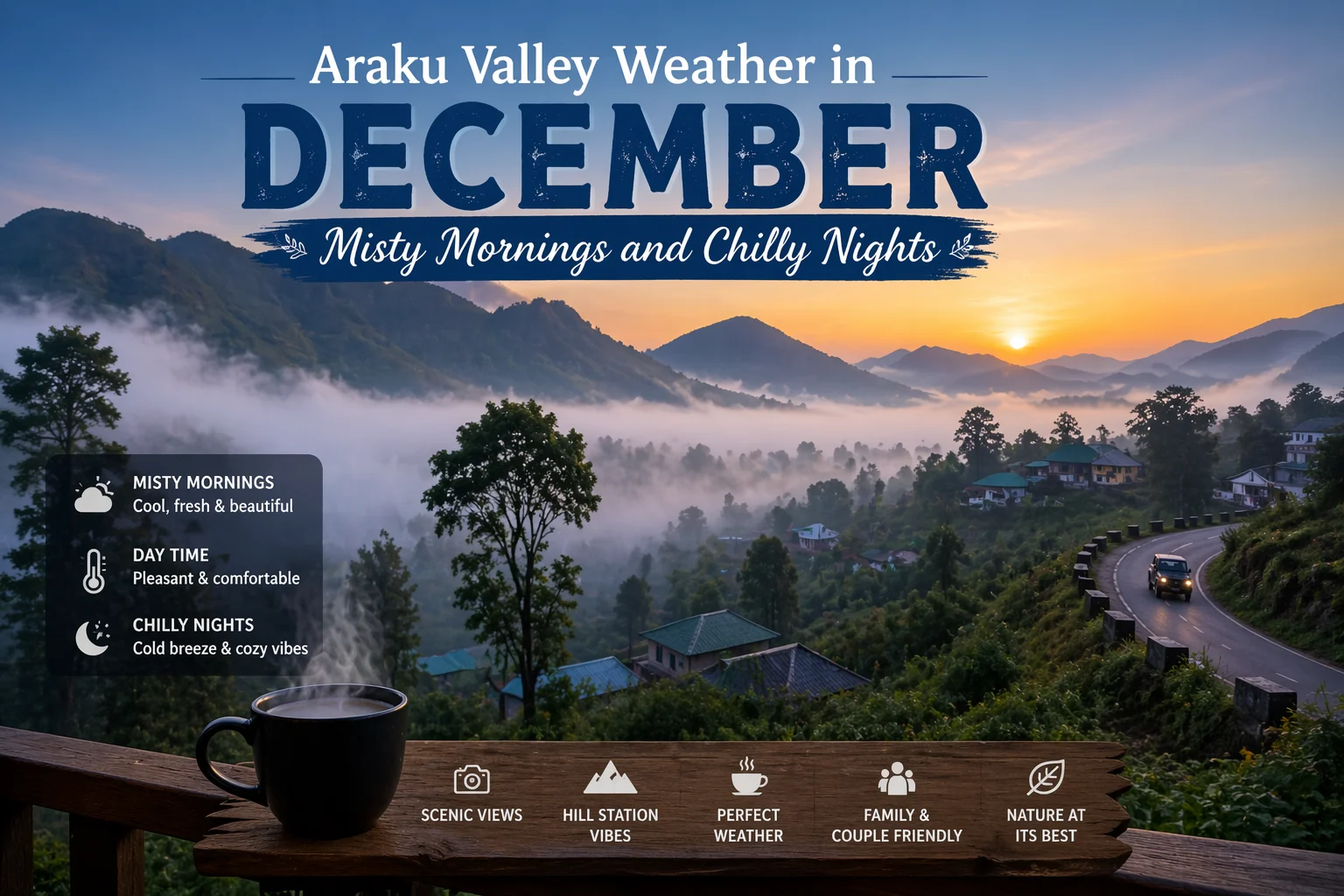
Araku Valley Weather in December: Misty Mornings and Chilly Nights
Araku Valley Weather in December:
December marks the heart of Araku Valley’s peak tourism season, drawing visitors seeking cool temperatures and atmospheric mist that define the hill station experience. Understanding the specific weather characteristics of December helps travelers pack appropriately, plan daily activities around conditions, and set realistic expectations for their winter visit.
The weather in December creates the quintessential Araku experience that photographs circulate across travel platforms. Misty dawns, comfortable midday temperatures, and genuinely chilly evenings combine to deliver the hill station atmosphere that escapes the coastal heat visitors seek.
Average Temperature and Climate Overview
December temperatures in Araku Valley follow patterns that differ substantially from the coastal plains below. The elevation of approximately 900 meters creates conditions more comparable to hill stations elsewhere in India than to nearby Visakhapatnam.
Morning temperatures during December regularly drop to 8-12 degrees Celsius, occasionally touching single digits during particularly cold spells. These early hours deliver the most dramatic chill, often surprising visitors who underestimate how cold the valley becomes before sunrise. The coldest readings typically occur between 5:00 AM and 7:00 AM.
Daytime temperatures rise comfortably to 18-25 degrees Celsius by midday, creating pleasant conditions for outdoor exploration. This range allows sightseeing in light layers without the sweating that summer visits involve. The sun warms exposed areas noticeably, while shaded locations retain morning chill.
Evening temperatures begin declining from late afternoon, dropping progressively as night approaches. By dinner time, temperatures may fall to 12-15 degrees Celsius, reaching overnight lows similar to morning conditions. The temperature swing between afternoon peaks and overnight lows can exceed 15 degrees.
Rainfall during December typically remains minimal, though occasional light showers are possible. The northeast monsoon brings some moisture to this region, but December usually falls in the drier portion of its influence. Visitors can generally expect dry conditions, though carrying a light rain layer provides insurance against unexpected drizzle.
Best Viewpoints for the “Sea of Clouds” Experience
The mist that makes December mornings magical requires strategic positioning to appreciate fully. Certain viewpoints deliver the famous “sea of clouds” effect where valleys fill with fog while higher elevations emerge above the white expanse.
Galikonda View Point ranks as the premier location for experiencing fog-filled valleys from above. At 4,320 feet elevation, this viewpoint frequently rises above the mist layer during early morning hours. Arriving before sunrise positions you to watch clouds form and shift as dawn light illuminates them.
The timing window for optimal mist viewing typically spans 6:00 AM to 8:30 AM. Earlier arrivals in darkness may find conditions not yet visible, while later arrivals risk missing the peak effect before rising temperatures dissipate fog. The sweet spot occurs as dawn light strengthens enough to reveal the cloud formations clearly.
Alternative viewpoints along the Ananthagiri coffee plantation roads offer more accessible options for those not attempting the Galikonda journey. Several roadside pullouts provide valley views that capture fog effects without the early morning drive to higher elevations.
Photography during mist conditions requires attention to exposure compensation since the white expanse can fool camera meters. Bracketing exposures ensures capturing detail in both fog and any landscape elements extending above it. Patience rewards photographers since cloud formations shift continuously, occasionally revealing and concealing different portions of the landscape.
Packing List: Do You Need Heavy Woolens?
December visits to Araku require warmer clothing than the coastal plains demand, but the level of warmth needed depends on your personal cold tolerance and planned activities.
Essential items for December Araku trips include layering pieces that allow adjustment as temperatures change throughout the day. A light sweater or fleece serves well for afternoon activities. A warmer jacket or heavy sweater becomes necessary for mornings, evenings, and any time spent outdoors before mid-morning.
Thermal innerwear benefits those particularly sensitive to cold or planning very early morning outings. The 5:00 AM departure for sunrise viewpoints exposes travelers to the coldest conditions the valley produces. Standard clothing layers may feel inadequate during these early hours.
Heavy woolens comparable to serious winter destinations typically exceed necessity for most December visitors. Araku cold feels more similar to pleasant autumn weather in northern regions than to genuine winter conditions. Packing for mountain trekking or North Indian January would be excessive.
Footwear considerations include closed shoes rather than sandals for morning and evening excursions. The cold that creeps through open footwear diminishes enjoyment during chilly hours. Comfortable walking shoes also serve better for cave exploration and waterfall paths than sandals.
Miscellaneous items worth packing include lip balm since the drier winter air can cause chapping, sunscreen for midday sun exposure, and a hat or cap for both warmth in mornings and sun protection during afternoons. Hand cream helps those prone to dry skin in cooler, drier conditions.
Why December is the Busiest Time for Resorts
December brings maximum visitor numbers to Araku Valley, creating booking pressure and elevated pricing that travelers must navigate. Understanding the demand dynamics helps plan around constraints this popularity creates.
Holiday timing concentrates December visitors into specific peak windows. Christmas week sees substantial traffic from Christians celebrating holidays and others seeking festive atmosphere. The days between Christmas and New Year attract overlapping travelers, while the New Year period itself brings the year’s absolute peak demand.
School vacation periods align with December, enabling family travel that time-constrained parents cannot arrange during working months. The combination of pleasant weather, school breaks, and holiday spirit creates ideal conditions for family trips, contributing to resort occupancy.
The atmospheric conditions described above attract photography enthusiasts specifically targeting mist and fog experiences. Social media circulation of Araku mist images has expanded awareness, bringing visitors who might previously have sought similar experiences at more distant destinations.
Resort availability during December requires advance booking that other months do not demand. Popular properties fill weeks or months ahead for peak December dates. Even less sought-after properties experience occupancy that limits last-minute options. Booking at least three to four weeks ahead for mid-December dates and six to eight weeks for Christmas through New Year proves advisable.
Pricing reflects the demand-supply imbalance. Properties may charge double or triple their off-season rates during December peaks. The premium acknowledges that December delivers the experience visitors seek while properties must capture annual revenue during concentrated peak periods.
Traffic at attractions also increases during December. Borra Caves sees longer queues. Viewpoints become crowded during optimal timing windows. The peaceful atmosphere that off-season visitors experience may feel compromised by December crowds.
Despite the challenges, December remains the recommended time for visitors prioritizing the classic Araku experience. The weather, the mist, the comfortable temperatures for exploration, and the full accessibility of all attractions combine to deliver what the valley offers at its best. Managing the crowds and costs becomes worthwhile for the experience gained.
How is the weather in Araku Valley during December?
December weather in Araku Valley is cool, fresh, and pleasant with misty mornings and chilly nights, making it one of the best months to visit.
Is December a good time to visit Araku Valley?
Yes, December is considered one of the best times to visit Araku Valley because of comfortable daytime weather, scenic fog, and winter travel vibes.
How cold does Araku Valley get in December?
Nights can feel quite chilly compared to coastal cities, while mornings are cool and refreshing. Temperatures vary by location and elevation.
Can I see mist in Araku Valley in December?
Yes, December is famous for misty mornings, especially near hill roads, forests, and viewpoints like Vanjangi Hills.
What clothes should I carry for Araku Valley in December?
Carry light winter wear such as jackets, sweaters, socks, and comfortable shoes, especially for early mornings and night stays.
Is December good for couples visiting Araku Valley?
Yes, couples love December because the cool weather, foggy scenery, and peaceful hill atmosphere create a romantic travel experience.
Is December suitable for family trips to Araku Valley?
Yes, December is excellent for family trips due to pleasant daytime temperatures and enjoyable sightseeing conditions.
Does Araku Valley get crowded in December?
Yes, December is a peak travel month, especially on weekends, Christmas holidays, and New Year season. Hotels and cabs fill quickly.
Should I book hotels early for December in Araku Valley?
Yes, advance booking is strongly recommended because room demand rises sharply and prices may increase during peak winter dates.
What is the best way to plan an Araku Valley December trip?
Many travelers choose local planners like ArakuTrip for hotel bookings, cab services, sunrise trips, and smooth winter travel planning.

All Categories
- Araku Cab Service
- Araku Coffee
- Araku Tour Packages
- Araku Tourist Places
- Araku Trip Packages
- Araku Valley for families
- Araku Valley shopping
- Araku Valley Timings
- Araku Valley Trip Cost
- Araku Weather
- Around Vizag
- Camping in Araku Valley
- Hidden Spots
- Hotel & Rooms
- Hotels & Resorts
- Stay & Food
- Tatipudi Reservoir
- Tent camping
- Transport & Safety
- Travel Guides
- Vizag Attractions
- Vizag Beachs
- Vizag Cab Services
- Vizag Travel Planning
Recent Posts

Vizag Travel FAQ

Vizag Photography Guide

Vizag Shopping Guide
Tags