
The Taste of Araku: A Guide to Local Food and Bamboo Chicken
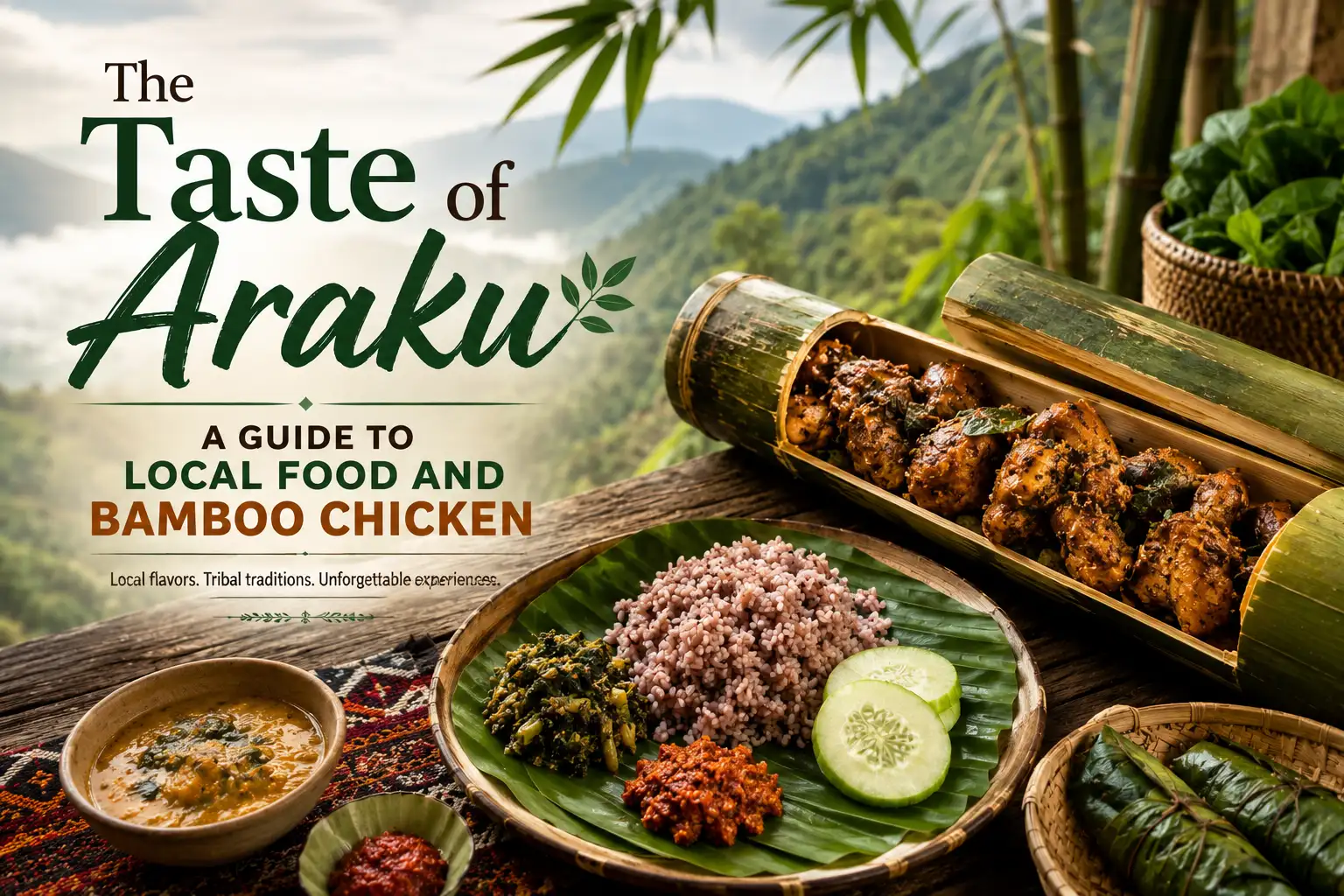
The Taste of Araku: A Guide to Local Food and Bamboo Chicken
The rich culinary traditions of Araku Valley distinguish the destination from generic hill station tourism. Developed over generations by indigenous tribal communities, the Araku local food culture relies heavily on unique, open-fire cooking techniques and pristine forest ingredients that are completely distinct from standard Indian restaurant fare.
Whether you are looking to try the famous signature dishes right at the source or bring home a piece of the valley’s rich harvest, here is everything you need to know about navigating Araku’s vibrant foodie scene.
What is Bamboo Chicken? The Tribal Speciality
Bamboo chicken—locally celebrated as bongulo chicken—is an iconic tribal dish that relies on an innovative, ancient cooking technique rather than rare or exotic ingredients.
[Marinated Chicken Stuffed into Fresh Bamboo] ➔ [Ends Sealed with Green Leaves] ➔ [Slow-Roasted Over Charcoal/Open Flame]
The Preparation Process
- The Marinade: Fresh chicken pieces are thoroughly coated in a vibrant tribal spice blend. These mixtures vary naturally from cook to cook but prominently feature locally gathered forest herbs and ground spices that lack the heavy oils or artificial colorings found in typical commercial curries. The meat is left to rest so the flavours fully penetrate.
- The Cooking Vessel: The seasoned meat is stuffed tightly into hollow cylinders of freshly cut green bamboo tubes. The ends are sealed tightly with local leaves before the entire tube is placed directly over an open wood or charcoal fire.
- The Slow Roast: The bamboo acts simultaneously as a pressure cooker, moisture lock, and natural flavouring agent. As the exterior chars, the water inside the green wood steams the chicken from within while slowly infusing the meat with a delicate, herbal, and woody aroma.
Because this traditional method cannot be rushed, cooking takes anywhere from 45 minutes to an hour. The resulting meat is incredibly tender, oil-free, and boasts a unique, intensely smoky profile. It is traditionally split open and served directly inside the charred bamboo tube, making it perfect to eat with your hands.
Top-Rated Roadside Stalls vs. Hotel Restaurants
When it comes to sourcing authentic bamboo chicken, travelers generally choose between two distinct dining environments:
1. Traditional Roadside Stalls
For the most genuine experience, look along the main ghat roads or at informal food stalls clustered tightly near natural picnic spots like the Chaparai waterfalls picnic guide area. These are predominantly managed by local tribal women who utilize traditional wood-fire setups passed down through generations.
- The Vibe: Authentic, raw, and culturally immersive. You can watch the entire process unfold from marination to fire-roasting.
- Cost & Logistics: A generous portion typically ranges between ₹250 and ₹400. You should keep cash handy, as card or digital network facilities are rarely stable at these remote roadside spots.
- Considerations: Hygiene standards can vary noticeably since these are open-air, informal setups. It is best to choose highly active stalls with visible fresh preparations.
2. Hotel and Resort Restaurants
If you prefer standard hygiene practices and clinical kitchen environments, major dining rooms across the valley now offer bamboo chicken as a curated signature item.
- The Vibe: Comfortable, air-conditioned, and highly accessible.
- Cost & Logistics: Noticeably higher than roadside stalls, reflecting property overhead and refined plating. If you are staying at premium properties found in our best resorts in araku valley guide or making a stopover during a structured Araku Valley 1-day tour package, ordering from the in-house kitchen provides maximum consistency and convenience.
Other Tribal Dishes to Try: Millet-Based Delicacies
While bongulo chicken grabs the spotlight, the broader tribal culinary landscape features incredible wholesome alternatives that adventurous foodies should actively explore:
- Millet-Based Staples: Long before rice became widely adopted in the valley, nutrient-dense millets were the absolute foundation of the local diet. Travelers can sample traditional millet porridges, flatbreads (ragi rotis), and savory local preparations that offer a healthy, hearty alternative to wheat and rice.
- Wild Forest Greens: Seasonally gathered wild vegetables and uncultivated forest greens frequently find their way into daily tribal stews, carrying uniquely earthy textures and sharp herbal notes that commercial produce simply cannot replicate.
- Alternative Meat Roasts: Depending on seasonal availability and village traditions, slow-cooked stews and open-flame preparations featuring goat or pork can also be found at weekly tribal markets.
- Traditional Brews: Locally fermented native drinks made from rice or palm are integral to regional festive contexts, providing deep cultural insight for those looking to experience authentic village customs responsibly.
Tip: Because these hyper-local dishes rarely appear on fixed restaurant menus, the easiest way to experience a genuine, home-cooked tribal meal is by booking a local homestay or coordinating directly with hosts through our comprehensiveAraku Valley accommodation guide.
Fresh Forest Honey and Spices: Souvenirs for Foodies
To recreate a small piece of the Araku food journey back home, local markets offer several excellent, travel-friendly artisanal products:
| Food Souvenir | What Makes It Special | Purchasing & Storage Tip |
| Wild Forest Honey | Gathered raw from wild cliffs and tree hives, this honey features deep, unpasteurized floral notes that shift with the seasons. | Buy directly from tribal cooperative vendors; ask for a quick taste to check thickness and flavor profile. |
| High-Altitude Black Pepper | Grown in the cool, elevated valley air, Araku pepper carries an intense, bright, and deeply aromatic punch compared to lowland crops. | Look for whole peppercorns at local village markets and transfer them to airtight jars at home to lock in freshness. |
| Organic Arabica Coffee | Grown locally by tribal communities under lush forest canopies, this world-renowned, GI-tagged specialty coffee is an absolute must-buy. | Pick up freshly roasted whole beans or ground powders directly from the town’s retail outlets or the tribal museum gift shops. |
| Dried Forest Produce | Spontaneous market finds like sun-dried wild mushrooms, native forest berries, and custom organic spice mixes. | Highly seasonal; pick them up opportunistically when exploring local weekly markets. |
Planning Your Culinary Tour
To easily string together a path that hits the best roadside bamboo chicken stalls, the town’s central food markets, and the plantation trails, it is highly recommended to secure seamless transport. You can organize your food hop by utilizing an easy Araku cab booking or by reading our optimized Vizag to Araku by car guide to map out your roadside pitstops perfectly.
For a completely stress-free experience where regional dining highlights, transport, and sightseeing are bundled together perfectly, take a look at our fully managed Araku Valley tour travel packages.
Is bamboo chicken very spicy or oily?
No. Traditional bamboo chicken uses absolutely zero oil or water during the actual cooking process, making it a very healthy, lean dish. The heat level depends entirely on the specific local spice marinade used by the cook, but it generally leans toward a rich, deeply smoky, and aromatic herbal flavor rather than a burning, chili-heavy spice.
Where can I find the most authentic bamboo chicken in Araku?
The most authentic preparations are found at the rustic roadside stalls operated by local tribal families along the main ghat roads and near major natural landmarks like the Chaparai area. If you are traveling on a tight schedule, these popular roadside culinary spots are easily accessible as quick lunch stops via our curated Araku Valley 1-day tour package.
How long does it take to prepare a fresh portion of bamboo chicken?
Because the dish is cooked slowly inside a thick, green bamboo log over a live fire, it requires roughly 45 to 60 minutes to cook thoroughly. It is highly recommended to place your order immediately upon arriving at a roadside spot or waterfall, go explore the surroundings for an hour, and return when your fresh, steaming bamboo tube is ready to be cracked open.
Can vegetarians find good traditional tribal food options in Araku?
Yes! While bamboo chicken dominates the mainstream tourism media, traditional tribal agriculture relies very heavily on diverse millets, grains, and wild forest vegetables. You can easily sample authentic vegetarian delicacies like hot ragi sankati (millet porridge), freshly patted ragi rotis, and seasonal wild green stir-fries by coordinating a traditional meal through the stays listed in our Araku Valley accommodation guide.
What is the typical price of a bamboo chicken dish?
At open-air roadside stalls, a full bamboo tube portion usually costs between ₹250 and ₹400, depending on the size and location. Prices are typically higher and subject to standard taxes when ordering inside established resort dining rooms or multi-cuisine hotel restaurants.

All Categories
- Araku Cab Service
- Araku Coffee
- Araku Tour Packages
- Araku Tourist Places
- Araku Trip Packages
- Araku Valley for families
- Araku Valley shopping
- Araku Valley Timings
- Araku Valley Trip Cost
- Araku Weather
- Around Vizag
- Camping in Araku Valley
- Hidden Spots
- Hotel & Rooms
- Hotels & Resorts
- Stay & Food
- Tatipudi Reservoir
- Tent camping
- Transport & Safety
- Travel Guides
- Vizag Attractions
- Vizag Beachs
- Vizag Cab Services
- Vizag Travel Planning
Recent Posts
Vizag Travel FAQ

Vizag Photography Guide

Vizag Shopping Guide
Tags