Monsoon Magic: The Best Waterfalls to See When it Rains
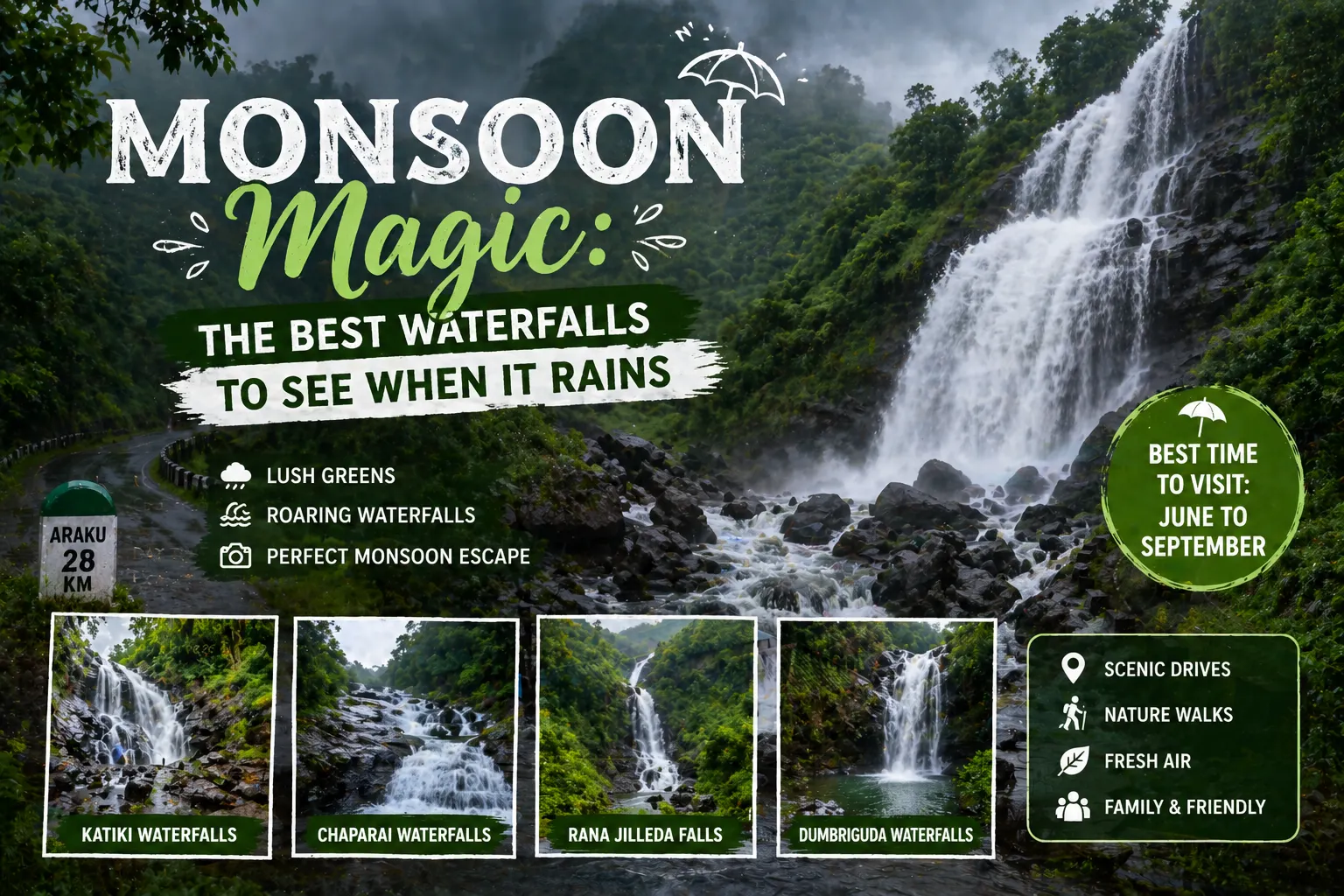
Monsoon Magic: The Best Waterfalls to See When it Rains
Monsoon transforms Araku Valley’s waterfalls from year-round trickles into thundering cascades that justify trips planned specifically around this seasonal spectacle. While most visitors concentrate their travel during winter peak season, those who embrace monsoon weather discover a different Araku, one where water dominates the landscape and greenery reaches its most intense expression.
Understanding which waterfalls benefit most from monsoon flows and how to navigate the challenges rainy season presents helps adventurous travelers experience this alternate face of Araku Valley.
Why Monsoon is the Prettiest Season in Araku
The Eastern Ghats surrounding Araku receive substantial rainfall during the monsoon months, typically June through September with peak precipitation in July and August. This water transforms the landscape in ways that dry-season visitors never witness.
Vegetation reaches maximum lushness as sustained moisture encourages growth impossible during drier months. Forest slopes that appear brown or faded during summer burst with green intensity that photographs struggle to capture. The contrast between verdant hillsides and gray, dramatic skies creates atmospheric scenes that define monsoon aesthetics.
Streams and rivers fill throughout the region, animating the landscape with water features that barely trickle during dry seasons. Small cascades appear along roadsides that show no sign of water at other times. The sound of flowing water becomes constant background as the valley absorbs and channels monsoon rainfall.
Air quality improves as rain washes dust from atmosphere and vegetation. Views gain clarity that haze can obscure during drier periods. The freshness of rain-cleaned air enhances outdoor experiences for those willing to tolerate getting wet.
The monsoon weather itself creates dramatic skies and atmospheric conditions. Cloud formations build and release, creating dynamic visual displays throughout the day. Mist rises from valleys after rain events, providing atmospheric effects different from but equally appealing as winter morning fog.
Top Waterfalls That Come to Life (Tadimada, Katiki)
Several waterfalls around Araku Valley reach their peak expression during monsoon, making visits specifically worthwhile during this season.
Katiki Waterfalls near Borra Caves transforms from an impressive cascade into a powerful display when monsoon flows peak. The Gosthani River carries maximum volume during this period, creating water volumes that dwarf dry-season flows. The trek to reach Katiki becomes more challenging with wet trails, but the destination rewards with dramatically enhanced spectacle.
Tadimada Waterfalls in the Ananthagiri area, also known as Ananthagiri Falls, similarly benefits from monsoon water. This cascade, relatively modest during dry months, becomes a substantial attraction when seasonal flows strengthen. The forest setting around Tadimada reaches peak greenery simultaneously, creating comprehensive scenic improvement.
Chaparai Waterfalls sees the highest water flows during monsoon, though the nature of the experience changes with conditions. The natural water slides that characterize dry-season visits become faster and more powerful, potentially too strong for casual sliding. The cascade appearance improves dramatically even if direct water activities face limitations.
Rana Jilleda near Araku town represents another seasonal waterfall that requires monsoon flows to achieve its full 60-foot drop potential. During drier months, flows may barely trickle over the cliff face. Monsoon transforms this into an actual waterfall worth visiting.
The timing window for peak waterfall viewing spans late July through September, when accumulated rainfall creates maximum flows. Early monsoon may not yet deliver peak conditions; late monsoon and post-monsoon October often retain strong flows while weather becomes more cooperative.
Road Safety and Travel Precautions in the Rain
Monsoon travel to Araku involves challenges that dry-season visitors avoid. Acknowledging these realities and preparing appropriately enables safe enjoyment of the season’s unique offerings.
Road conditions deteriorate during monsoon as water damages surfaces, particularly along the ghat sections. Potholes develop or worsen, edges erode, and debris from hillsides may partially block roadways. Driving speeds must adjust for these conditions regardless of vehicle capability.
Landslides represent the most serious monsoon risk along mountain roads. Heavy rainfall can destabilize slopes, sending debris across roadways with little warning. News monitoring before departure and inquiry at accommodations about current road status helps avoid travel during dangerous conditions.
Visibility decreases substantially during active rainfall. The combination of water on windshields, spray from other vehicles, and reduced light penetration through clouds limits how far drivers can see. This reduced visibility compounds the need for slower speeds that challenging road conditions already demand.
Stream crossings along some attraction access routes may become impassable during heavy rainfall. Roads that include water crossings manageable during dry conditions can become dangerous during elevated water levels. Local advice about specific route conditions proves valuable before attempting less-traveled roads.
Rain gear becomes essential rather than optional for monsoon visits. Waterproof jackets, quick-dry clothing, and appropriate footwear that handles wet conditions improve comfort substantially. Umbrellas help in open areas but may prove cumbersome on treks through dense vegetation.
Train travel may offer more reliability than road travel during monsoon, particularly for reaching Araku from Vizag. Rail services generally continue during rain conditions that make ghat driving inadvisable. Checking current service status before departure confirms trains are operating normally.
Best Resorts for a Rainy Day Retreat
When rain intensifies beyond comfortable outdoor exploration, resort facilities become more important than during fair-weather visits. Properties that offer engaging on-site experiences support monsoon trips through inevitable indoor hours.
Resorts with covered common areas, indoor restaurants, and recreational facilities prevent rain days from becoming wasted time. Properties offering activities like indoor games, libraries, or organized entertainment maintain guest engagement when weather traps visitors inside.
Room quality matters more during monsoon since guests spend increased time in accommodations. Properties with comfortable seating, entertainment options, and pleasant ambiance justify their rates when rooms become daytime refuges rather than merely sleeping spaces.
Campfire culture that defines many Araku resorts faces challenges during rain. Properties with covered fire areas or alternative evening programming maintain atmospheric experiences despite weather interference. Inquiring specifically about rainy-weather facilities helps identify properties prepared for monsoon guest needs.
Location considerations shift during monsoon. Properties on scenic overlooks deliver value when views open between rain events. Properties requiring significant road travel to reach attractions become less convenient when road conditions complicate every journey.
Dining options on-site become nearly essential during heavy rain when travel to restaurants involves getting soaked. Properties with quality on-site dining eliminate the uncomfortable choice between poor meals and wet journeys. Room service capability adds convenience for guests who prefer staying completely dry.
Monsoon visits to Araku Valley reward travelers who appreciate rain-enhanced beauty and accept weather-related compromises. The waterfalls perform at their peak, the landscape achieves maximum green intensity, and the crowds that characterize peak season disappear almost entirely. For the right visitor, monsoon Araku delivers experiences unavailable during the more popular dry months.
Is monsoon the best time to see waterfalls in Araku Valley?
Yes, monsoon is one of the best seasons to visit Araku Valley because waterfalls become fuller, greener, and more scenic after seasonal rains.
Which are the best waterfalls to visit in Araku Valley during monsoon?
Popular choices include Katiki Waterfalls, Chaparai Waterfalls, Rana Jilleda Falls, and nearby seasonal cascades.
How is Katiki Waterfalls in rainy season?
During monsoon, Katiki Waterfalls becomes more powerful and beautiful, making it a favorite for adventure and nature lovers.
Is Chaparai Waterfalls good to visit when it rains?
Yes, Chaparai Waterfalls is popular in monsoon for its flowing rock stream, fresh surroundings, and picnic atmosphere, though caution is needed on wet rocks.
Are monsoon waterfalls in Araku Valley safe to visit?
Yes, but visitors should be careful near slippery rocks, strong currents, and sudden rain. Following local guidance is recommended.
What should I wear while visiting waterfalls in monsoon at Araku Valley?
Wear non-slip footwear, quick-dry clothes, and carry a raincoat or umbrella for changing weather conditions.
Can families visit Araku waterfalls during rainy season?
Yes, families can visit many waterfall spots, but choosing safer viewpoints and supervised areas is best during heavy rains.
Is monsoon good for photography in Araku Valley?
Absolutely. Monsoon offers dramatic clouds, misty hills, green forests, and lively waterfalls, making it excellent for photography.
Does Araku Valley get crowded during monsoon weekends?
Yes, rainy weekends often attract travelers looking for scenic drives and waterfall trips, especially from Visakhapatnam.
How should I plan a monsoon waterfall trip to Araku Valley?
Many travelers use local planners like ArakuTrip for cab bookings, weather-based route planning, hotel stays, and safer monsoon travel arrangements.

All Categories
- Araku Cab Service
- Araku Coffee
- Araku Tour Packages
- Araku Tourist Places
- Araku Trip Packages
- Araku Valley for families
- Araku Valley shopping
- Araku Valley Timings
- Araku Valley Trip Cost
- Araku Weather
- Around Vizag
- Camping in Araku Valley
- Hidden Spots
- Hotel & Rooms
- Hotels & Resorts
- Stay & Food
- Tatipudi Reservoir
- Tent camping
- Transport & Safety
- Travel Guides
- Vizag Attractions
- Vizag Beachs
- Vizag Cab Services
- Vizag Travel Planning
Recent Posts

Vizag Travel FAQ

Vizag Photography Guide
Vizag Shopping Guide
Tags