Road Conditions and Ghat Road Safety: Vizag to Araku by Car
Road Conditions and Ghat Road Safety: Vizag to Araku by Car
Driving from Visakhapatnam to Araku Valley by car offers flexibility and scenic engagement that other transport modes cannot match. However, the route includes challenging ghat sections that demand respect and appropriate preparation. Understanding current road conditions, navigating the hairpin bends safely, and knowing where to stop enhances both safety and enjoyment when reaching Araku by car.
Vizag to Araku by Car:
First-time drivers on this route often underestimate the ghat sections, expecting standard highway driving throughout. The reality involves significant elevation change, tight curves, variable road surfaces, and traffic patterns that differ from urban or plains driving. This guide prepares you for what the journey actually involves.
Mapping the Route: Distance and Typical Travel Time
The standard route from Visakhapatnam to Araku Valley covers approximately 115 kilometers via State Highway 39. However, distance alone poorly predicts travel time given the varying terrain across the journey.
The initial section from Vizag city through the urban outskirts follows typical city and suburban roads. Traffic conditions vary by time of day, with rush hours adding congestion that gradually thins as you leave the metropolitan area. This section covers roughly 20-25 kilometers and takes 30-45 minutes depending on traffic.
The midway section crosses relatively flat terrain as you approach the ghat base. Road quality here generally remains reasonable, allowing comfortable cruising speeds. This section passes through areas like Tyda before the terrain begins rising. Allow approximately 45 minutes to one hour for this portion.
The ghat section, covering approximately 30-40 kilometers, contains the challenging driving that defines this route. Sharp curves, steep gradients, and elevation gain require reduced speeds regardless of vehicle capability. This section typically takes 60-90 minutes for careful drivers, though conditions and traffic affect timing.
The final approach to Araku Valley crosses relatively flat plateau terrain once the climb completes. This section feels like a reward after ghat concentration, with easier driving through coffee plantations and agricultural land. Allow 20-30 minutes for the final approach.
Total journey time typically spans three to three and a half hours for experienced drivers maintaining appropriate caution. First-time visitors should budget four hours to avoid rushing through challenging sections.
Managing the 8 Major Steep Hairpin Bends
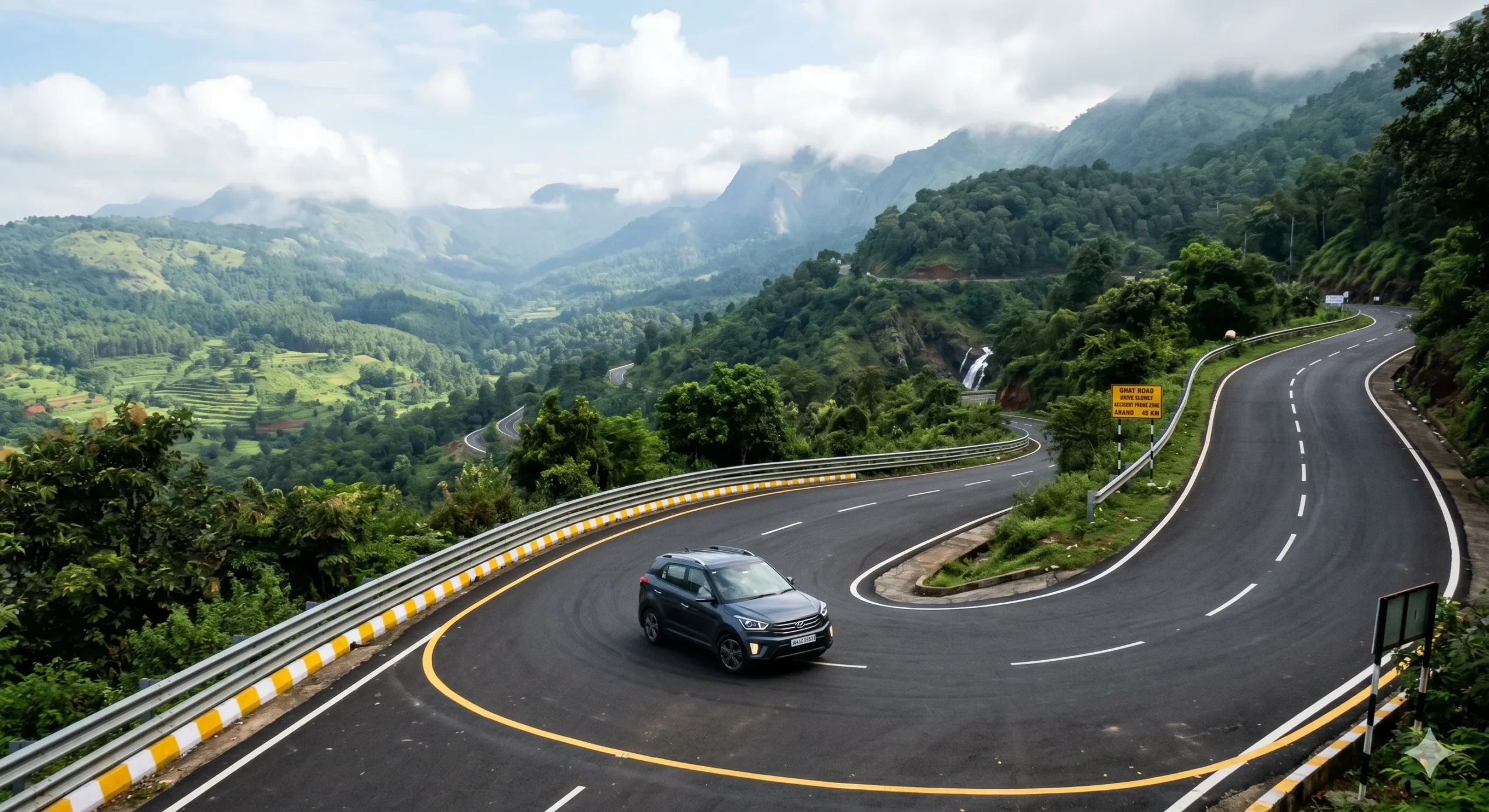
The ghat section contains approximately eight particularly challenging hairpin bends that demand focused attention. These turns tighten beyond what roadway entry angles suggest, catching unprepared drivers who enter too fast for comfortable completion.
Approaching hairpin bends requires speed reduction well before the turn begins. The entry angle often obscures the actual tightness of the curve until you’re committed. Reducing speed earlier than feels necessary provides margin for the unexpected, whether tighter curvature, oncoming traffic, or road surface problems within the turn.
Gear selection matters on steep sections. Downshifting before descents allows engine braking to supplement wheel brakes, reducing brake overheating risks on extended downhill sections. Automatic transmissions benefit from manually selecting lower gears where available rather than relying entirely on brake application.
The inside line through hairpins may feel natural but creates problems when oncoming traffic appears. Staying in your lane throughout turns, even when the road appears empty, prevents dangerous encounters with vehicles hidden by the curve geometry. Trucks and buses frequently use these routes, requiring substantial road width for their own turns.
Stopping or parking within hairpin curves creates hazards for all traffic. If you need to stop for any reason, continue through to a straight section or designated pullout area before stopping. Emergency situations excepted, maintaining motion through curves protects everyone on the road.
Weather significantly affects hairpin navigation. Morning fog can reduce visibility to distances shorter than stopping requirements. Wet roads from rain or mist reduce traction during the turning forces that curves generate. Night driving amplifies all challenges as headlight reach may not match the distance needed to assess curves adequately.
Best Stops Along the Way: Damuku View Point and Tatipudi
The Vizag-Araku route passes several points worth stopping for scenery, refreshment, or simply breaking the driving concentration. Planning stops adds enjoyment while reducing driver fatigue.
Tatipudi Reservoir appears relatively early in the journey, approximately 50 kilometers from Vizag. This water body provides boating opportunities, a watch tower with panoramic views, and facilities for brief exploration. The reservoir makes an excellent first break point, allowing drivers to stretch before the ghat sections ahead.
Damuku View Point offers roadside access to valley panoramas without requiring detour from the main route. The viewpoint appears during the climbing section, providing both scenic value and opportunity to rest while absorbing views that driving concentration prevents enjoying in motion.
Tyda Nature Camp, branded as Jungle Bells, provides facilities for longer stops including refreshments, nature walks, and even overnight stays for those splitting the journey. The location approximately midway through the route suits breaking the drive into manageable segments.
Ananthagiri coffee plantations line portions of the route through the upper ghat sections. Informal stops along roadsides allow photographs among coffee plants and brief immersion in plantation atmosphere. Designated pullout areas exist at several points; stopping on roadway shoulders creates hazards and should be avoided.
The final approach to Araku passes through Borra Caves Junction, where the caves themselves sit approximately 4 kilometers off the main route. Visitors planning cave visits can divert here rather than backtracking from Araku later. The short detour adds minimal time while efficiently sequencing attractions.
Safety Tips for Night Driving and Foggy Weather
While daylight travel is strongly recommended for first-time drivers on this route, circumstances sometimes require navigating challenging conditions. Understanding specific risks helps manage them when avoidance isn’t possible.
Night driving through the ghats multiplies all daytime challenges. Headlights cannot illuminate around corners until you’re close enough that reaction time compresses. Oncoming vehicles may have poorly aligned lights that blind rather than warn. Animal crossings become harder to anticipate. Unless genuinely necessary, delay departures or overnight partway rather than driving the ghats after dark.
Fog occurs frequently during winter months, particularly in early morning and evening hours. The dense fog that makes Araku famous for photography simultaneously creates dangerous driving conditions. Fog lights, where equipped, penetrate better than headlights, but thick conditions may still limit visibility below safe stopping distances.
When fog reduces visibility significantly, reducing speed proportionally is essential. The fog line along road edges provides guidance when center and side boundaries disappear. Maintaining increased following distance protects against sudden stops by vehicles ahead that you cannot see until dangerously close.
Rain creates multiple hazards beyond reduced visibility. Road surfaces become slippery, extending stopping distances and reducing grip during turns. Water pooling on road surfaces can cause hydroplaning at speed. The ghat sections, already challenging, become substantially more demanding when wet.
Practical preparations for adverse conditions include ensuring windshield wipers function effectively, headlights and fog lights work properly, and your fuel level provides margin for potential delays. Mobile phone charge allows communication if you need assistance, though signal coverage varies through the ghats.
The fundamental safety principle for driving Vizag to Araku by car involves matching speed to conditions rather than aspirational timing goals. The road demands respect regardless of driver experience or vehicle capability. Drivers who grant that respect arrive safely while enjoying one of India’s more scenic motoring routes.
How are the road conditions from Visakhapatnam to Araku Valley by car?
The road from Visakhapatnam to Araku Valley is generally motorable and scenic, with a mix of highways, village roads, and ghat sections. Conditions can vary seasonally due to rain and maintenance work.
Is the ghat road to Araku Valley safe for self-driving?
Yes, the ghat road is usually safe for careful drivers, but extra caution is needed on curves, downhill stretches, foggy mornings, and during monsoon season.
Can beginners drive from Visakhapatnam to Araku Valley?
Beginners can drive if they are confident with hill roads, but many travelers prefer experienced local drivers for a more relaxed and safer trip.
What is the best time to travel by car from Visakhapatnam to Araku Valley?
Early morning departures are ideal because traffic is lighter, visibility is better, and you get more time for sightseeing stops.
Are there sharp turns on the Vizag to Araku ghat road?
Yes, some ghat sections have winding turns and elevation changes, so controlled speed and attentive driving are important.
Is night driving recommended from Visakhapatnam to Araku Valley?
Night driving is possible, but daytime travel is usually safer because visibility is better and scenic stops are easier to enjoy.
How is the road during monsoon on the way to Araku Valley?
Monsoon makes the route beautiful and green, but roads may become slippery with fog or reduced visibility in some hill sections.
Which vehicle is best for the Vizag to Araku road trip?
Sedans can manage in normal conditions, while SUVs are preferred by many families for better comfort and hill-road confidence.
Should I hire a local driver for the Araku ghat road trip?
Yes, many travelers choose local drivers because they know the curves, weather patterns, sightseeing stops, and safest driving practices.
What is the safest way to plan a car trip to Araku Valley?
Start early, check weather, keep fuel topped up, avoid overspeeding, and book with trusted local planners like Araku Trip for experienced drivers and smoother travel support.

All Categories
- Araku Cab Service
- Araku Coffee
- Araku Tour Packages
- Araku Tourist Places
- Araku Trip Packages
- Araku Valley for families
- Araku Valley shopping
- Araku Valley Timings
- Araku Valley Trip Cost
- Araku Weather
- Around Vizag
- Camping in Araku Valley
- Hidden Spots
- Hotel & Rooms
- Hotels & Resorts
- Stay & Food
- Tatipudi Reservoir
- Tent camping
- Transport & Safety
- Travel Guides
- Vizag Attractions
- Vizag Beachs
- Vizag Cab Services
- Vizag Travel Planning
Recent Posts
Vizag Travel FAQ

Vizag Photography Guide

Vizag Shopping Guide
Tags