Offbeat Araku Waterfalls
Offbeat Araku Waterfalls
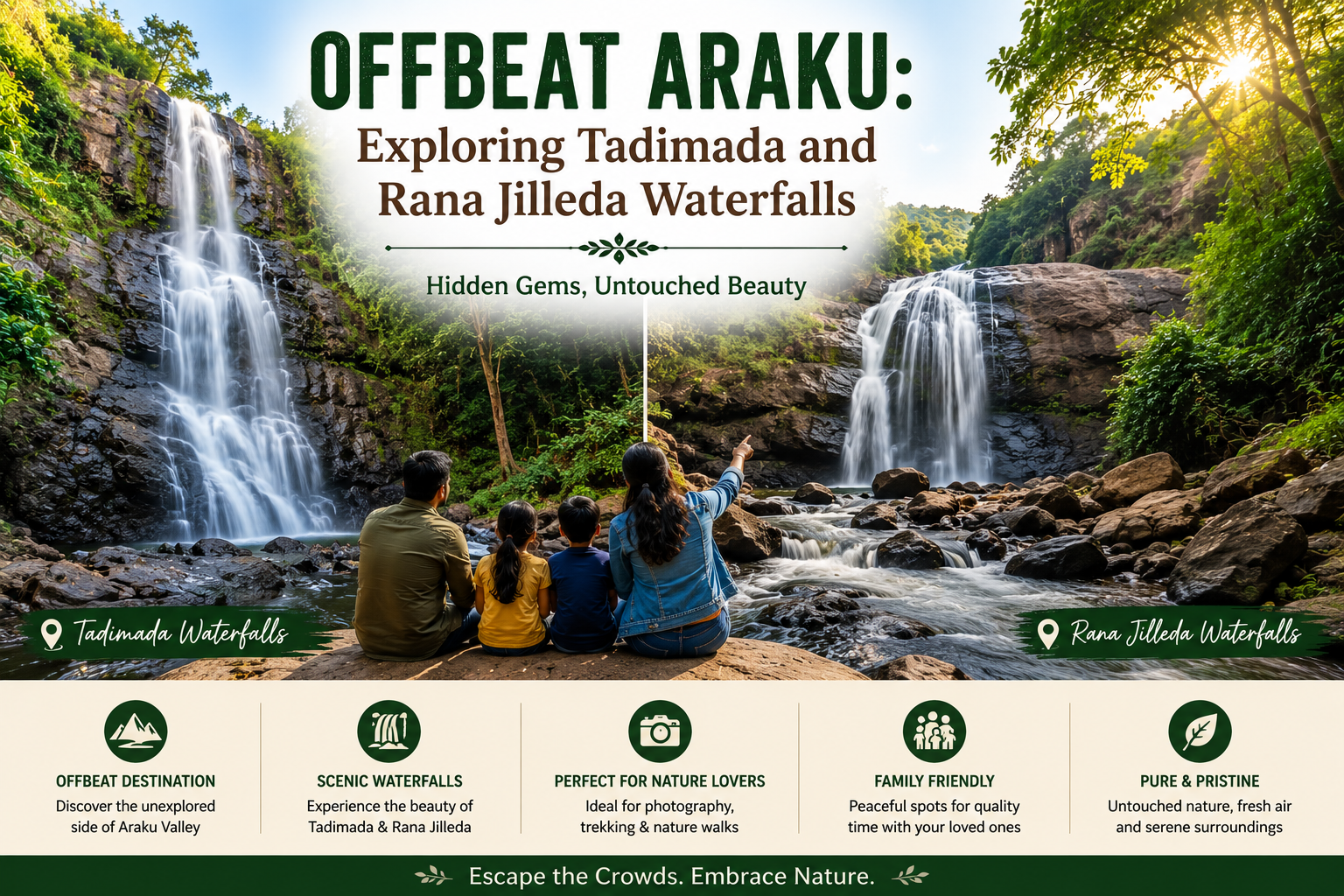
Offbeat Araku: Exploring Tadimada and Rana Jilleda Waterfalls
Most Araku itineraries rotate through the same handful of waterfalls — and for good reason, since spots like Chaparai and Katiki earn their popularity. But if you’ve already covered those, or you’d simply rather avoid the crowds, Tadimada and Rana Jilleda are worth the extra effort. Both deliver real natural beauty without the queues — at the cost of a bit more planning.
Here’s what to know before you go looking for either one.
Tadimada Falls (Ananthagiri Falls): A Hiker’s Paradise
Tadimada Waterfalls — also known as Ananthagiri Falls — sits within the coffee plantation belt between Vizag and Araku, in the same general area covered in our Ananthagiri Hills exploration guide. Most visitors hear about it through local inquiry rather than mainstream tourism listings, which is exactly why it stays quiet.
Like every waterfall in the region, Tadimada looks its best during and just after monsoon, when flow volume peaks — check our Araku monsoon waterfalls guide for how that season affects access across the board. The trade-off is familiar: monsoon means power but tougher trails; dry season means easier walking but a weaker cascade.
Reaching the falls means a moderate hike through forested terrain — manageable for reasonably fit adults and older kids, though path conditions shift with season and maintenance, so it’s worth checking current conditions before you set out. The approach itself is part of the appeal: shade, varied vegetation, and the chance of wildlife sightings make the walk worthwhile even before you reach the water.
Visitor numbers here stay noticeably lower than at Chaparai or Katiki, even in peak season — which is the whole draw if solitude is what you’re after. It’s also a decent stop for Araku Valley photography: the forest canopy creates trickier but more atmospheric lighting than open waterfall sites typically offer.
Rana Jilleda: The 60-Foot Drop Near Araku Town
Rana Jilleda is the other offbeat pick, and it’s notable for being relatively close to Araku town — reportedly within 15–20 km — with a roughly 60-foot drop that makes a strong visual impression when the water’s flowing well.
“Relatively close” doesn’t mean “easy to find,” though. Access roads and the final approach often call for local navigation help, since tourism infrastructure here is minimal. As with Tadimada, timing matters: visit during or shortly after monsoon for meaningful flow, since dry-season visits can be underwhelming.
Don’t expect facilities — no vendors, no viewing platforms, nothing built out for tourists. Come self-sufficient with water and snacks. For current access conditions, local sources beat anything published online: accommodation staff, cab drivers who know the area, or tourism office personnel can usually give you the most up-to-date read. If you’re arranging a cab for your trip anyway, see our Vizag-to-Araku cab fare guide or our Araku cab booking page.
Trekking Paths and Accessibility
A few things to keep in mind before heading to either waterfall:
- Road conditions vary by season. What’s manageable for a standard vehicle in dry season can challenge even a capable SUV after heavy rain.
- Trailheads often lack formal signage. GPS coordinates help where available; otherwise, visible foot traffic on the trail is your best informal guide.
- Match difficulty to your group. A “moderate” trek for fit adults can be genuinely tough for elderly travelers or very young kids — be honest about this before committing.
- A local guide adds real safety margin. Costs are usually modest, and the navigation and safety value is worth it on unfamiliar trails.
- Travel in a group where possible, and tell someone your plan and expected return time — mobile signal often doesn’t reach these areas.
For more developed waterfall options with established trails and facilities, our Katiki Waterfalls adventure trek and Duduma Waterfalls guides are good comparison points.
Best Time of Year for Secluded Waterfall Hopping
- Monsoon (July–September): Maximum flow, but deteriorating trails, tricky access roads, and leeches in the forest.
- Post-monsoon (October–November): Often the sweet spot — strong residual flow, drier trails, and generally pleasant weather.
- Winter (December–February): Best hiking comfort, though some falls may run lower.
- Summer (March–May): Generally disappointing — dry season can reduce a roaring monsoon cascade to a trickle.
Whatever season you pick, our best time to visit Araku Valley guide breaks down the trade-offs in more detail. And if solitude is the goal, weekdays beat weekends regardless of season — it compounds the crowd-avoidance benefit of going offbeat in the first place.
Planning the Rest of Your Trip
Offbeat waterfalls work best as an add-on to a broader Araku itinerary rather than the sole focus of a trip. Check our places to visit in Araku Valley and things to do in Araku Valley guides to build out the rest of your stops, and if you’d rather have logistics handled, our Araku Valley tour packages can include offbeat detours with a local guide.
Tadimada and Rana Jilleda won’t show up on every Araku checklist — and that’s precisely why they’re worth the extra effort for anyone chasing a quieter, more authentic side of the region’s waterfalls.
Where are Tadimada Waterfalls and Rana Jilleda Waterfalls located?
Tadimada Waterfalls and Rana Jilleda Waterfalls are hidden natural attractions located in the Araku Valley region of Andhra Pradesh, surrounded by dense forests and scenic Eastern Ghats landscapes.
Why are Tadimada and Rana Jilleda Waterfalls considered offbeat destinations?
Unlike popular tourist spots, these waterfalls remain less crowded and offer a peaceful experience for travelers seeking untouched natural beauty.
How can I reach Tadimada Waterfalls?
Tadimada Waterfalls can be reached by road from Araku Valley, followed by a short walk or trek depending on the season and route conditions.
How can I reach Rana Jilleda Waterfalls?
Rana Jilleda Waterfalls is accessible from nearby villages around Araku Valley. Local guides are often recommended for first-time visitors.
What is the best time to visit Tadimada and Rana Jilleda Waterfalls?
The best time to visit is during and after the monsoon season, from July to January, when the waterfalls are at their fullest and the surrounding greenery is most vibrant.
Are the waterfalls suitable for family visits?
Yes. Families can enjoy the scenic beauty and peaceful surroundings, though caution is advised near slippery rocks and water streams.
Is trekking required to reach these waterfalls?
A short trek or nature walk may be required depending on the route, making these waterfalls ideal for nature lovers and adventure enthusiasts.
Are Tadimada and Rana Jilleda Waterfalls safe for children?
Children can visit with adult supervision. Visitors should be careful around wet rocks, uneven trails, and flowing water.
Is swimming allowed at the waterfalls?
Swimming conditions vary depending on water levels and seasonal flow. Visitors should assess safety conditions before entering the water.
Are food facilities available near the waterfalls?
Food facilities are limited near these offbeat locations. It is advisable to carry drinking water and light snacks during your visit.
What should I carry when visiting these waterfalls?
Carry comfortable trekking shoes, water bottles, snacks, a camera, sunscreen, insect repellent, and weather-appropriate clothing.
Are Tadimada and Rana Jilleda Waterfalls good for photography?
Yes. The waterfalls, forest surroundings, rocky landscapes, and seasonal mist make them excellent locations for photography and videography.
Can I visit both waterfalls on the same day?
Yes. Many travelers combine Tadimada Waterfalls and Rana Jilleda Waterfalls into a single-day sightseeing itinerary from Araku Valley.
Are local guides available for waterfall visits?
In some areas, local guides can assist visitors with directions, trail information, and safety tips, especially during the monsoon season.
What other attractions can be combined with these waterfalls?
Visitors often combine these waterfalls with Borra Caves, Katiki Waterfalls, Galikonda View Point, Coffee Plantations, Tribal Museum, and other attractions in Araku Valley.

All Categories
- Araku Cab Service
- Araku Coffee
- Araku Tour Packages
- Araku Tourist Places
- Araku Trip Packages
- Araku Valley for families
- Araku Valley shopping
- Araku Valley Timings
- Araku Valley Trip Cost
- Araku Weather
- Around Vizag
- Camping in Araku Valley
- Hidden Spots
- Hotel & Rooms
- Hotels & Resorts
- Stay & Food
- Tatipudi Reservoir
- Tent camping
- Transport & Safety
- Travel Guides
- Vizag Attractions
- Vizag Beachs
- Vizag Cab Services
- Vizag Travel Planning
Recent Posts

Vizag Travel FAQ

Vizag Photography Guide
Vizag Shopping Guide
Tags