
Araku Valley shopping
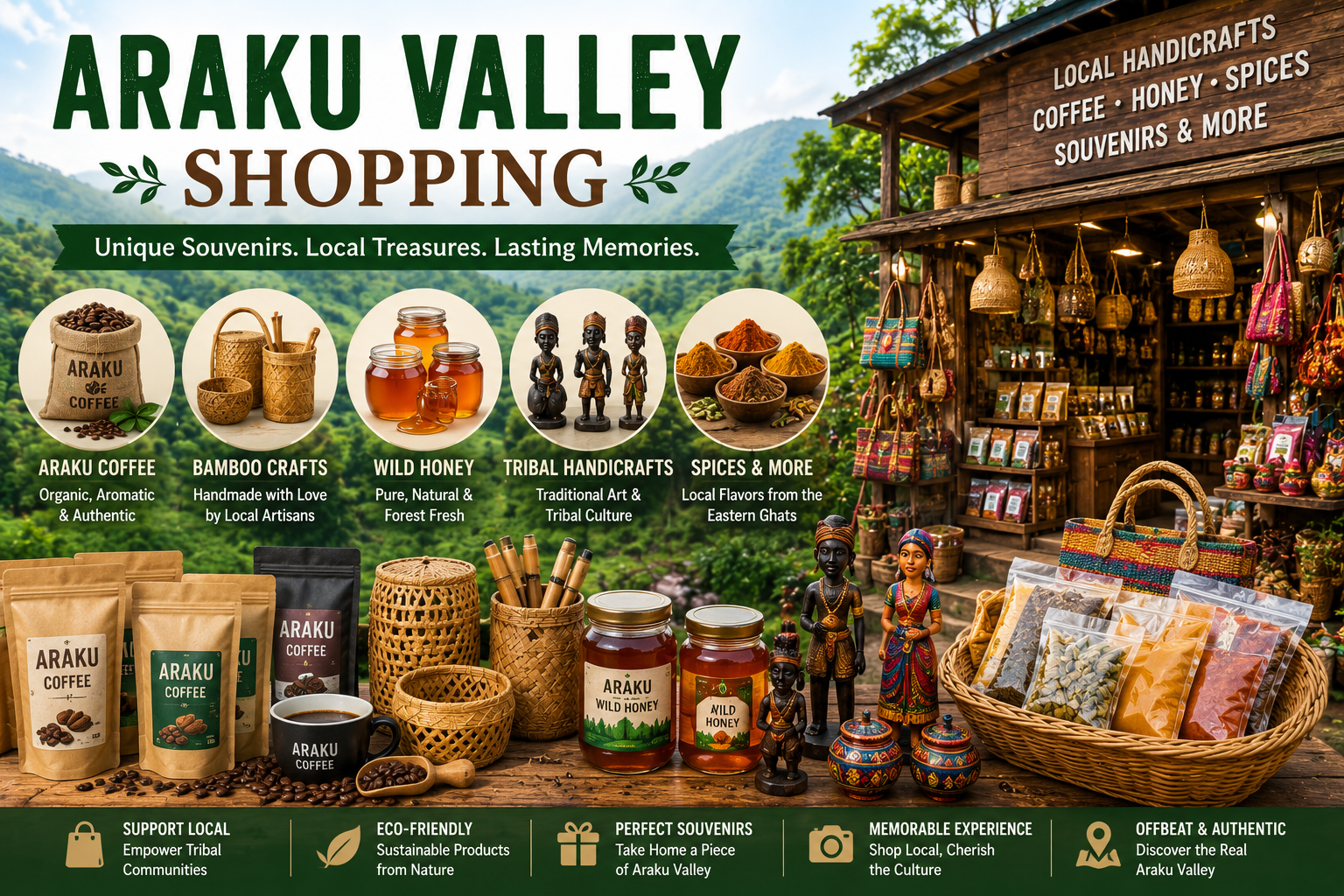
Araku Valley shopping
Araku Valley shopping: What to Buy and Where
A good souvenir does more than sit on a shelf — it brings part of the trip back with you. Araku Valley produces a handful of things you genuinely can’t get elsewhere: award-winning coffee, forest honey, tribal handicrafts, and spices grown at an elevation that changes how they taste. Here’s what’s worth buying, where to find it authentic, and how to avoid paying for an imitation.
Authentic Souvenirs: Coffee, Spices, and Honey
Araku coffee is the headline purchase, and for good reason — the organic Arabica grown here by tribal communities has won international recognition and commands premium pricing in global markets. Buying it on-site means fresher beans and money going directly to the producing communities. You’ll find whole beans, ground powder across roast levels, and instant variants for convenience, with the Coffee Museum and Tribal Museum shops offering the most reliable quality. Roadside vendors sell it too, but quality verification there is on you. Expect to pay ₹200–500 depending on form and packaging — generally good value against what the same coffee fetches in city retail.
Forest honey, gathered by tribal communities from wild hives in the surrounding hills, has a flavor profile commercial processing can’t replicate — and because quantities are genuinely limited, it’s one of the more special things you can bring home. Buying from tribal vendors directly supports the gatherers, even if the packaging is more basic than what you’d see on a shelf. Ask to taste before you buy if the vendor allows it — varieties differ more than you’d expect.
Spices — black pepper, cardamom, and others grown at this elevation — round out the consumable souvenirs, with flavor profiles distinct from lowland-grown equivalents. They pack well and make easy gifts. If food is a bigger interest for you than shopping, our Araku Valley local food guide covers what to eat while you’re here too.
Tribal Handicrafts: Terracotta and Woodwork
Beyond consumables, Araku’s tribal craft traditions produce souvenirs with real staying power.
- Bamboo products are the most visible category — baskets, containers, and household items made with techniques refined over generations. Watching artisans work, where you get the chance, says more about the skill involved than the finished piece alone.
- Terracotta pottery, still practiced by some communities, carries distinctive forms and decoration that vary slightly from piece to piece — a feature, not a flaw, of handmade work.
- Woodwork, carved or constructed from local forest materials, ranges from practical to purely decorative.
- Textiles, where weaving traditions survive, have a handwoven character that’s immediately distinguishable from commercial fabric.
Pricing varies by complexity and where you buy: simple bamboo pieces run ₹100–300, with elaborate carved items priced higher. There’s no fixed pricing structure here, so comparison shopping and a bit of negotiation are part of the process.
Top Places for Shopping: Museum Shops and Weekly Markets
- Tribal Museum gift shop — reliable sourcing for both handicrafts and consumables, with the museum context implying decent curation and fair pricing. Easy to combine with a visit if you’re already stopping for the exhibits — see our Tribal Museum guide for what else is worth seeing there.
- Coffee Museum shop — narrower focus, but deeper selection of coffee-specific products. Pairs naturally with a Coffee Museum and plantation visit.
- Roadside vendors near popular attractions — informal, potentially direct-from-producer, with more room to negotiate, but quality verification is on the buyer.
- Weekly markets in Araku or nearby Paderu — these bring tribal producers together on specific days, so confirm the schedule before planning a shopping-focused stop.
- Train and bus station vendors — convenient for last-minute purchases on your way out, with the trade-off of more limited selection.
Tips for Identifying Genuine Organic Products
- Look for certification labels on packaged coffee — the established Araku coffee branding carries verification that informal sellers can’t match.
- Buying directly from tribal vendors — at markets or near attractions — carries its own implicit authenticity, separate from any formal certification.
- Check for handmade irregularities. Slight variation and visible hand-tool marks suggest genuine craft work; perfect uniformity usually means machine production.
- Be skeptical of prices well below the norm. A bargain that’s too good is more often a substitute product than a genuine deal.
- Ask the vendor about the product. Genuine producers or close-to-source sellers can usually answer basic questions about origin and method; distant commercial resellers often can’t.
- Ask your accommodation staff or guide for vendor recommendations — local knowledge is the fastest way to skip the unreliable options.
Fitting Shopping Into Your Trip
Shopping pairs naturally with museum visits and a relaxed day in town, so it’s worth budgeting time for rather than squeezing it into a rushed last stop. If you’re mapping out your days, see our things to do in Araku Valley and places to visit in Araku Valley guides, or our 2-day Araku trip plan if you want shopping built into a fuller itinerary. Curious what a full trip typically costs, souvenirs included? Check our Araku Valley trip cost guide.
Araku’s shopping rewards a little patience — go in knowing what to look for, and you’ll come home with coffee, honey, and handicrafts that actually mean something, while putting money directly into the communities that made them.
What are the best things to buy in Araku Valley?
The most popular items to buy in Araku Valley include Araku Coffee, tribal handicrafts, bamboo products, wild honey, spices, handmade souvenirs, and local chocolates.
Is Araku Coffee worth buying?
Yes. Araku Coffee is internationally recognized and is produced by tribal farmers using organic farming methods. It is one of the most sought-after products in the region.
Where can I buy authentic Araku Coffee?
Visitors can purchase authentic coffee from the Coffee Museum, GCC outlets, local cooperative stores, and authorized coffee shops in Araku Valley.
What handicrafts are available in Araku Valley?
Tourists can find bamboo crafts, wooden souvenirs, tribal artwork, handmade baskets, decorative items, and traditional handicrafts made by local artisans.
Are there tribal markets in Araku Valley?
Yes. Local tribal markets and weekly “Santhas” offer handmade products, fresh produce, wild honey, bamboo items, and traditional crafts.
Is bargaining common in Araku Valley markets?
Bargaining may be possible at local markets and roadside stalls, but fixed-price shops and government outlets generally have standard pricing.
Can I buy organic products in Araku Valley?
Yes. Organic coffee, honey, spices, herbal products, and locally produced food items are available in several shops and tribal cooperative outlets.
What souvenirs should I bring back from Araku Valley?
Popular souvenirs include coffee powder, coffee beans, tribal handicrafts, bamboo products, handmade jewelry, local chocolates, and wooden decorative items.
Is shopping expensive in Araku Valley?
No. Most local handicrafts and tribal products are reasonably priced, making them great souvenirs and gifts for family and friends.
Are there government-run shops in Araku Valley?
Yes. Government-supported outlets and tribal cooperative stores sell authentic local products and help support tribal communities.

All Categories
- Araku Cab Service
- Araku Coffee
- Araku Tour Packages
- Araku Tourist Places
- Araku Trip Packages
- Araku Valley for families
- Araku Valley shopping
- Araku Valley Timings
- Araku Valley Trip Cost
- Araku Weather
- Around Vizag
- Camping in Araku Valley
- Hidden Spots
- Hotel & Rooms
- Hotels & Resorts
- Stay & Food
- Tatipudi Reservoir
- Tent camping
- Transport & Safety
- Travel Guides
- Vizag Attractions
- Vizag Beachs
- Vizag Cab Services
- Vizag Travel Planning
Recent Posts

Vizag Travel FAQ
Vizag Photography Guide

Vizag Shopping Guide
Tags